
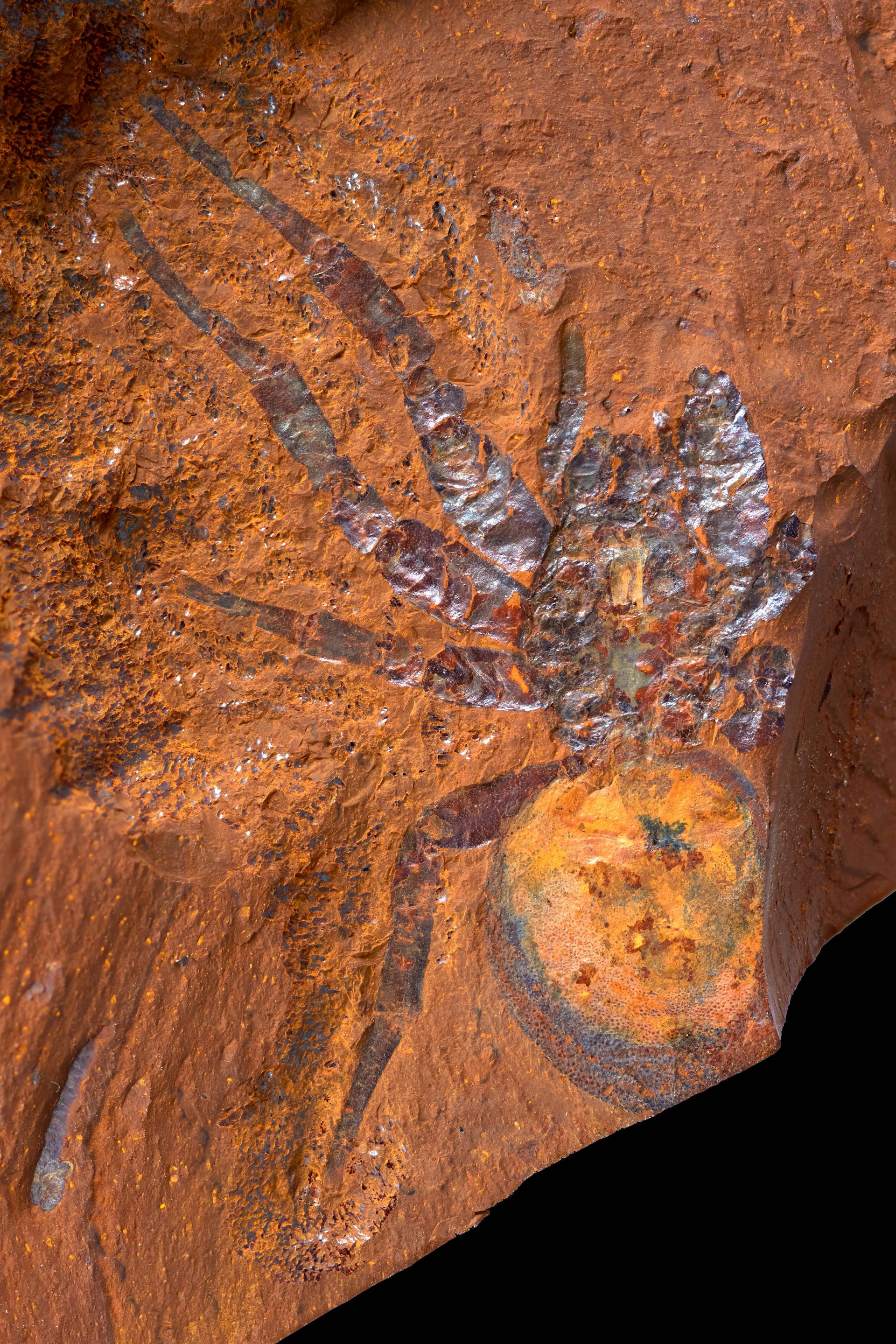
A large trapdoor spider preserved in McGraths Flat.
Michael Frese
A research paper published online last year in Gondwana Research should have been giving creationists nightmares. It reports work by an Australian and American team of palaeontologists and geologists, led by Tara Djokic of the Australian Museum and UNSW Sydney, showing how iron-rich minerals can preserve fossils in such exquisite detail that individual pigment cells in fish eyes, internal organs of insects and fish, and even delicate spider hairs and nerve cells can be seen in deposits dated to between 11 million and 16 million years old.
The fossils come from McGraths Flat, a Miocene rainforest lake deposit in New South Wales, where organisms were entombed not in the usual shale, sandstone or limestone, but in iron-rich ferricrete composed largely of the iron-oxyhydroxide mineral goethite. Instead of destroying delicate biological structures, as might have been expected, the iron-rich sediment preserved them in astonishing microscopic detail.
This is not the first time iron has been shown to play an important role in preserving soft tissues rather than just the hard bones and teeth that normally fossilise. It was also implicated in Mary Schweitzer’s famous discovery of preserved collagen and soft-tissue-like structures in dinosaur fossils — a discovery that creationists frequently misrepresent today as “proof” that dinosaurs were alive only a few thousand years ago. Despite repeated corrections of these claims, creationist accounts of Schweitzer’s work have grown ever more fanciful with the passage of time, and now routinely include assertions that she found fresh blood and that the tissue was carbon-dated to just a few thousand years old.
In reality, the “fresh blood” claim is a distortion. Schweitzer described microscopic red structures that resembled blood cells, but their appearance was the starting point for a scientific investigation, not a claim that liquid blood had survived for millions of years. Nor was there any question of carbon dating, which is not used to date dinosaur fossils of this age. Schweitzer herself, writing in Scientific American, explained that the scientifically interesting question was not whether the fossil was young, but what chemical processes could allow traces of original biological material to persist for tens of millions of years.
The new paper extends that understanding by showing another way in which soft tissues can be preserved in remarkable detail over deep time. In favourable conditions, microscopic particles of iron-oxyhydroxide, each only about 0.005 millimetres across, can enter tissues and cells before decay destroys them, replicating delicate structures at cellular and even subcellular scales.
How this was discovered, and why it matters for palaeontology, is explained in an article in The Conversation by Tara Djokic. Her article is reproduced here under a Creative Commons licence and reformatted for stylistic consistency:

Unusual red rocks in Australia are rewriting the rules on exceptional fossil sites
Fossilised fish from McGraths Flat.
Salty Dingo
Hidden beneath farmland in the central tablelands of New South Wales lies one of Australia’s most extraordinary fossil sites – McGraths Flat. It dates back between 11 million and 16 million years into the Miocene epoch, a time when many of today’s familiar plants and animals evolved.
It is here that palaentologists and geologists from the Australian Museum Research Institute have made remarkable fossil discoveries. Where dust and drought now dominate, a lush rainforest once flourished. In stunning ecological detail, fossils at McGraths Flat reveal this ancient ecosystem.
Strikingly red in appearance, the sedimentary rocks here are composed entirely of goethite – a fine-grained mineral that contains iron. This iron has preserved a range of plants, insects, spiders, fish and feathers with exceptional detail.
Our new study, published in the journal Gondwana Research, shows there’s another reason these rocks are so intriguing. They fundamentally challenge ideas about where well-preserved fossil sites on Earth can be found, and why.
A large trapdoor spider preserved in McGraths Flat.
Michael Frese
Traditionally, the most exceptionally well-preserved fossil sites are from rocks dominated by shale, sandstone, limestone, or volcanic ash.
Consider Germany’s Messel Pit or Canada’s Burgess Shale. At these sites, organisms were rapidly buried in fine-grained sediments, allowing the exceptional preservation of soft tissues, not just hard parts.
Messel Pit has preserved roughly 47 million-year-old fossils showing the outlines of feathers, fur and skin. Meanwhile, the Burgess Shale contains soft tissues from some of Earth’s earliest animal life, dating back about 500 million years.
By contrast, sedimentary rocks made entirely of iron are the last place you’d expect to find well-preserved remains of land-based (terrestrial) animal and plant life.
That’s because iron-rich sedimentary rocks are predominantly known from banded iron formations. These massive iron deposits largely formed around 2.5 billion years ago in Earth’s ancient oxygen-depleted oceans, long before complex animal and plant life evolved.
In more recent history, iron is considered a mere weathering product, forming rust on the continents when exposed to our oxygen-rich atmosphere. Just look at Australia’s iconic red-rocked outback landscape that preserves these million - to billion-year-old features.
Yet the discovery of McGraths Flat has defied these expectations.
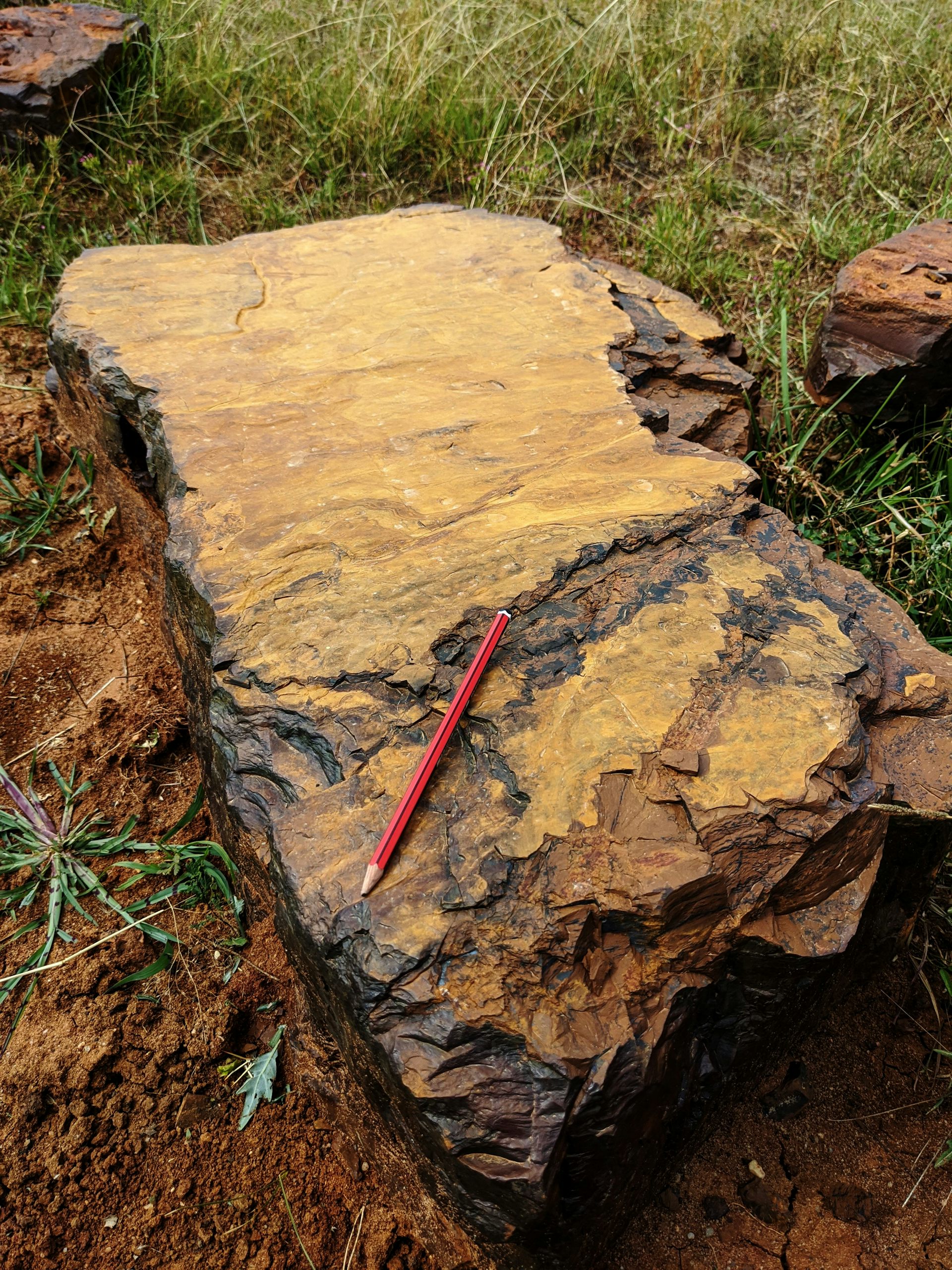
Strikingly red fossil-bearing rocks of McGraths Flat, composed of an iron-oxyhydroxide mineral called goethite.
Tara Djokic
McGraths Flat is made from a very fine-grained, iron-rich rock called ferricrete. It’s essentially a cement made from iron.
The ferricrete consists almost entirely of microscopic iron-oxyhydroxide mineral particles, each just 0.005 millimetres across. When an animal died and was buried in the sediment, this minute scale is what allowed the iron particles to fill every cell. The result? Extraordinarily well-preserved soft tissue fossils.
Compared with marine life, fossil sites preserving terrestrial life are notoriously rare. Terrestrial sites that preserve soft tissues? Even rarer. The exceptional detail captured in the McGraths Flat fossils reveals new snapshots of past life we don’t often get to find.
These fossils are so perfectly preserved that individual pigment cells in fish eyes, internal organs of insects and fish, and even delicate spider hairs and nerve cells can be seen.
This level of preservation rivals other well-preserved fossil sites, such as those consisting of shale or sandstone. Except here, they are entombed in iron.
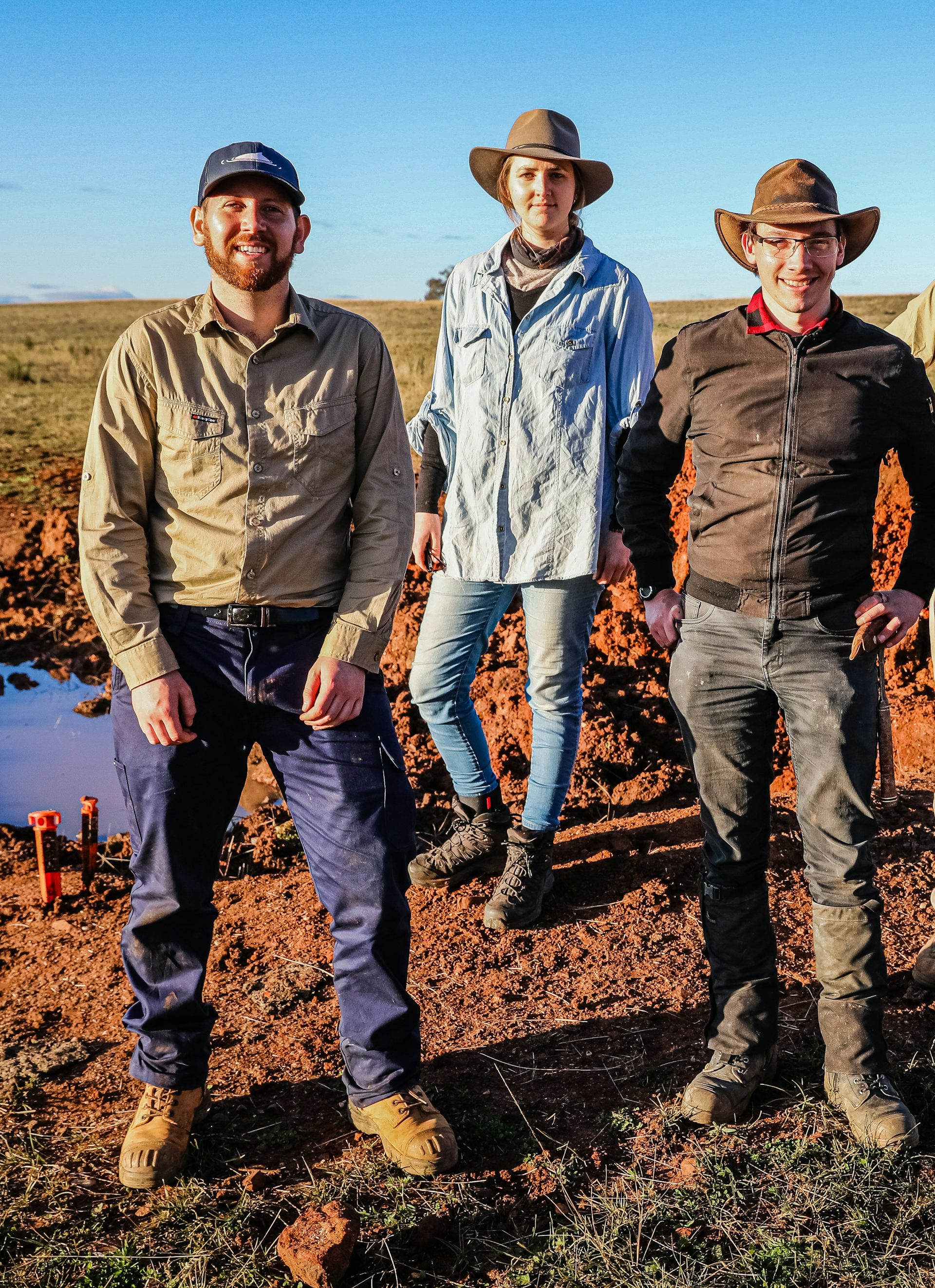
Australian Museum Research Institute researchers Matthew McCurry, Tara Djokic and Patrick Smith (left to right), three of 15 co-authors who collaborated on this study published in Gondwana Research.
Salty Dingo
Our new study sheds light on how this fossil site came to be – a crucial step for finding similar terrestrial fossil troves in iron.
McGraths Flat began forming during the Miocene when iron leached from weathering basalt under warm, wet rainforest conditions.
Acidic groundwater then carried the dissolved iron underground until it reached a river system with an oxbow lake – an abandoned river channel. There, the iron became ultra-fine iron-oxyhydroxide sediment.
It rapidly coated dead organisms on the lake floor and replicated their soft tissue structures down to the cellular level.
A new fossil roadmap
Understanding how McGraths Flat formed could provide a roadmap for finding similar iron-rich fossil sites worldwide.
Key features to look for include very fine-grained and finely layered ferricrete in areas where:
- ancient river channels cut through older iron-rich landscapes, such as basaltic rocks from volcanoes
- ancient warm, humid conditions once promoted intense weathering, and
- the surrounding geology lacks significant limestone or sulphur-containing minerals (such as pyrite), because these could interfere with the formation of the iron-oxyhydroxide mineral sediments.
The red rocks of McGraths Flat open an entirely new chapter in our understanding of how exceptionally well-preserved fossil sites can form.
The next breakthrough in understanding ancient terrestrial life might not come from traditional shale or sandstone fossil beds, but from rusty-red rocks hidden beneath our feet.
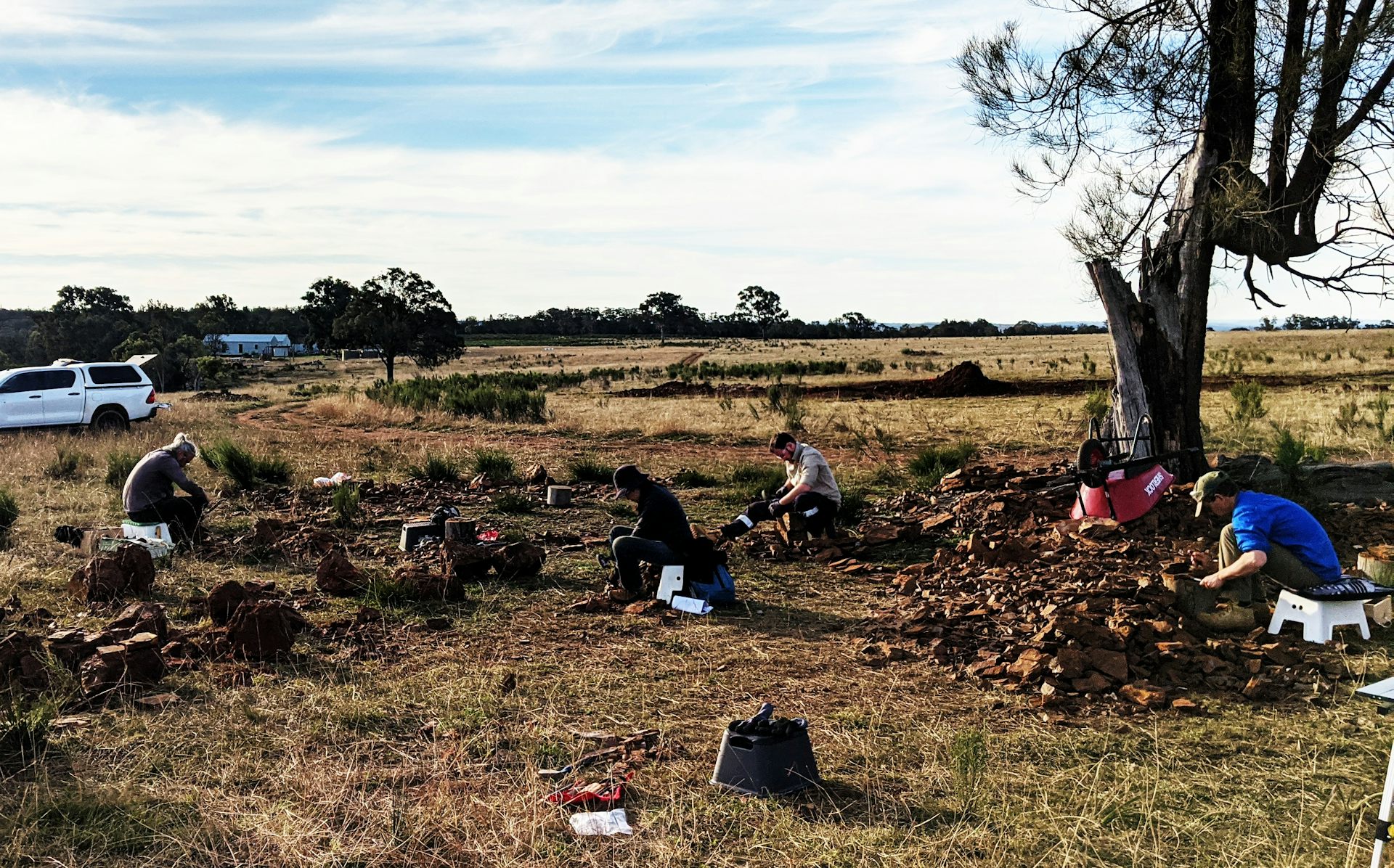
Palaeontologists from the Australian Museum Research institute at the McGraths Flat field site, splitting the red rocks apart with a hammer and chisel to search for fossils.
Tara Djokic
The study’s authors acknowledge the traditional custodians of the land and waterways on which McGraths Flat is located, the Wiradjuri Nation people.

Tara Djokic, Scientific Officer, Palaeontology, Australian Museum; UNSW Sydney
This article is republished from The Conversation under a Creative Commons license. Read the original article.


The lesson from McGraths Flat is not that the fossils are young, nor that science has somehow been embarrassed by finding unexpected preservation. The lesson is almost the opposite. Science found something surprising, investigated the chemistry, identified a plausible mechanism, and added a new class of fossil-preserving conditions to palaeontology’s growing catalogue of known taphonomic processes.
Creationism, by contrast, has no explanation to offer. It can only misrepresent discoveries like these, strip them of context, ignore the dating, ignore the chemistry, and pretend that “soft tissue” means “recent tissue”. But that is not an argument; it is merely a refusal to understand what has been found. Iron-mediated preservation does not rescue creationism from deep time — it helps explain how traces of ancient life can survive within it.
The fossils from McGraths Flat are therefore doubly inconvenient for creationists. They are 11–16 million years old, far older than any biblical chronology permits, and they show that delicate biological structures can persist in fossil form when the right geochemical conditions intervene. Once again, a supposed problem for evolution and deep time turns out to be a problem only for those who refuse to learn the science.
So, far from undermining palaeontology, these red rocks from Australia are expanding it. They show that exceptional fossil preservation is not magic, not mystery, and certainly not evidence for a young Earth. It is chemistry, geology and deep time doing what science exists to explain — while creationism is left doing what it does best: misunderstanding the evidence and calling the misunderstanding proof.
Advertisement
Amazon

Amazon

Amazon

Amazon

Amazon

Amazon

Amazon

Amazon

Amazon

Amazon

Amazon

Amazon

All titles available in paperback, hardcover, ebook for Kindle and audio format.
Prices correct at time of publication. for current prices.



No comments :
Post a Comment
Obscene, threatening or obnoxious messages, preaching, abuse and spam will be removed, as will anything by known Internet trolls and stalkers, by known sock-puppet accounts and anything not connected with the post,
A claim made without evidence can be dismissed without evidence. Remember: your opinion is not an established fact unless corroborated.