

One of the recurring problems for Bible-literalist creationism is that people were living ordinary human lives long before its chronology permits them to have existed. They were finding food, acquiring knowledge of local plants and developing habits that left recognisable traces on their bodies. Two ancient individuals from Sulawesi, Indonesia, now provide a particularly revealing example: their teeth preserve evidence of betel-nut consumption thousands of years before the supposed biblical Flood—and, in the older individual’s case, long before “Creation Week” itself.
The research, published in Science Advances, concerns two hunter-gatherers, one dated to approximately 25,000–16,000 years ago and the other to 7,600–6,300 years ago. Even the youngest end of the older specimen’s age range places that person well before the entire universe supposedly appeared, according to young-Earth creationism. The younger individual also predates the legendary genocidal Flood in conventional biblical chronologies; indeed, both individuals predate creation itself under the familiar approximately 6,000-year scheme. These are awkward people to accommodate in a history constructed from Genesis.
As the Griffith University news report, researchers detected arecoline, a psychoactive compound found in betel nut, in the individuals’ dental tissues. Both also had unusual rounded grooves in their teeth, interpreted as evidence of habitually sucking whole nuts. Experiments showed that soaking intact nuts in artificial saliva released enough of the compound to produce effects in laboratory receptor tests. Together, the chemical evidence, tooth wear and experiments make a strong case for an ancient practice of consuming a neuroactive plant.
There are sensible limits to the conclusion. Two individuals cannot establish how widespread the practice was, prove an uninterrupted tradition between their lifetimes, or tell us precisely why either person used the nuts. Nevertheless, they offer a striking glimpse of plant use among people living long before agriculture.
Their presence also implies an earlier history. These individuals belonged to populations whose ancestors had already reached Sulawesi and established themselves there. Their remains therefore mark points within an unfolding human story, rather than its beginning. The decisive chronological problem for creationism is not speculation about how quickly people could travel: it is the dated evidence that they were already there.
Then there is the supposed global Flood. A catastrophe capable of remodelling the Earth’s surface and depositing the geological record, as many Flood proponents claim, would also require an explanation for the survival of older archaeological remains in their recoverable contexts. Merely calling those remains “pre-Flood” does not resolve that problem. Here, as so often, the evidence reveals a deep human past that makes sense within archaeology’s chronology, while refusing to fit the compressed timetable of biblical mythology.
In addition to the Grifith University news report, five of the authors of the paper in Science Advances have also published an account of the research in The Conversation. Their article is reprinted here under a Creative Commons licence:

Ancient teeth reveal the Ice Age origins of the world’s 4th most common addictive drug
Betel nut fruits with a dehusked betel nut in foreground.
Credit A Brumm
Humans everywhere use mind-altering substances, from stimulants and narcotics to hallucinogens. Yet surprisingly little is known about how some psychoactive drugs were first discovered and incorporated into daily life.
In a study published today, we uncover the prehistoric roots of betel nut chewing. This widespread habit has a long and deep history in the Asia-Pacific region.
Betel nut is an addictive stimulant that induces mild euphoria and heightened alertness in users, among other effects, and high rates of mouth cancer among habitual users. After alcohol, caffeine and nicotine, betel nut is the world’s fourth most widely consumed psychoactive substance.

Where people chew betel nut. Inset: the Indonesian island of Sulawesi, with two sites with early use of betel nut shown.
Our new study, published in Science Advances, suggests betel nut use originated much earlier than previously believed – perhaps as long as 25,000 years ago. We also found evidence that the modern practice of chewing these palm seeds evolved from an older and simpler form of drug use – one that also carried health consequences.
Discovery reveals prehistoric drug use
It all started with our discovery of mysterious grooves in ancient human teeth.
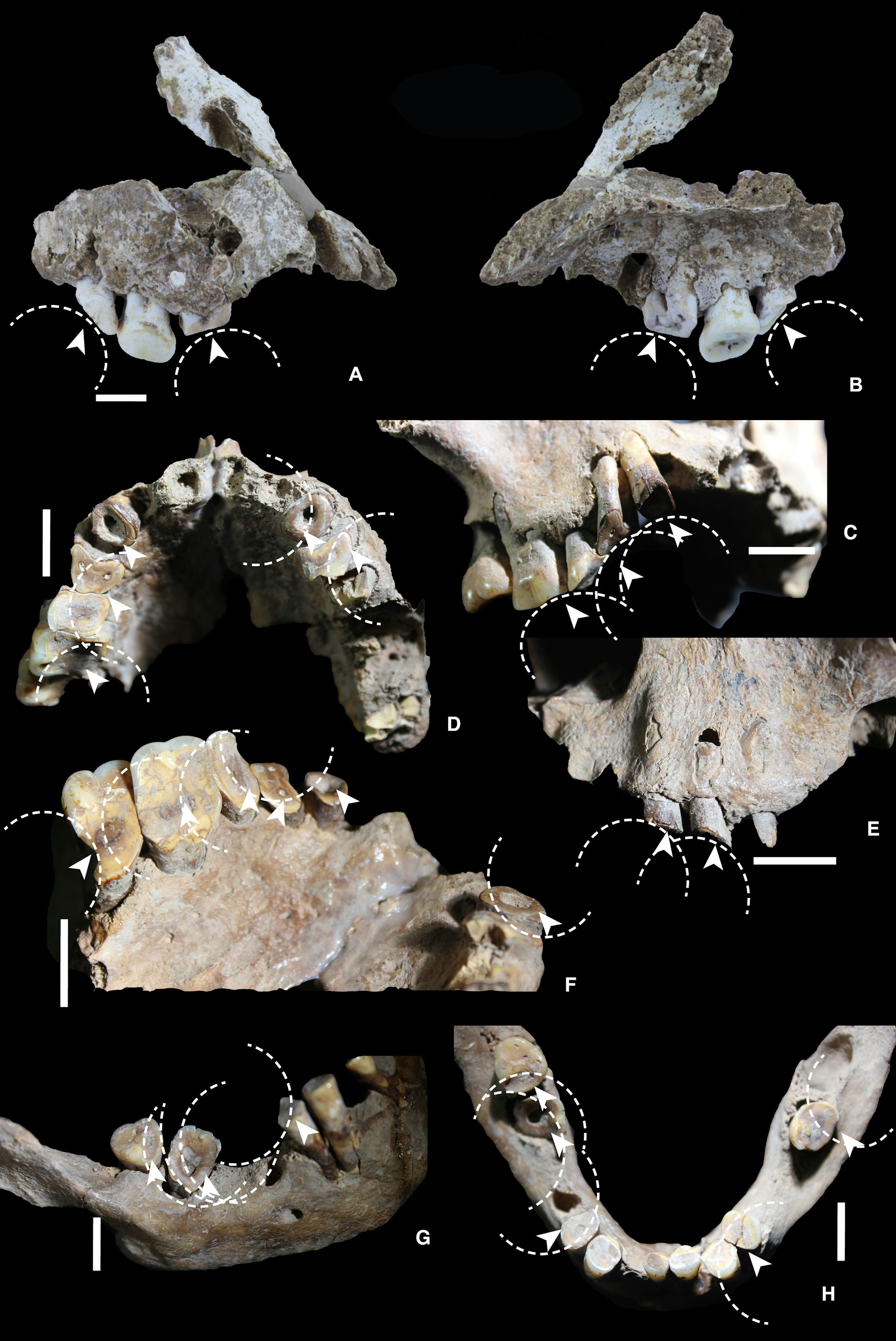
Ancient tooth grooves caused by betel nut-sucking, indicated with arrows. A-B: Fragment of an upper jawbone with three molars from a hunter-gatherer who lived around 25,000–16,000 years ago. C-H: The jaws of a hunter-gatherer dated to 7600–6300 years ago.
M. Vlok, CC BY
Although they lived at least 10,000 years apart, these individuals shared a common trait: deep, rounded grooves in some of their teeth. At first, this feature greatly puzzled us.
The grooves were unlike any previously documented form of prehistoric dental wear. They pointed to an unusual activity, performed repeatedly over a long period.
We eventually concluded that the hunter-foragers had regularly held a hard, roughly spherical object between their teeth while sucking on it for extended periods. Over time, the abrasion caused by this activity wore deep grooves into their teeth.
In one individual, this dental wear was so extreme that the sensitive pulp chamber, the “living core” of the tooth, had become fully exposed in several places. This would have been very painful.
What was the mystery object these foragers were sucking?
The grooves reminded us of the “clay pipe facets” seen in people from the colonial period. These were rounded notches worn into the teeth of habitual smokers who regularly clenched the abrasive stems of clay tobacco pipes between their teeth.
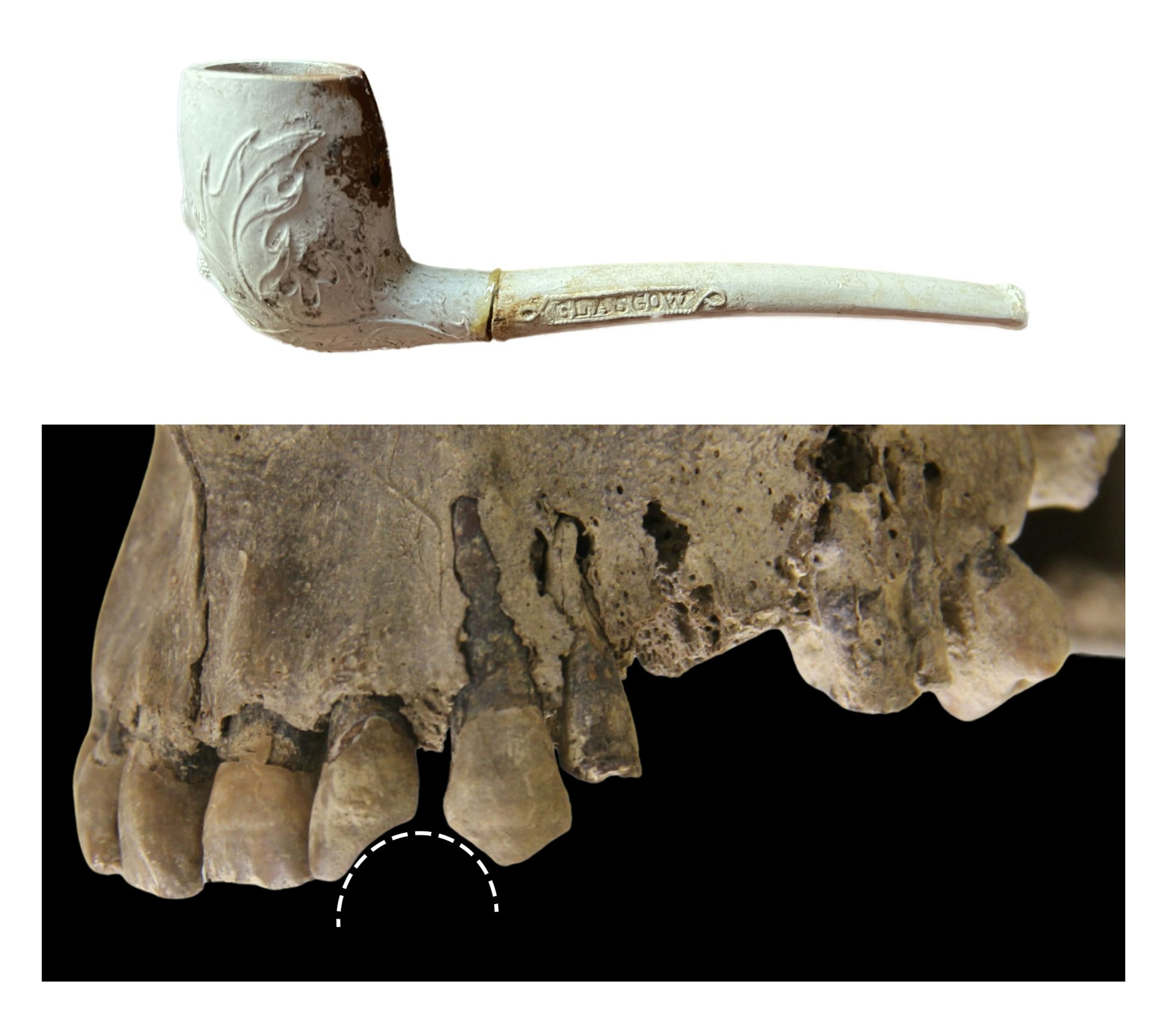
Top: historical clay pipe. Bottom: rounded notch (clay pipe facet) formed in the teeth of a habitual clay pipe smoker (~1860–1920 CE).
M. Langley / M. Vlok, CC BY
Like clay pipe facets, these telltale tooth marks may have been caused by a long-term drug-related habit.
How betel nut chewing began
Modern users consume betel by mixing an areca seed (the betel “nut”) with slaked lime – typically made by pulverising burnt shells, limestone, or coral – to form a “quid” that is chewed for its psychoactive effects.
Depending on local traditions, other ingredients may also be added. Slaked lime triggers a chemical reaction that allows the nut’s psychoactive compounds to be absorbed more rapidly into the bloodstream.
Betel quid chewing in modern New Guinea.

A Kol man from East New Britain with teeth stained red from chewing betel quid.
International Missions Board, CC BY-NC
We reasoned that, before the development of betel quid chewing as we know it, foragers simply sucked intact betel nuts.
Would this have had the same effect? We soaked betel nuts in artificial saliva and tested the resulting extracts on frog egg cells engineered to produce human brain receptors.
We found prolonged exposure of intact betel nuts to saliva does release the principal psychoactive alkaloid in these seeds, arecoline. So sucking alone is sufficient to liberate brain-altering compounds.
Biomolecular analysis also revealed the presence of arecoline in our ancient foragers’ teeth, confirming they had ingested betel nut.
So the results support our hypothesis: early hunter-foragers in Sulawesi were habitually sucking whole betel nuts.
Bad habits
While the psychoactive “high” of betel nut-sucking may have been milder than that of modern betel quid chewing, the habit was frequent and prolonged enough to dramatically reshape the teeth of its practitioners.
One reason for the habit may have been pain relief. Both individuals suffered from chronic dental problems, and arecoline has pain-killing properties.
But our findings hint at a cruel irony. The more these people sucked betel nuts, the more damage they inflicted on their teeth. Yet because areca seeds can help dull pain, worsening dental disease may have compelled them to continue the habit.
The world’s first habitually used drug?
Current models suggest the first traditions of psychoactive drug use, including the production of fermented alcoholic drinks (barley beer), can be linked to the Neolithic advent of farming about 12,500 years ago.
But betel nut use can now be traced to Ice Age Sulawesi, with the nut-sucking practice emerging by 16,000 years ago, and perhaps as early as 25,000 years ago. This was long before the onset of farming.
At some stage, the custom appears to have evolved into the far more potent form of betel quid chewing that remains common today.

Betel nut-sucking may be the earliest recorded evidence for habitual drug use.
A. Brumm, CC BY-SA
Our study does suggest, however, that the habitual use of some plant drugs has deep roots in our species’ history. What’s more, early hunter-foragers were already experiencing health consequences from long-term use.

Adam Brumm, Professor of Archaeology, Griffith University; Carney D. Matheson, Associate Professor, School of Environment and Science, Griffith University; Fakhri, Researcher, Centre for Archaeometry, Badan Riset dan Inovasi Nasional (BRIN); Melandri Vlok, Lecturer, School of Dentistry and Medical Sciences, Charles Sturt University, and Roger Papke, Professor of Neuroscience, University of Florida
This article is republished from The Conversation under a Creative Commons license. Read the original article.


These two individuals add a remarkably personal detail to the evidence for humanity’s deep past. Long before farming, writing or the composition of Genesis, people on Sulawesi were using a plant whose chemistry could alter their physiological state. We cannot know precisely what motivated them, or how widely their habit was shared, but their teeth preserve evidence of behaviour that would otherwise have disappeared from the archaeological record.
For young-Earth creationism, the difficulty begins with the dates. Even the youngest estimate for the older individual places them thousands of years before the supposed creation of the universe. The younger individual also lived before the conventional biblical date of the Flood—and before creation itself under the familiar 6,000-year chronology. Their ancestors, meanwhile, must already have reached Sulawesi. These were people living within an established human history, not waiting for a biblical narrative to authorise their existence.
Invoking a global flood merely introduces another problem: explaining the preservation and archaeological context of evidence older than a catastrophe supposedly capable of reshaping the planet’s surface. Declaring the dates wrong because they contradict Genesis reverses the proper relationship between evidence and explanation. A chronology must accommodate the evidence; the evidence is under no obligation to accommodate a chronology derived from scripture.
The contrast with the scientific approach is straightforward. Researchers combined dental wear, chemical analysis and experiments to investigate a specific question, while leaving room for uncertainty about motives and the extent of the practice. Nothing in that explanation requires a predetermined story. Once again, ordinary traces of ancient lives reveal a past far longer, richer and more interesting than biblical literalism allows.
Advertisement
Amazon

Amazon

Amazon

Amazon

Amazon

Amazon

Amazon

Amazon

Amazon

Amazon

Amazon

Amazon

All titles available in paperback, hardcover, ebook for Kindle and audio format.
Prices correct at time of publication. for current prices.



No comments :
Post a Comment
Obscene, threatening or obnoxious messages, preaching, abuse and spam will be removed, as will anything by known Internet trolls and stalkers, by known sock-puppet accounts and anything not connected with the post,
A claim made without evidence can be dismissed without evidence. Remember: your opinion is not an established fact unless corroborated.