Showing posts with label India. Show all posts

Thursday, 30 April 2026

Refuting Creationism - The Giant 50 Foot Snake Deity, Vasuki , of Hindu Mythology - The Fossil Evidence?


Vasuki indicus,
Nāgarāja (Serpent King) of Hindu mythology
AI-generated image (ChatGPT 5.4 Thinking)

A colossal prehistoric snake, Vasuki indicus, may have rivaled the largest snakes in history, stretching up to 50 feet long. Fossils from India suggest it was a slow-moving ambush predator and part of a widespread ancient snake lineage.

Credit: AI/ScienceDaily.com.
50-foot ancient snake discovered in India may be one of the largest ever | ScienceDaily

An open access paper published in Scientific Reports in 2024 describes an astonishing giant snake from India which, in life, may have reached up to about 50 feet in length. Ignoring, for the moment, the inconvenient age of the fossils, its existence bears an eerie superficial resemblance to the mythical Hindu serpent king, Vasuki.

Imagine the unbounded joy and celebration there would be if creationists were finally presented with fossil evidence that appeared to confirm one of their favourite myths, giving them something more tangible than the written-down stories of Bronze Age pastoralists.

Strangely, though, there have been no such celebrations over evidence which, superficially at least, appears to echo Hindu mythology. It is almost as though creationists understand perfectly well that religious myths are just that — myths — and that any evidence which appears to support someone else’s mythology can be dismissed without a second thought. Unless, of course, it happens to be their own mythology, in which case coincidence, metaphor and wishful thinking are suddenly promoted to “evidence”.

Named by its discoverers Vasuki indicus, the snake is estimated to have been between about 11 and 15 metres long, making it one of the largest snakes ever known. The genus name comes from Vasuki, the great serpent king of Hindu mythology, often depicted coiled around the neck of Shiva. Vasuki is one of the mythological nāgas associated with serpent worship, including the Hindu festival of Naga Panchami.

However, as a supposed source of the Vasuki myth, there is one small snag: Vasuki indicus lived about 47 million years ago, in the early Middle Eocene, a mere 19 million years after the end-Cretaceous mass extinction that ended the reign of the non-avian dinosaurs. That is long before humans, long before language, long before writing, and long before any culture capable of inventing and transmitting religious mythology existed. Like all religious mythology, the stories of Vasuki arose much later in human history — not in the Eocene swamps of India, and certainly not as a folk memory of a snake that had vanished tens of millions of years before there were any people to remember it.

The fossil vertebrae of Vasuki indicus were discovered in the Panandhro Lignite Mine in Kutch, Gujarat State, western India, and described by Debajit Datta and Sunil Bajpai of the Department of Earth Sciences, Indian Institute of Technology Roorkee, Uttarakhand, India. The remains consist of 27 mostly well-preserved vertebrae, some still articulated, from what appears to have been a fully grown animal. The authors identify it as a member of the extinct madtsoiid snake family and suggest that it represents a distinctive Indian lineage of large-bodied snakes. ([EurekAlert!][2])

The accompanying Springer Nature news release, reproduced by EurekAlert!, is available here. The original Springer Nature press release is accessible to accredited journalists only.

Tuesday, 18 January 2022

Anger as an Indian Court Acquits Catholic Bishop of Charge of Repeatedly Raping a Nun

Bishop Franco Mulakkal
Judge ordered acquittal of charge of raping a nun
Kerala court clears bishop in nun's rape | BBC

In a verdict which shocked and angered the leaders of women's groups who supported the nun, sessions Judge G Gopakumar, in a brief order last Friday, declared that the prosecution had failed to prove all the charges against Bishop Franco Mulakkal, Bishop of a diocese in Jalandhar in the Punjab, Northern India. His accuser was a nun in the Missionaries of Jesus, a congregation from Kerala, that is part of the Jalandhar diocese. The prosecution case was hampered by the sudden death in October 2018, of Father Kuriakose Kattuthara, a key witness, vociferous supporter of the nuns and a critic of Bishop Mulakkal.

Readers of this blog may remember how the nun finally went to the police after repeated complaints to the Church authorities, and a letter to the Pope, were met with indifference. Several other nuns from the mission also came forward with allegations of harassment, intimidation and sexual assault by priests.

As head of their diocese, Mulakkal wielded immense power over the mission, including budgets and job allocations. His response to the accusation was to claim that Sister Villoonnickal of trying to blackmail him into giving her a better job. Sister Villoonnickal is one of the nuns who supported the accuser. A prosecution was only brought after a prolonged campaign including public demonstrations, which themselves were met with persecutions, bullying and vilification of the victims and expulsions.

Sister Josephine Villoonnickal, left, sister Alphy Pallasseril, center, and Sister Anupama Kelamangalathu, at St. Francis Mission Home, in Kuravilangad.
Credit: AP Photo/Manish Swarup
Sister Lucy Kalappura, a member of the Franciscan Clarist Congregation and a teacher at Sacred Heart High school at Dwaraka, Kerala, who was at the forefront of protests against Mulakkal and one of the five nuns who took part in a sit-in near the Kerala High Court in Kochi, was removed from her teaching post and expelled from the Franciscan Clarist Congregation.

According to Sister Villoonnickal, the rapes took place in Room 20 of a small convent at the end of a one-lane road in rural Kerala. She alleges that every few months, Mulakkal would visit the St. Francis convent and summon the nun. Then, according to a letter she wrote to church officials, he raped her, a total of thirteen times; the first time on May 5, 2014; the last time on Sept. 23, 2016. The dates of these visits are corroborated by entries in the convent’s visitor logs.

Reports of the sexual abuse of Catholic nuns in Karela, one of the oldest Christian communities in India, are widespread. Legend has it that Christianity was brought to southern India by St Thomas the apostle, in 56 AD.

Rural Indian Christian culture is one of deference to male authority and especially to the authority of Catholic priests. Nuns are required to be celibate and any who admit to sexual experience, even non-consensual, risk alienation and even expulsion from their order, so there is enormous social pressure on them to comply with the demands of priests and then to keep silent about it. Some are so naive they may even think it is normal and even part of their duty to minister to a 'celibate' priest's needs. Some may even blame themselves for the assault.

Often these offences take place in private and the nuns are reluctant to report it immediately, so there is never any forensic or medical evidence of the offence and any trial comes down to one word against another.

The scandal surrounding the allegations, the obstruction by the Church and the arest of Mulakkal prompted the Pope to admit publicly that the abuse of nuns by priests was a problem the Church needed to confront, admitting for the first time that his predecessor, Pope Benedict, had been forced to shut down an entire order in which nuns were being kept as 'sex slaves' for priests. It also prompted Archbishop Kuriakose Bharanikulangara of Faridabad, a former Vatican diplomat, to issue an apology to the victims of sexually predatory priests.

However, Kerala Catholic Bishops’ Council defended Mulakkal and criticised the nuns who campaigned for justice, accusing them of helping "the Church’s enemies to attack it and its leaders and disdain the Sacraments, causing much pain to all those who love the Church." Three bishops showed their support by visiting Mulakkal in prison during the three weeks he spent in custody before being released on bail.

The prosecution has announced that they will be appealing against the acquittal, to the Indian High Court.

Tuesday, 1 May 2018

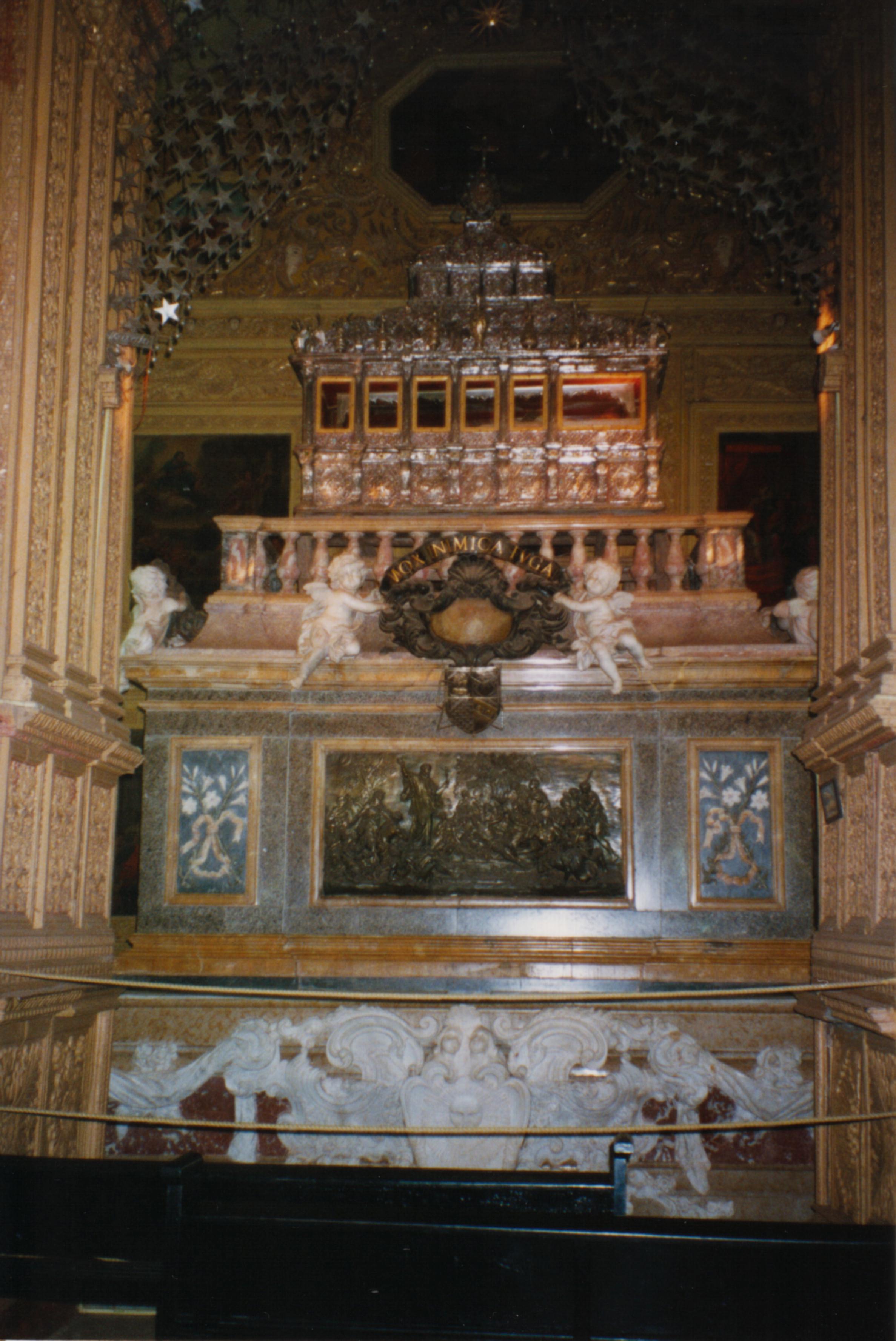
Lessons From Goa - Saint Francis Xavier


Body of Saint Francis Xavier in a silver casket of Basilica of Bom Jésus in Goa.
source: Wikipedia
While on a recent vacation in Goa, India we were treated to a guided tour of some of the historic places, including the UNESCO World heritage church of Bom Jésus (Good Jesus in Portuguese - is there a bad one?).

This church is notable mostly because it contains the remains of St Francis Xavier, co-founder of the Jesuits with St Ignatius Loyola.

The body of St Francis is allegedly incorruptible. Our guide assured us that it is exactly as St Francis was in life, despite being buried and exhumed multiple times before being placed in the air-tight silver casket. Curiously, given the importance of such miracles, this incorruptibility of St Francis' body is tantalisingly displayed through little windows showing selected body-parts barely visible from ground level as the casket is mounted some twenty feet up in an elaborate shrine, richly endowed with gold, silver and precious stones, presumably in tribute to his vow of poverty. Who wants to look directly at a rotting corpse?

What can be seen of the body suggests, if the legend of incorruptibility is true, that St Francis had the appearance of a blackened and desiccated corpse in life, which is curious because a statue of St Francis, which our guide assured us was a miraculously accurate statue, perfect in every details, shows him to be on the short side but otherwise a perfectly normal European, albeit with a rather strange posture.

Web Analytics