Sunday, 29 May 2011

Jesus and the New Deal

Time and again, whenever you point out the immorality in the Old Testament, things like the command to kill disobedient children and to stone a raped woman if she didn’t scream loudly enough; sanctioning slavery, selling daughters, genocide, etc, you’ll be told that Jesus overturned all that. That Jesus brought with him a ‘new covenant’ or a new deal between Man and God.

You’ll be told this despite the very clear statement to the contrary:
Think not that I am come to destroy the law, or the prophets: I am not come to destroy, but to fulfil. For verily I say unto you, Till heaven and earth pass, one jot or one tittle shall in no wise pass from the law, till all be fulfilled.

Whosoever therefore shall break one of these least commandments, and shall teach men so, he shall be called the least in the kingdom of heaven: but whosoever shall do and teach them, the same shall be called great in the kingdom of heaven.
Well, let’s grant that this passage by Matthew was a mistake (and not just Jesus telling a little porky pie or something added later by some scribe or other to justify something else he was pushing at the time). Let’s grant that Jesus did come to abolish the OT laws and start over again with some new ones.

Basically, what we’re accepting now is that God realised there were so many mistakes in the Bible as it was then, that he needed to send someone to correct them all. Of course we need to suspend belief that an inerrant god wrote the Bible in the first place otherwise we would find it impossible to think there was anything in the Bible which needed correcting.

But let’s indulge our fantasy a little longer see where we get to.

We now have a situation where we ‘know’ Jesus came to overthrow, or at best to correct the Old Testament, because of all the mistakes in it. And we know this for certain because we can read about it in the Bible, which doesn’t have any mistakes in it...

Oops!

Well, let’s ignore the obvious contradiction there and press on.

We also know that we need the salvation that Jesus offers us, in other words, we need to sign up to the New Deal, because it says in the Old Testament, which Jesus has overthrown (or corrected), that we are all sinners...

And we know this because it says so in the inerrant Bible, which Jesus has overthrown (or corrected)...

Forgive me if I started to go round in circles there trying to follow the circular logic...

Even some otherwise intelligent adults will tell you this with complete conviction and will even tell you you have gone wrong if you can’t see the good sense in it...



submit to reddit


Friday, 27 May 2011

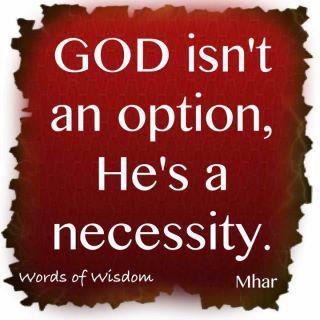
The God of Personal Necessity


Words of Delusion
This is probably the second most popular religious fallacy and, like the God of the Gaps fallacy is accepted by very many otherwise intelligent people. Like the God of the Gaps fallacy it too is so ludicrous when spelled out that it's astonishing that it's even attempted, yet it crops up time and again in discussion with believers of all creeds.

It takes several forms but essentially the argument is always, there must be a god otherwise the consequences would be [something undesirable, unpleasant or otherwise unacceptable].

Some examples are:

Wednesday, 25 May 2011

God of The Gaps


Almost invariably, any discussion with Creationists or advocates of their thinly disguised pseudo-scientific version, Intelligent Design, will revolve around their challenge to explain how something happened. Popular subjects are:
  • How could matter come from nothing
  • How could ‘life’ come from non-life
  • How could an eye evolve
  • Who created the law of gravity
  • Any other gap in understanding / knowledge / education

Ignoring for a moment the fact that all these questions have been addresses or are being address by science and are firmly within the domain of science, what’s going on here? What we have are various different versions of the God of the Gaps argument which seems to convince so many Creationists and even some intelligent Christians, Muslims or Jews. Creationists apparently find this utterly convincing, even citing the erroneous claim that these questions can’t be answered by science as their reason to believe in their god.

But... There are three huge and inescapable assumptions here, even if we allow that some questions have not been fully answered yet by science.

Sunday, 22 May 2011

God The Sadist Almighty


If we are to believe the Old Testament, the God of the Jews, Christians and Muslims is inerrantly omniscient; it knows all things past, present and future. It knows absolutely, and in every last detail, everything about you and your future.

If you’re bound for Hellfire, as all Christians, Jews and Muslims believe many or most of us are, the Biblical god has always known this, for all time, way before it created you. It created you in the sure and certain knowledge that you would end up being thrown into the fiery lake of Hellfire.

How then is this god any different to a man whose hobby is breeding kittens to throw them into a fire, or to pour petrol (gasoline) on them and throw a match onto them? If you knew of such a man in your street, what would be your opinion of him?

Thursday, 19 May 2011

Is Religion a Phobia?

‘God-fearing’: a term used approvingly by Christians and no doubt by Jews and Moslems, as well as other monotheist traditions, to describe those of their religion who believe in their god and act according to its directions as revealed in their respective holy books or by the priests and prophets who represent it.

But what if we substitute the word ‘spider’ for god? What if we talk about spider-fearing people? How about closed spaces, or open spaces; about lifts or flying; about walking through doorways or using new technology?

Would we consider those who feared any of these things rational and worthy of special respect because of their fear, or would we maybe see their condition as a problem which they need help and support to overcome? Would we see it as something which they could, given time and the right treatment, eventually overcome and return to living a normal life?

What I’m talking about here is morbid phobia; irrational, life-changing fears. The sort of fear which becomes part of the sufferer’s identity and around which they, and their family, may have to fit their life and take special measures to accommodate.
A phobia is defined as an irrational and intense fear of a specific object or situation. Phobias are classified as anxiety disorders by the Diagnostic and Statistical Manual (4th Ed; DSM-IV)

So, how much of a religious person’s life is conditioned by God-fearing, or theophobia to give it it’s correct medical name? How much of a religious person time is spent thinking about their god, and how to avoid it hurting them? How much time is spent seeking its forgiveness or its approval for fear of the consequences of not doing so? How much time do they spend assuring it of their ‘love and obedience’ and otherwise trying to placate, reassure and mollify it?

The answer of course is a great deal of it. Their 'faith' often defines them as people. Asked to describe themselves, most fundamentalists will immediately identify with their religion. "I am a Christian/Moslem who...".

Unlike other phobia, where the response is avoidance and even fleeing the scene, with an omnipresent god this is not an option. The only recourse is to bargain and try to placate and curry favour with it. Watch the reaction of a seriously arachnophobic person to the suggestion that they come close and examine a harmless spider to see for them self there is nothing to worry about. Try talking to them about how a spider's eyes work, or how their silk is made. Now compare that to the reactions of a seriously devout religious fundamentalist when you ask them to examine a few simple questions about their god. Questions like, "Can it create an object so heavy it can’t lift it?", or "Can it create a Euclidean triangle whose internal angles don’t add up to 180 degrees?"

Forced to confront questions of this sort, many religious people can become extremely aggressive, often resorting to verbal abuse and threats, and frequently by avoidance techniques, and even casting protective spells in the form of quotes from their hand-book of ‘faith’ or by attempting to mollify their god by telling you they will ‘pray for you’; even calling on others to assist in this ritual. They clearly perceive these harmless questions as a serious threat much as an arachnophobe perceives a harmless Tegenaria or Araneus not as a thing of beauty but as an object of terror, and so show symptoms of irrational fear.

It’s my contention that much of the behaviour of religious people, especially fundamentalists, is the result not of faith, but of fear; the severity of symptoms being directly related to the degree of extremism of belief from moderate to fundamentalist.

I contend that religion is merely a phobia inculcated into people in childhood by parents and authority figures who suffer from it themselves and who are afraid to NOT infect their unfortunate children with it, just as some sufferers feel compelled to mutilate their children's genitalia. These children often grow up too afraid even to think of escaping from the phobia and so the cycle is repeated in the next generation.

Religious peoples’ irrational responses, irrational behaviour and irrational reasoning is a direct consequence of an irrational, morbidly paranoid phobia – theophobia. We should recognise religions for what they are and call them by their name.


submit to reddit


What Does Rapture Theology Say About Christians?


Why do some Christians crave for the 'Rapture'? What do they think it'll do for them?

And what does this tell us about their morality and their 'Christian love' for their fellow man?
  • The greatest event they can imagine is their god destroying all life on Earth, especially those humans who don't share their 'faith'.
  • They believe that they alone, of all the humans who have ever lived, and of all the human societies throughout history, have got it right; everyone else, without exception, got it wrong.
  • They believe they will be given a grandstand seat to watch everyone else suffering eternal agony, and that this will be a reward for being such good people.
  • They believe they are such good people that they deserve to have everything for themselves when all the 'undeserving' humans have been killed off.
  • They believe they alone are good enough to occupy an exalted place alongside their god whom they believe is creator and ruler of the entire Universe. No one else is, or has ever been, that special.
  • They know this because they have been told by someone else that it's true and despite the complete lack of any corroborating evidence. They believe it simply because they can't imagine NOT being that special.

They actually think that watching other people, and even their loved ones, suffering unimaginable horrors is a reward!

And these Christians condescend to lecture other people on matters of morality, ethics and love, and demand the right to meddle in our legislatures, our courts, our schools, our science, and in all aspects of our lives, including what we do in the privacy of our own homes...

[Later note] If any Christians feel they've been unfairly tarred with the same brush, perhaps they would explain why they don't believe in the Second Coming of Jesus.

The Evolution of Gullibility.


Gullible: easily fooled or cheated ; especially: quick to believe something that is not true
(Miriam-Webster’s http://www.learnersdictionary.com/search/gullible)

Atheists are often quick to point out that religious people are usually religious because they were indoctrinated as children when they were young and gullible. They point to the strong association between geography and religious belief so that you can make a guess about the religion someone was brought up with based on where they were born. In some parts of the world, the Balkans and Northern Ireland for example, this often holds down to the level of the town or village or even the street or housing estate you were born in.

This of course strongly suggests that religious ‘faith’ isn’t something which most people arrive at through independent thought or through examination of the evidence; rather is suggests that they were given their beliefs by their parents, their peers and authority figures in their immediate culture. Any later justification for that belief in terms of presumed evidence or ‘personal experience’, or on the basis of ‘faith’ alone, is a post hoc rationalisation of pre-existing beliefs. For example, if someone has a ‘religious experience’ it is rare for them to interpret this as anything other than a manifestation in some form of the god they were brought up to believe in or in whom many or most of their friends and associates believe. It is rare for a ‘religious experience' to result in conversion to a ‘foreign’ religion. The same applies to so-called out-of-body experience where recalled memories recorded by a malfunctioning, usually anoxic, brain are often interpreted in terms of the locally popular religion.
Web Analytics