Spare a thought for Christian apologists. It must be awful for them - apart, that is, from all the money that the more devious ones get from their credulous customers in return for cognitive dissonance trauma therapy in the form of books, speaking engagements and TV chat and televangelist show appearances. Imagine what it must be like having to promote fallacies for a living like, to paraphrase Christopher Hitchens, "...an unctuous merchant in a bazaar come before us with ingratiating smirks and outspread hands, offering consolation and solidarity and uplift, competing as they do in a marketplace".
 But what makes it worse for them is that the Bible itself so frequently flatly contradicts them and pulls the rug out from under their feet, so they have to plough on regardless, hoping no one has noticed. Take, for instance the stock-in-trade fall-back position when all the logic has failed and every argument has been defeated yet again - that their god is eternal and exists outside space an time and so doesn't need to be explained because the evidence bar is at ground level, whereas science of course is required to jump an impossibly high bar and provide proof of the origins of everything, including, so it seems, the origin of the nothing before there was something, whilst conceding that there was time and space before there was space-time.
This tactic is used to make several apologetics 'arguments' look to the unsophisticated both logical and honest, particularly:

- The Cosmological Argument, where apologetic salesmen claim the right to assume that everything requires an explanation in terms of cause, except their god which is granted a free pass to make the logic work.
Briefly:
- Whatever begins to exist has a cause.
- The Universe began to exist.
- Therefore, the Universe had a cause.
Originally devised by Al-Ghazali to 'prove' the existence of Allah (and therefore that the Qur'an is the literal word of Allah), it has since been purloined by William Lane Craig who earns his living using it to 'prove' the existence of the Christian God (and therefore that the Bible is the literal word of the Christian God). - The Ontological Argument devised by Anselm, Archbishop of Canterbury under William II of England. Briefly, this argues that, because a necessary aspect of perfection is existence, and because one can conceive of a perfect god, such a god must exist. (No really!). Believe it or not, this is still trotted out despite being refuted by, amongst others, Thomas Aquinas, David Hume and Immanual Kant, and by being so obviously an absurd attempt to define God into existence which, if it were true, could be used to define anything one wishes into existence. Shame about the manifest fact that it only works for imaginary invisible things but never for real things.
It is of course nothing more than the anthropocentrically arrogant view that a god must exist because one is necessary for the believer and a vindication of the view that man creates gods in his own image. - The Teleological Argument, also known a 'Paley's Watch' which argues that the appearance of design implies a designer and, since living things look like they were designed, there must be a designer (which is of course, the Christian God if you're a Christian; Allah if you're a Muslim, and whichever your favourite creator god is if you happened to have parents brought up in a different 'faith').
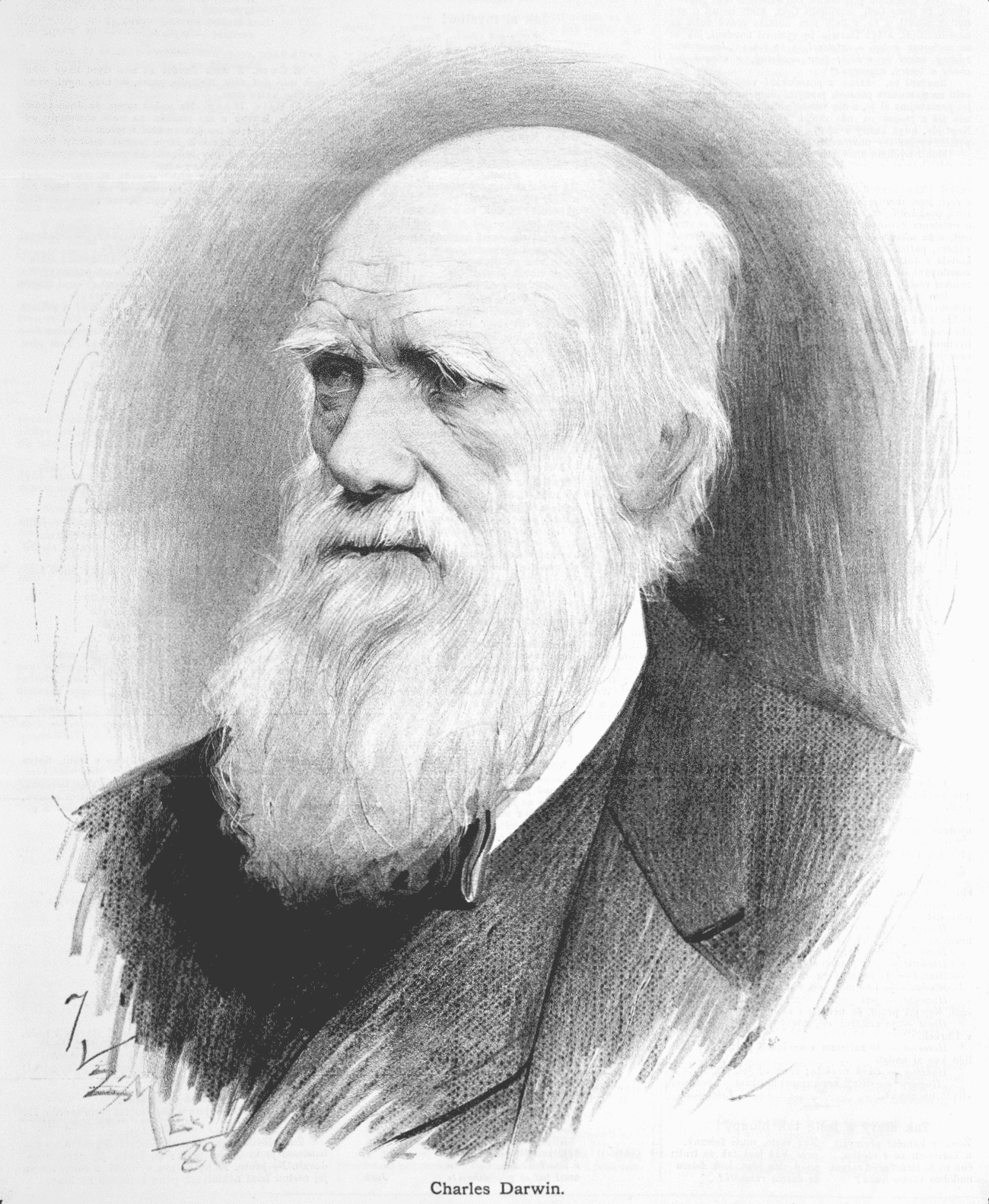
This was refuted by Darwin and Wallace in 1859 but is never-the-less still trotted out by and to people who have managed to remain ignorant of descent with modification and the power of natural selection to produce the semblance of design by a natural process. Some religious apologists earn their living by providing their customers with reason to maintain this ignorance and to convince themselves that this ignorance trumps anything science can produce.
It ignores the obligation to apply the argument to their own god who is, naturally, granted an exemption from the need to have its design explained. "But [insert designer god] has always existed so doesn't need to have it's origins explained!"


The problem for all these standard arguments however, is that whoever wrote the Bible failed to anticipate that future apologists were going to need this fall-back, get-out-if-jail-free card in order to get round the fact that there was no evidential or logical support for the notion they were writing about, and promptly scuppered the whole thing with the following passage reporting what one of the prophets claimed God had told him:
Ye are my witnesses, saith the Lord, and my servant whom I have chosen: that ye may know and believe me, and understand that I am he: before me there was no God formed, neither shall there be after me.
Isaiah 43:10
Oops!
So, Isaiah says that God says that he had a beginning and will have an end, and that before him there were no gods and there will be none after him. God also says that gods are 'formed'. To make matters worse, this is the same prophet whom Christians love to claim prophesied the birth of Jesus, so 'proving' that Jesus was who they claim he was. Obviously what's happened here is that the writer assumed all that was then known was all that was going to be known, so never anticipated apologists coming up against the arguments science can now put forward, so never imagined so much would hinge on them getting away with persuading people that God is eternal as a escape clause.
So, Christian apologists, in view of the fact the God says he is not eternal and has not existed for ever, but was once 'formed', how do you answer the following:
- What caused God?
- How can a perfect god be imperfect in that one day it will cease to exist and once had no existence?
- Who or what designed God, or what natural process gave it the necessary complexity to be able to create the Universe and monitor and record all human thoughts and actions?
Alternatively you could explain why you disagree with what God said in the Bible and by what process do you came to know better than the god whom you claim created everything and knows all?
You might need to spend a while thinking up the answers, or maybe you could send the questions to William Lane Craig, or whomsoever is your current favourite 'leading' apologist, asking them to come up with an answer. It must be awful for you trying to eke out a living by denying the very thing you are being paid to promote and having to struggle to present arguments that even your supposedly omniscient god says are false.
I bet you sometimes wished you had chosen a more honest way to earn a living, don't you?