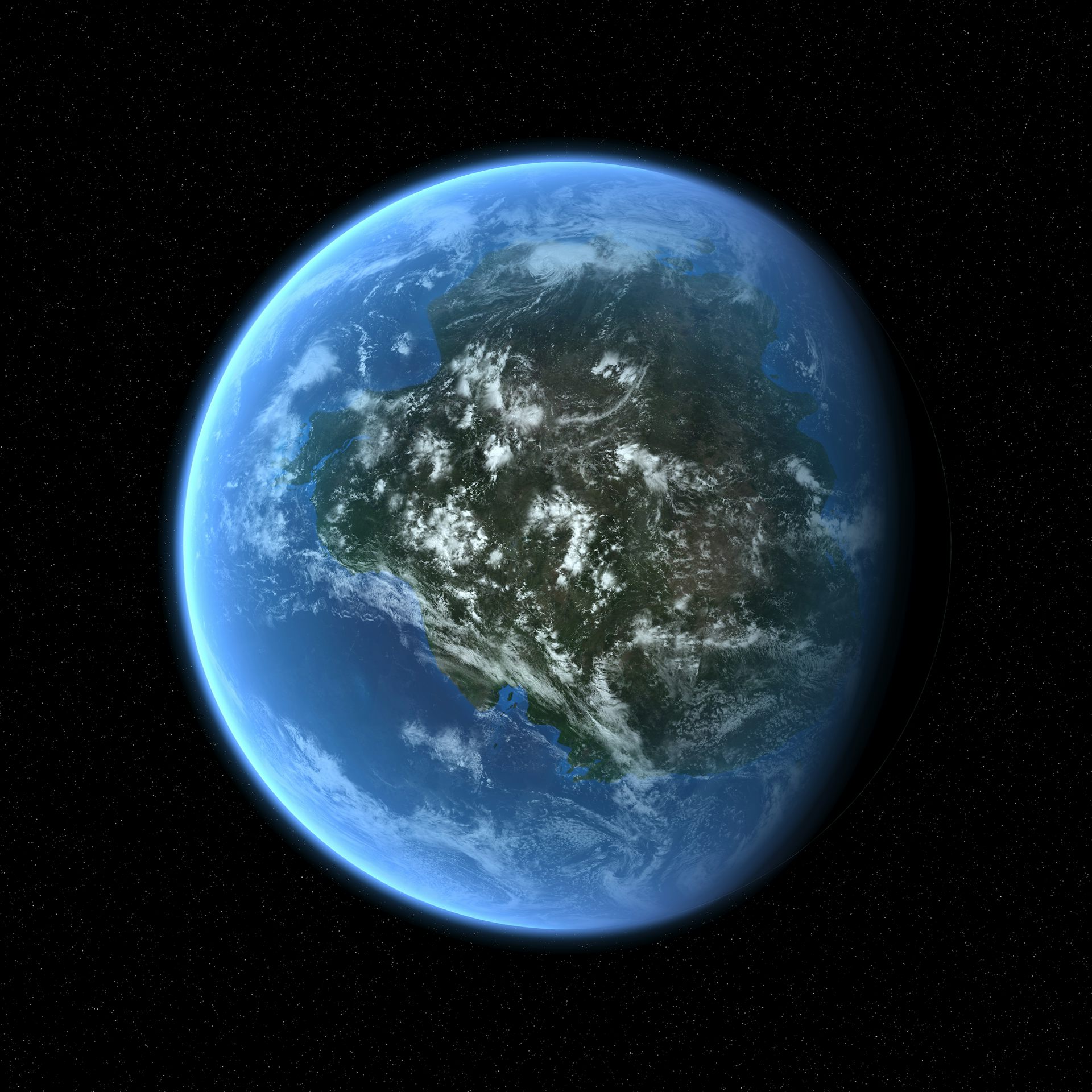

Reconstruction of Greater Gondwana at ca. 500 Ma or at 550 to 500 Ma compared with conventional paleogeographic interpretations (inset).
From: Tao Wang et al.(2026).
More than half a billion years before the supposed ‘Creation Week’ of biblical literalism, moving continents were reshaping the planet and helping to establish the environmental conditions in which early animals diversified. That is the inconvenient historical setting of new research into Gondwana: a vast continental assembly whose formation, geological activity and subsequent fragmentation belong to a timescale that bears no resemblance to the few thousand years allowed by young-Earth creationism.
A paper in Science Advances , by Tao Wang of the State Key Laboratory of Deep Earth and Mineral Exploration, Institute of Geology, Beijing, China, and colleagues, suggests that Gondwana was substantially larger than conventional reconstructions show. As co-author Bill Collins explains in his accompanying account in The Conversation, isotopic evidence in granites identifies ancient continental material now concealed beneath younger geological formations across much of Asia. Including these overlooked fragments increases Gondwana’s estimated share of Earth’s continental landmass to roughly 80 per cent, making it a supercontinent even under a restrictive definition of that term. This reconstruction concerns the world of approximately 550–500 million years ago.
Its significance extends beyond redrawing an ancient map. The researchers propose that the reorganisation of plate boundaries associated with Gondwana’s assembly established an enormous belt of volcanic activity. Sustained emissions of greenhouse gases could then have helped alter the climate, contributing to conditions favourable to the diversification of Cambrian life. This is a proposed connection between geological and biological change, rather than a demonstration that volcanism alone caused the Cambrian radiation.
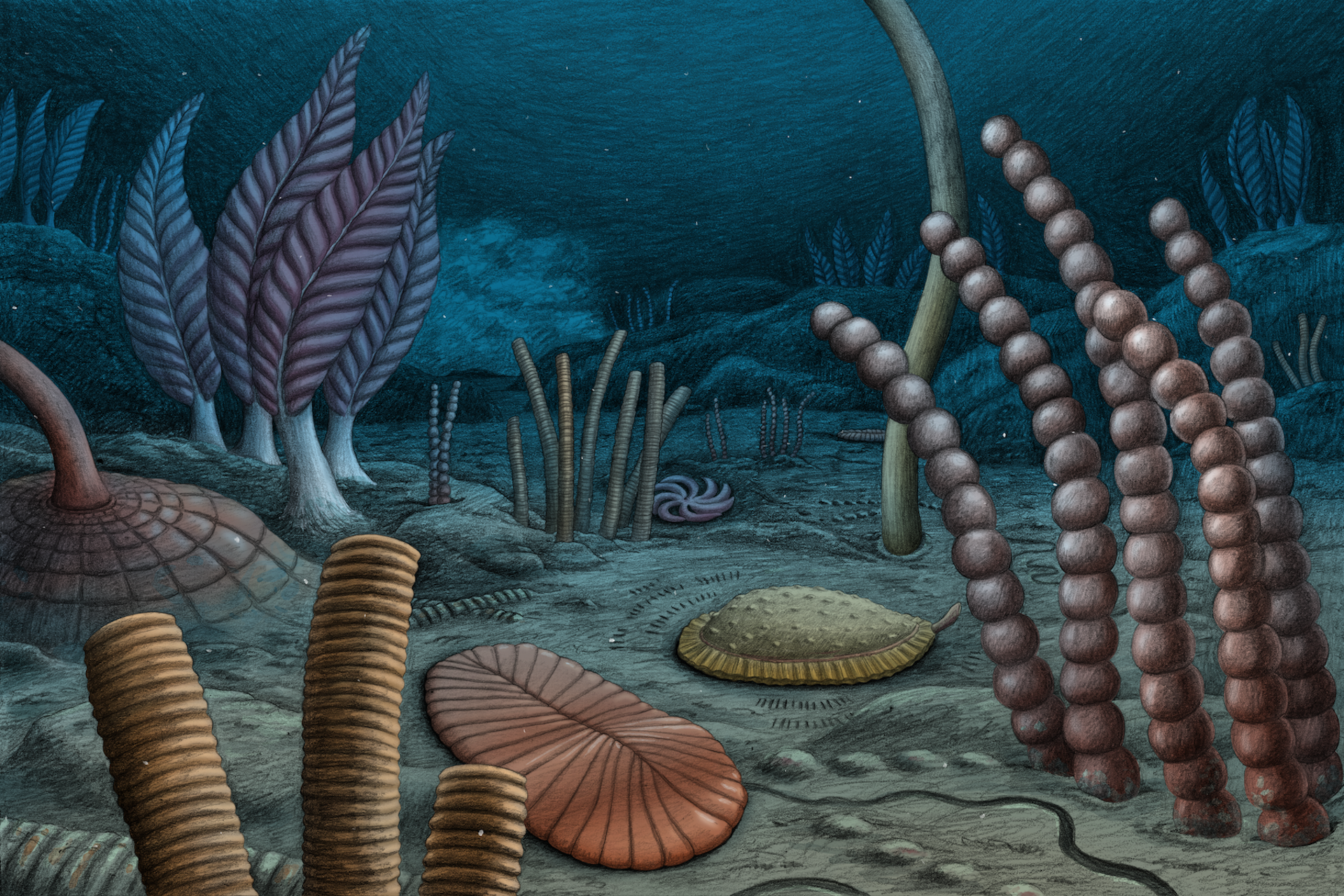
One distinction matters here: despite the article’s headline, this concerns the diversification of life, not its original appearance. Life already had a long evolutionary history before the Cambrian, and animals existed before that period began. Nor was the Cambrian ‘explosion’ an instantaneous event resembling a magical creation. The term describes a geologically rapid evolutionary diversification, unfolding over millions of years.
For creationism, therefore, the problem is more substantial than another inconvenient date. Here is a testable account connecting the history of continents with the environmental context of biological evolution. Continents assemble, plate boundaries change, volcanoes influence the atmosphere, and organisms evolve in the resulting conditions. None of this requires foresight or a predetermined destination. It requires physical processes, evolving populations and the immense passage of time.