 |
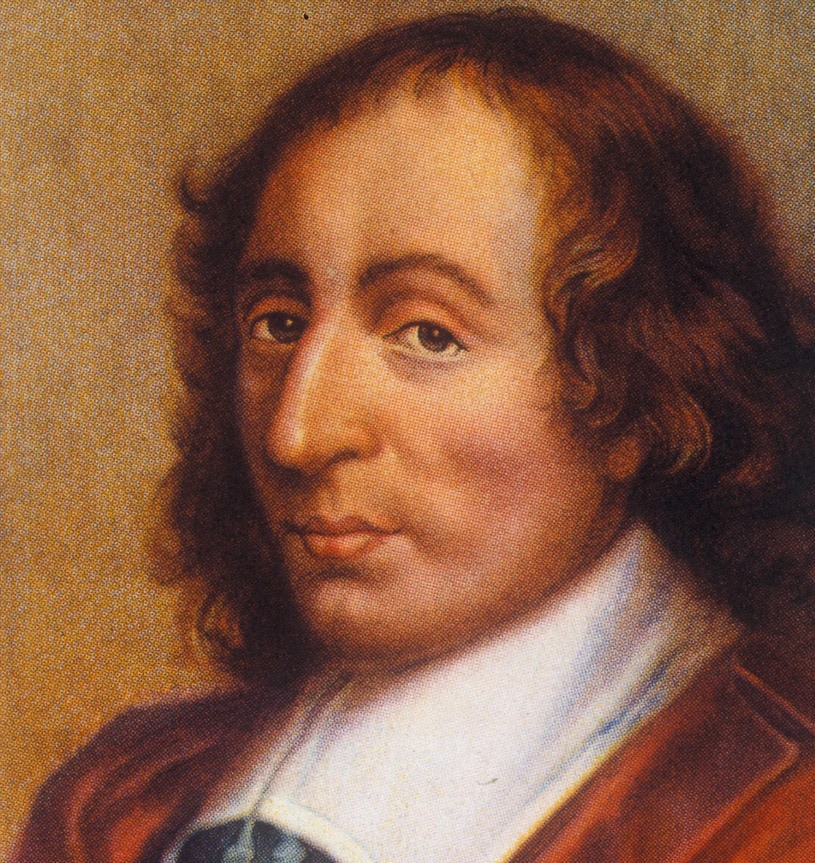
| Blaise Pascal (1623-1662) |
Also known as Pascal's Gambit, Pascal's Wager is the suggestion that, because the existence of God (and by that he meant the Christian god of course) can't be determined by pure reason, a person should 'wager' that one existed. He reasoned that if it turns out (i.e. is 'discovered' after death) that there is no god, then one has lost nothing. If it turns out that there is one, then one has gained everything. So, in effect, one is betting nothing against infinity.
Apart from its abject, and frankly disgraceful, abandonment of reason, in the implicit assumption that reality can be determined by a wager, where else does Pascal's Wager fail?
Well, as many people have pointed out, and as many apologists for other gods have shown, Pascal's Wager can be just as easily used for ANY deity, whether actually believe by anyone or merely hypothetical, whose supporters claim promises eternal life to believers and eternal suffering for non-believers. Indeed, it is frequently used for the Abrahamic god.
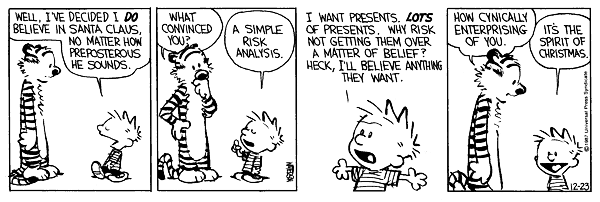
But apart from that damaging error, there are several unstated and fatal assumptions in Pascal's Wager which show that it only 'works' if you assume a priori the following:
- There is an after-life - requiring a priori belief in the existence of a god and a soul.
- The Abrahamic belief in Heaven and Hell is valid - requiring a priori belief in the existence of the Abrahamic god.
- That the Abrahamic god is the only god, requiring a priori belief in the existence of the Abrahamic god.
What if we exclude these assumptions?
- The wager fails since there is no difference in outcome no matter which we opt to bet on.
- The wager fails because what happens, even if there is an after-life, may not depend on which option you bet on.
- The wager fails because you will have almost certainly lost everything by opting to believe in the wrong god. With an infinite array of all possible gods being bet against just one, the bet to believe becomes indistinguishable from the bet not to belive.
 So, without these a priori assumptions, where does that leave Pascal's Wager? It leaves it as a gamble in which you opt either to sacrifice your intellectual integrity, independence of thought and action and responsibility for your own beliefs and actions, against a life of freedom, personal integrity, self-reliance and personal responsibility.
 You surrender freedom and self-respect in favour of abject, cringing, voluntary slavery.
And what benign, benevolent, loving god could respect a person who did that?
 And this is the final nail in the coffin of Pascal's Wager: as any god with an IQ above that of a cucumber should be able to work out, it assumes the god it purports to promote is too stupid to notice that it's 'believers' don't have any real reason to believe in it but are just pretending to believe in case it's true.
In fact, Pascal's Wager, far from being the trump card many apologists like to keep up their sleeve for when they look like losing, actually shows what poor, tenuous things religious faiths, especially the Abrahamic faiths, are that they need to depend on such weak and hypocritical fallacies and implied threats to maintain themselves.
Pascal's Wager is an attempt to fool an omniscient god.
Or is it an attempt to fool a gullible people by those who know they're pushing a lie?


"Pascal's Wager is an attempt to fool an omniscient God".
ReplyDeleteAgreed. The wager does not make anyone have faith, which is a requirement.
"Or is it an attempt to fool a gullible people by those who know they're pushing a lie?"
1) You would have to indicate the benefit for the lie being pushed.
a)If it is for control, indicate the control you currently have and how this control is ensured by yourself.
b)If it is power, indicate the power you currently have and how this power is ensured by yourself.
c)If it is enslavement, indicate how you are actually free and how this freedom is ensured by yourself.
2)You would then have to describe how your "belief" in you having any control or power or freedom is not a delusion in itself.
3) After describing this, indicate the end result or benefit, if any, in obtaining this if death itself is what awaits you and nothing more.
Or do your hopes lay in giving your future descendants a chance to further "evolve" to a species not yet imagined so you can be part of a future evolutionary line chart showing your evolution from primates to humans to (insert here)?
Or do your hopes lay in the possibility of science discovering a way to alter genetics and isolating "aging" in the hopes to gain immortality?
Please explain, and no avoidance or psychological excuses as to how these questions further what you think your "cause" is, or how the belief of your supposed intelligence is above answering, or how I missed the point and didn't read the text. Just answer. Thanks.
Anonymous.
ReplyDeleteSee if you can think of any benefits to a priest or a religious apologist of tricking someone else into agreeing with them. If not, you'll probably find it hard to see what might be motivating a con artist or snake-oil salesman.
Anonymous
ReplyDeleteI want "immortality" from nanotechnology, and it is really irritating that billions of minds controlling trillions of dollars which could be applied to that technology, are fooled into believing they will live forever even if they apply their resources to irrelevant aims.
Nice article. It all makes sense except for the "a priori" parts. The wager does not assume that there's a god/afterlife/heaven. It starts by saying "Either there is, or there isn't." Any subset insufficient to win you eternal happiness counts as "There isn't". Now you must bet on "there is" vs. "there isn't", without knowing the true answer.
ReplyDeleteThe entire wager is predicated on possible outcome where belief in (the Christian) god is assumed to result in ever-lasting life in Heaven. The basic a priori assumption therefore is that such a god and Heaven both exist.
DeleteIf you think not, try the wager with each of the following assumptions in turn:
1. There are no gods.
2. Only Hell and Satan exist.
3. Thousands of different gods, all offering different rewards/punishments for belief/non-belief, exist.
4. Only Zeus exists and he will punish people who don't believe in him.
Remove the basic cultural assumption that there would only be one god and that god would be the Christian one with either Heaven or Hell awaiting us, and Pascal's Wager makes no sense whatsoever.