Young Earth creationists insist that Earth—and everything upon it—was created only about 6,000–10,000 years ago, with the entire human population subsequently reduced to eight survivors of a global flood. Unfortunately for that mythology, archaeologists continue to uncover abundant evidence that humans were living, thinking and creating art tens of thousands of years before the supposed “Creation Week”, within cultures whose archaeological remains show no trace of having been interrupted by a planet-drowning flood.
The latest examples are two tiny bird figurines discovered in Hohle Fels Cave in the Swabian Jura of south-western Germany. Carved from mammoth ivory approximately 40,000 years ago, during the Aurignacian period, they were recovered in 2025 from the cave’s well-documented archaeological sequence by a University of Tübingen team led by Professor Nicholas Conard.
Each figurine is scarcely larger than a thumbnail, yet both display remarkable anatomical and behavioural detail. One appears to represent a resting or possibly brooding bird, with its head drawn close to its body and its legs tucked beneath it. The other has its wings spread and its neck extended, perhaps depicting a bird in flight, landing, threatening a rival or displaying during courtship. At just two centimetres long and weighing about 0.7 grams, the latter is the smallest known piece of Ice Age figurative art from the Swabian Jura World Heritage region.
My last blog post concerned a 210-million-year-old, gap-filling dinosaur from Zimbabwe that is helping palaeontologists to reconstruct the early evolution and dispersal of dinosaurs.
This post concerns another gap-filling fossil, although one from much closer to the present—just 30 million years ago. It is a remarkably complete skeleton of the early canid Mesocyon coryphaeus, one of the most complete pre-Ice Age canid skeletons yet found in North America.
This specimen fills a different sort of gap. Mesocyon coryphaeus, first named in 1879, is relatively common in the John Day Formation of Oregon, but it was previously known principally from skulls and teeth. Its postcranial skeleton—the bones behind the skull—had remained almost entirely unknown. The new specimen therefore fills an important anatomical gap in our understanding of how early canids moved, hunted and responded to the changing environments of Oligocene North America.
The fossil itself has had a curious history. It was collected during the late 1980s from land administered by the Bureau of Land Management near what is now the John Day Fossil Beds National Monument. Encased in a protective plaster jacket, it entered the monument’s collection after initially being mistaken for an oreodont—an extinct North American even-toed ungulate sometimes loosely described as resembling a mixture of sheep, camel and pig.
During the 1990s, the skull was separated from the surrounding rock for display, whereupon its teeth and cranial anatomy revealed that it was actually a canid. Park palaeontologists began exposing the remainder of the skeleton in 2012, but preparation continued intermittently for years. By the time the fossil was fully uncovered in 2022, more than 500 hours of painstaking preparation had been devoted to it.
University of Michigan palaeontologist Anne E. Kort, together with Jennifer Cavin of John Day Fossil Beds National Monument and Xiaoming Wang of the Natural History Museum of Los Angeles County, formally described the specimen in a paper published online in the Journal of Paleontology on 29 May 2026.
Known as JODA 3366, the specimen includes a complete cranium, an almost complete vertebral column in front of the sacrum, all the major limb bones and parts of both the forefeet and hindfeet. Only the tail and portions of the hands and feet are missing. It even preserves part of the baculum, or penis bone, establishing beyond reasonable doubt that the animal was male.
It is gap-filling time again — not because palaeontologists have discovered some predetermined evolutionary “missing link”, but because another conspicuous blank on the palaeontological map is being filled. This time, the new evidence comes from Africa and concerns a dinosaur that lived about 210 million years ago, during the Late Triassic.
The discovery sheds new light on the early diversification and geographical distribution of dinosaurs, when they were still only a relatively minor component of terrestrial ecosystems. Over the following millions of years, they diversified into an extraordinary range of forms and became the dominant large land animals of the Jurassic and Cretaceous periods.
Gaps in the fossil record are, of course, eagerly seized upon by creationists desperate to find somewhere to insert their god. Their enthusiasm tends to diminish markedly whenever palaeontologists recover new evidence from one of those gaps. Each such discovery removes another supposed refuge for the ever-shrinking god of the gaps, so the evidence must be dismissed as misidentified, incorrectly dated or merely another example of “evolutionary storytelling”.
No matter how many gaps science fills, creationists continue to assure themselves that the next one will be different: that it will finally be the gap that science cannot investigate and into which their preferred creator can safely be inserted. Unfortunately for that strategy, palaeontologists continue to discover fossils, dating methods continue to improve, and previously neglected regions continue to be explored.
This latest discovery consists of a partial skeleton excavated from exposures of the Late Triassic Pebbly Arkose Formation on the shore of Lake Kariba in northern Zimbabwe. An international team of Zimbabwean, South African and British scientists has named the animal Musango matusadonaensis. The study was led by Professor Paul M. Barrett of the Natural History Museum, London, while the expeditions during which the fossils were collected were led by Professor Jonah Choiniere of the University of the Witwatersrand’s Evolutionary Studies Institute.
Musango was an early sauropodomorph — a member of the lineage that later produced the enormous, long-necked sauropods such as Diplodocus. Unlike those gigantic four-legged descendants, however, Musango was a relatively lightly built, predominantly bipedal animal. It measured an estimated 4.5 metres in length but weighed only about 222 kilograms. Its skull has not been recovered, so its diet cannot be established with certainty, although comparisons with related dinosaurs suggest that it was probably herbivorous or omnivorous.
The fossil record of early dinosaurs is extremely uneven. Europe, North America and parts of South America have been studied far more intensively than much of Africa, leaving large gaps caused not necessarily by the absence of dinosaurs but by the scarcity of sustained palaeontological exploration. Musango is only the fifth dinosaur formally named from Zimbabwe, following the description in 2024 of another sauropodomorph from the same formation, Musankwa sanyatiensis.
Phylogenetic analysis places Musango and Musankwa as close relatives within Unaysauridae, a group whose fossils are known from Africa, India and South America — landmasses that were then joined within Gondwana. Together, these discoveries support an emerging picture in which Late Triassic southern Africa contained several distinct ecosystems with their own dinosaur communities, rather than a single uniform fauna extending across the region. Africa was therefore not a peripheral spectator in early dinosaur evolution; its still-underexplored rocks may preserve crucial evidence about how dinosaurs diversified and spread before their later ecological dominance.
VIS light photography of the selected panel at the “Carrefour” of the panels no. 13 and 14 composed of a reindeer and a horse as well as bison and possibly a deer, respectively, and the schematic Bison 15.
For the first time, scientists have obtained direct radiocarbon dates for Palaeolithic paintings in the Grotte de Font-de-Gaume in what is now southwestern France. A black-line drawing of a bison was created between 13,461 and 13,162 calibrated years before present (cal BP), while two parts of a mask-like figure produced dates ranging from about 16,000 to 14,200 cal BP. In other words, people were producing accomplished works of art in France more than 3,000 years before even the upper limit of 10,000 years that young-Earth creationists commonly allow for the entire age of Earth.
Not that this evidence is likely to persuade many creationists to reconsider their beliefs, of course. Once a preferred conclusion has been declared infallible, any evidence that contradicts it can simply be dismissed as fraudulent, mistaken or somehow “wrong”. One stock evasion is the evidence-free suggestion that radioactive decay rates must once have been different. In the case of radiocarbon dating, even known variations in atmospheric carbon-14 are measured and incorporated into the calibration curves. But no amount of calibration can correct a chronology that is wrong by design.
For anyone more interested in discovering the truth than in finding excuses to protect a preordained conclusion, however, these paintings are fascinating glimpses into how members of our species perceived the world around them, with its bison, horses, cave lions, mammoths and other Ice Age animals. Having visited the Grotte du Pech Merle in the Lot and the Lascaux II faithful reproduction of the famous Lascaux cave in the Dordogne, I can testify to the breathtaking magnificence of these monumental works.
Their purpose can only be surmised. They may have formed part of rituals intended to influence or appropriate the power of the animals; they may have recorded stories, conveyed knowledge or helped to instruct younger members of the group. None of these interpretations can yet be demonstrated conclusively. A controversial paper published in 1998 compared certain features of Upper Palaeolithic cave art with drawings made by a young autistic child with exceptional artistic ability. It did not, however, establish that any particular Palaeolithic artist was autistic.
During my visit to Pech Merle, our guide suggested that one of the great animal friezes might have been drawn in a matter of hours by a single artist, using bold, confident lines in black pigment. That interpretation may remain speculative, but the powers of observation, memory and control evident in those sweeping lines are unmistakable.
The new dating study was carried out on paintings in the Grotte de Font-de-Gaume, near Les Eyzies in the Dordogne, by an interdisciplinary research team led by CNRS researcher Ina Reiche. Direct radiocarbon dating had previously been considered impossible because the black pigments used at Font-de-Gaume, Lascaux and other decorated caves in the region were assumed to consist solely of iron and manganese oxides, which contain no carbon. However, the absence of carbon had never actually been demonstrated.
Using non-invasive Raman microspectrometry and hyperspectral imaging, the researchers examined black-line drawings of a bison and a figure interpreted as a human or animal face, or “mask”. These techniques revealed that charcoal was distributed uniformly throughout the black lines, rather than occurring only in isolated patches, helping to rule out contamination from graffiti or tourist activity.
A point made several times in these blog posts is that the creationist interpretation of Genesis presents the living world as having been deliberately created for human use. That raises an obvious question: why have humans needed to modify virtually every domesticated animal and cultivated plant to make it more useful?
In many cases, selective breeding has altered organisms so extensively that modern breeds and crop varieties are barely recognisable as descendants of their wild ancestors. Did the supposed creator fail to anticipate how humans would use them, or was it simply incapable of finishing the job and obliged to leave the improvements to us?
Creationists have never produced a satisfactory, evidence-based answer. Instead, they appeal to “mystery”, “unknowable intentions” or some other form of theological evasion — ways of avoiding the question while pretending to have answered it. Alternatively, they simply ignore the problem and continue asserting that Genesis provides an accurate account of history and the origins of living species.
Rice, of course, doesn't get a mention in the Bible, the cultural origins of whose authors were primarily the Tigris-Euphrates rivers of Mesopotamia and later the Nile in Egypt, where wheat and barley were the staple crops, so they knew nothing of the origins or cultivation of rice, nor of India or China for that matter. Wheat by contrast is mentioned in the Bible 51 times and barley, 37.
Science, by contrast, allows us to reconstruct increasingly detailed and testable histories of domesticated animals and cultivated plants. Genetics, archaeology and the study of ancient plant remains show how humans selected heritable variations and gradually changed wild populations through artificial selection, hybridisation and the movement of crops between regions. One particularly fascinating example is the origin and cultivation of Asian rice, Oryza sativa, which now provides sustenance for more than 3.5 billion people.
The evidence traces this history across a timescale wholly incompatible with the creationist belief in a 6,000–10,000-year-old Earth. Wild rice ancestral to modern cultivated rice was growing in the lower Yangtze region of China about 100,000 years ago. Humans began gathering and processing it approximately 24,000 years ago, and evidence of pre-domestication cultivation appears about 13,000 years ago. By around 11,000 years ago, plant remains show a rapid increase in characteristics associated with domestication, as generations of human selection transformed wild rice into a recognisably cultivated crop.
There is also evidence of rice cultivation in the Ganges valley of northern India as early as 6500 BCE—about 8,500 years ago. The details remain a subject of legitimate scientific debate, particularly whether Indian rice was domesticated independently and how much the eventual development of indica rice owed to hybridisation between local rice and japonica introduced from China. What is not in dispute is that modern rice emerged through a prolonged history of cultivation, selection, migration and hybridisation — not through an instantaneous act of creation.
The history of rice is the subject of an article in The Conversation by Garritt C. Van Dyk, Senior Lecturer in History at the University of Waikato, New Zealand. His article is reprinted below under a Creative Commons licence and reformatted for stylistic consistency:
Biological invasions present evolutionary biologists with an apparent paradox. A newly established population may begin with only a handful of individuals and therefore contain only a small sample of the genetic variation present in its parent population. The resulting population bottleneck should increase inbreeding, reduce its capacity to adapt and expose harmful recessive mutations to natural selection. In extreme cases, the population should succumb to what population geneticists call an “extinction vortex”, in which declining genetic diversity and declining population size reinforce one another.
And yet some introduced species do precisely the opposite. They survive, proliferate and overwhelm the ecosystems into which they have been introduced. Few examples are more spectacular—or more ecologically destructive—than the brown tree snake, Boiga irregularis, on the Pacific island of Guam.
Native to Australia, Papua New Guinea and other parts of the western Pacific, brown tree snakes probably reached Guam as accidental stowaways in military cargo sometime after the Second World War. The invading population is believed to have been founded by only a handful of snakes. Nevertheless, their descendants multiplied until, in some parts of the island, densities reached an extraordinary 30,000 snakes per square mile.
The consequences for Guam’s wildlife have been catastrophic. As nocturnal, generalist predators encountering abundant prey that had evolved without such a snake, they devastated the island’s native birds, causing several species to disappear from the wild on Guam. They have also disrupted food webs, preyed upon reptiles and small mammals and caused hundreds of power cuts by climbing electricity infrastructure.
But how did a population founded by so few individuals avoid collapsing under the burden of inbreeding?
A new paper in Science Advances by Christopher A. Osborne of the University at Buffalo and colleagues from Buffalo and the US Geological Survey suggests that the answer lies partly in a form of genetic variation that earlier sequencing methods tended to miss.
The snakes did not, in fact, avoid the bottleneck. Their genomes retain compelling evidence of it. The researchers found that roughly half of each snake’s genome consisted of long “runs of homozygosity”—regions in which the copies inherited from the mother and father were almost identical. This is a genomic signature of intense inbreeding, comparable with that seen in some endangered species of conservation concern.
However, genetic diversity is not confined to changes in individual DNA letters. Using long-read sequencing, which can detect much larger differences, the researchers found nearly 19,000 structural variants. These included sections of DNA that had been duplicated, deleted, inserted or rearranged. Together, these structural variants affected almost eight times as much of the genome as the single-nucleotide variants upon which conventional estimates of genetic diversity have largely relied.
More importantly, the surviving variation was not distributed randomly. Structural variants were especially abundant around gene promoters and in genes associated with adaptive immunity and olfaction. Variation in immune genes could help the snakes respond to pathogens, while variation affecting their highly developed sense of smell could influence their ability to recognise prey, exploit different foods and distinguish closely related snakes from potential prey. In other words, a population can be genetically impoverished overall while retaining disproportionately important variation in precisely those parts of its genome that influence survival and adaptability.
A point I have made before in this blog is that the ignorance of the Bible’s authors is revealed as clearly by what they omitted as by what they included. When examined in the light of modern science, many of their claims turn out to be wrong, showing that they filled gaps in their knowledge with stories that reflected the prevailing superstitions of their culture. Meanwhile, the omissions reveal just how narrow their geographical and intellectual horizons were.
There is no unmistakable fact in the Bible that could not have been known, inferred or imagined by people living in the ancient Near East when its various books were written. There is no knowledge that required revelation from an omniscient being and no awareness of vast regions, peoples or periods of history lying beyond the experience of its human authors.
That is entirely understandable if the Bible is a collection of human writings. It is much more difficult to explain if its ultimate author was an omniscient god. Such an author would not have shared the cosmological limitations of ancient people or presented the world in the familiar ancient Near Eastern form found in Genesis: primordial waters divided by a firmament, dry land beneath it, and the Sun, Moon and stars placed in that firmament as lights. Whatever ingenious reinterpretations modern apologists may retrofit to the text, there is nothing in it that anticipates the real structure, age or scale of the Universe.
Nor is there any hint that people were already living on the other side of the planet. Archaeological evidence from Madjedbebe in northern Australia indicates human occupation by about 65,000 years ago. The Bible’s authors knew nothing of Australia, its First Peoples or the tens of thousands of years of human history that had already elapsed before the supposed events of Genesis.
What is perhaps more surprising is that educated adults today can still imagine that the Genesis creation myth is an accurate and inerrant account of history, despite its demonstrable errors and enormous omissions. The text contains no Australia, no Americas, no Pacific peoples and no conception of the deep human past—only the restricted world known to its authors, projected onto the entire planet.
Augustine of Hippo provides an illuminating example of how treating Scripture as historical fact could obstruct an otherwise rational consideration of the evidence. Contrary to a common misconception, Augustine did not insist that Earth was flat. By his time, its spherical shape had been understood by educated Greeks and Romans for centuries, and Augustine was prepared to concede that it might be demonstrated scientifically.
What he could not accept was that the far side of a spherical Earth might be inhabited, because that appeared irreconcilable with the biblical claim that every human descended from a single original man—and, after the supposed global flood, from Noah and his family. In De Civitate Dei, he wrote:
To a palaeontologist, a gap in the fossil record is an unanswered question and an invitation to keep looking. To a creationist, it is more often treated as a convenient space in which to insert a supernatural explanation. The difficulty for creationism is that scientists have an inconvenient habit of finding the missing evidence, whereupon the gap becomes smaller, the evolutionary history becomes clearer, and creationists must quietly move their supernatural explanation somewhere else.
A particularly neat example is provided by a paper just published in Australian Zoologist by Timothy J. Churchill, Michael Archer, Suzanne J. Hand and Roy M. Farman. As Churchill explains in an article in The Conversation, a handful of tiny fossil jaws from north-western Queensland has supplied a previously missing opening chapter in the evolutionary history of Australia’s most diverse family of marsupial predators.
The family Dasyuridae contains almost 80 living species, including Tasmanian devils, quolls, dunnarts, planigales and antechinuses. They range from insect-eaters weighing only a few grams to the much larger Tasmanian devil, and occupy environments extending from the tropical rainforests of New Guinea to Australian deserts, grasslands and alpine woodland. Yet, despite this modern diversity, their early fossil history had remained frustratingly obscure.
Molecular studies indicated that dasyurids had diverged from their closest relatives millions of years before the earliest unambiguous fossils then known. Almost all accepted dasyurid fossils were younger than about five million years, leaving what palaeontologists call a “ghost lineage”: a branch whose existence was indicated by evolutionary relationships, but whose earlier fossil representatives had not yet been found. The animal once thought to fill that gap, Barinya wangala, was subsequently shown to belong to an entirely different family of peculiar, probably snail-eating marsupials called malleodectids.
Creationists sometimes present such gaps as evidence against evolution, apparently assuming that unless every organism that ever lived has obligingly become fossilised, been exposed at the surface and been discovered, the evolutionary history can be dismissed. But incompleteness is not inconsistency. Fossilisation is rare, suitable rocks are unevenly distributed, and tiny, fragile animals are especially unlikely to leave recognisable remains. Evolution nevertheless predicted that earlier dasyurids had existed. The question was whether any of them would eventually be found.
The new species, named Miyumba chrisdickmani, is known from six partial lower jaws recovered from Early Miocene deposits in the Riversleigh World Heritage Area on Waanyi Country. It lived about 23 million years ago and probably weighed only about 30 grams, making it comparable in size to a modern antechinus or large dunnart. It is now the oldest confirmed member of Dasyuridae, extending the family’s recognised fossil history by more than five million years.
Its significance, however, lies in much more than its age. The teeth of Miyumba possess a particular arrangement in which the third lower premolar is smaller than the first and second. This appears to be a shared derived characteristic, or synapomorphy, identifying dasyurids as a natural evolutionary group. At the same time, Miyumba retains several ancestral dental features expected in an animal close to the base of that group’s family tree.
That combination is precisely what evolutionary theory predicts: an early member of a lineage should possess the defining innovations inherited by its descendants while retaining features inherited from more distant ancestors. It should not look exactly like a modern Tasmanian devil, quoll or dunnart because those specialised forms had not yet evolved. Nor should it be unrelated to them. It should display a mosaic of ancestral and newly evolved characteristics — and that is exactly what Miyumba does.
Of all the primitive ‘just-so’ stories in Genesis, the tale of how the serpent was condemned to crawl on its belly must rank among the most transparently mythological. Having supposedly tempted Eve to eat the forbidden fruit, God curses the serpent to go on its belly and ‘eat dust’ for the rest of its life. Although the story never explicitly says that the serpent previously had legs, the curse plainly implies a change and has traditionally been understood as an explanation for why snakes slither instead of walking.
Like so much of Genesis, it begins with an observation familiar to its authors—snakes have no legs—and invents a magical tale to explain it. It is an ancient example of an etiological myth: folklore devised to explain why something in the natural world appears as it does, long before anyone had the evidence or intellectual framework needed to understand its real history.
Even as mythology, however, the story is strangely incoherent. Genesis itself does not identify the serpent as Satan but introduces it as the most cunning of the wild animals God had made. Nevertheless, this supposedly ordinary animal can speak, reason and somehow knows about a prohibition that God had given to Adam before Eve had even been created. The text makes no attempt to explain how it acquired either this knowledge or the power of speech.
More awkward still for anyone insisting that the story is literally true, the serpent’s predictions prove substantially more accurate than God’s warning. God tells Adam that he will die on the day he eats the fruit. The serpent tells Eve that they will not die, that their eyes will be opened and that they will become like God, knowing good and evil. They eat the fruit, their eyes are opened and they do not die that day. God then confirms that the humans have indeed become ‘like one of us’ in knowing good and evil. According to Genesis itself, Adam goes on to live for another 930 years.
On the most straightforward reading of the story, therefore, the serpent tells Eve the truth while God’s threat to Adam proves false. Later theologians have attempted to rescue the tale by inventing a ‘spiritual death’, or by claiming that Adam merely began to die that day, but neither qualification appears in the text. These are apologetic repairs added by people who can see the problem but cannot admit that the story’s authors created it.
Science, meanwhile, has uncovered a very different account of how snakes acquired their extraordinary bodies—one involving neither talking reptiles nor fruit, curses or human disobedience, but descent with modification over immense periods of geological time. Snakes are highly modified members of the squamate reptile radiation. Their ancestors progressively elongated their bodies, increased the number of vertebrae and reduced their limbs as different lineages adapted to particular ways of life. Their evolutionary history extends back at least to the Middle Jurassic, about 160 million years ago.
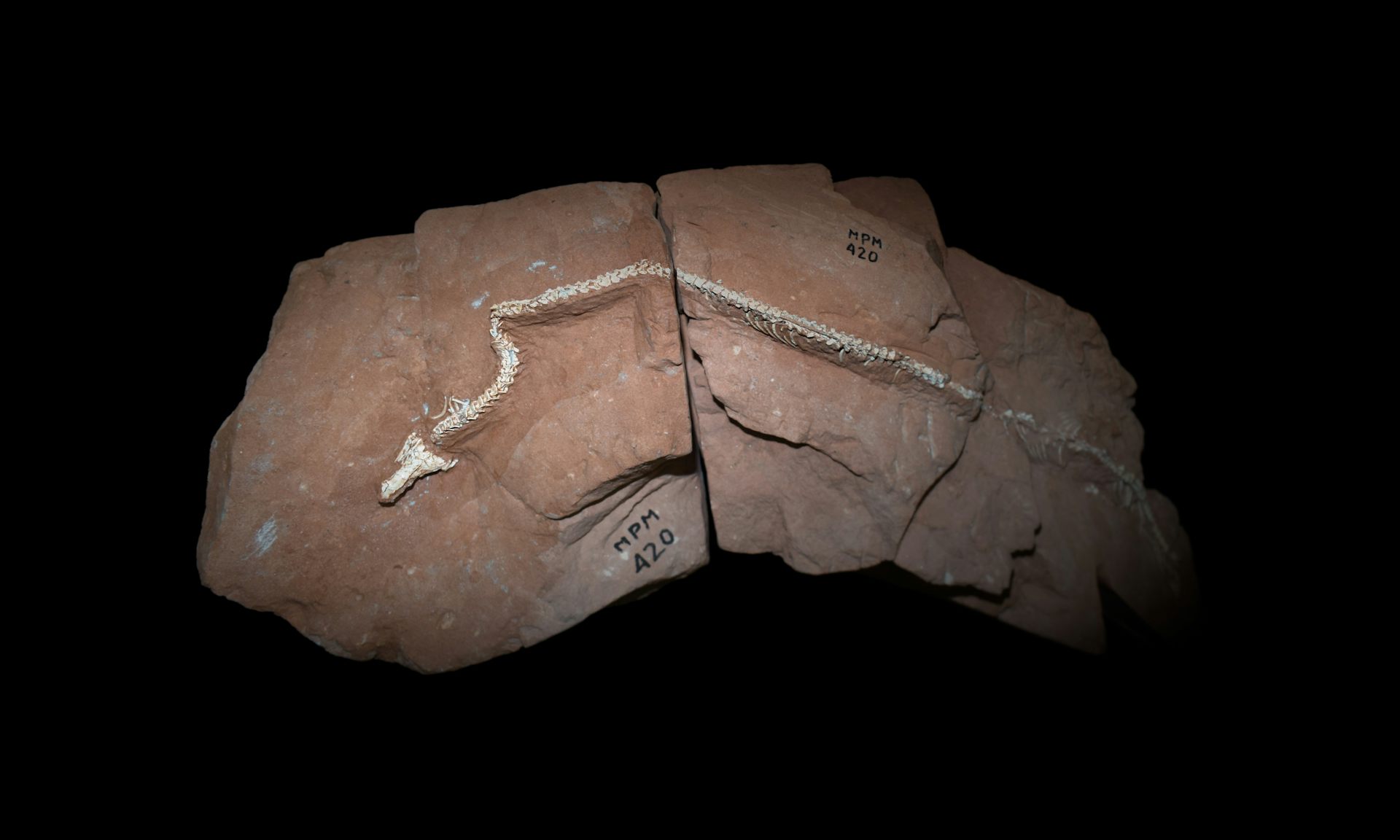
Now, a paper published in Nature by an international team led by Tiago R. Simões describes an exceptionally well-preserved early snake from the Late Cretaceous of Brazil. Named Tametara mirim, the animal lived approximately 85–75 million years ago, when non-avian dinosaurs still dominated terrestrial ecosystems. It is the first articulated snake fossil known from Brazil and preserves a three-dimensional skull together with more than 100 connected vertebrae.
The preserved portion of its skeleton appears to have lacked forelimbs. Because the region around the pelvis is missing, the researchers cannot determine whether it retained vestigial hindlimbs, as some other early snakes did. Its skull also combines recognisably snake-like specialisations with ancestral features resembling those of other squamate reptiles—precisely the sort of mosaic of old and new characteristics expected in an evolving lineage, but not from the instantaneous transformation of an animal by a divine curse.
Young-Earth creationists are fond of pointing out that a single flood or storm can deposit a layer of sediment very quickly, as though this somehow proves that the entire geological record could have been produced during the mythical year-long flood described in Genesis. But the speed with which an individual layer forms tells us nothing about the intervals between successive layers. When those layers contain regular, measurable cycles produced by processes operating daily, fortnightly and seasonally, they become a record of elapsed time—and that time cannot simply be waved away.
An article in The Conversation by palaeontologist Alfio Alessandro Chiarenza of University College London describes just such a record. It concerns the Villaggio del Pescatore fossil site near Trieste, north-eastern Italy, where dinosaurs, crocodilians, fish, shrimps, plants and other organisms were preserved with exceptional detail about 80 million years ago.
Chiarenza and his colleagues, led jointly with Federico Fanti of the University of Bologna, have published their findings in the journal Global and Planetary Change. Their evidence shows that the site was not, as previously proposed, a quiet lake or sinkhole. It was a tropical tidal flat on the edge of an ancient sea, repeatedly affected by powerful monsoon floods and tropical cyclones.
The fossil-bearing limestone consists of metre-thick packages containing thousands of discrete, paper-thin light and dark layers. These had previously been interpreted as annual deposits, or varves. However, high-resolution synchrotron X-ray scanning, microscopic and geochemical analyses, and statistical analysis of the repeating patterns revealed something still more remarkable: the layers are tidal microcouplets, laid down under a semidiurnal tidal regime—two tidal cycles each day.
Moreover, variations in the thickness of the layers follow the familiar fortnightly alternation between spring and neap tides. The rocks therefore contain not merely a succession of vaguely similar bands, but an ordered astronomical rhythm produced by the interaction of Earth’s rotation with the orbit of the Moon. By counting and analysing those layers, the researchers calculated that the fossil-bearing succession accumulated over approximately 40 years. In other words, the rock preserves an almost day-by-day record extending across four decades.
That presents creationists with a problem that cannot be dismissed by claiming that “floods can deposit sediment rapidly”. Of course they can; that is precisely what some of the layers record. But a single flood cannot manufacture 40 years’ worth of successive twice-daily tidal deposits, arranged in the correct fortnightly spring–neap pattern. Still less can the supposed year-long biblical flood accommodate a geological sequence that records some 40 years of tides within one small part of a vastly larger, 80-million-year-old succession.
A paper just published in Scientific Reports by an international team led by Olev Vinn of the University of Tartu, Estonia, provides a lovely illustration of the opportunistic nature of evolution.
Some 470 million years ago — almost 470 million years before creationists’ mythical ‘Creation Week’ — a seemingly modest ecological innovation occurred in the oceans: animals began using the sheltered interiors of empty mollusc shells as habitats. This happened during the Middle Ordovician, following the Cambrian radiation, and helped to establish a new ecological niche that remains important in marine ecosystems today.
Creationists like to misrepresent the Cambrian radiation as the sudden appearance of complex, multicellular animals without ancestors. In reality, it was neither instantaneous nor without an evolutionary prehistory. It unfolded over tens of millions of years and grew out of changes already under way among the preceding Ediacaran biota, including increasing mobility, burrowing and ecological interaction.
As animals became more mobile, predation intensified and defensive structures became increasingly advantageous. Mineralised skeletons and shells evolved independently in several lineages, probably under several interacting pressures, including protection, structural support and changing ocean chemistry. Molluscs were among the groups that acquired shells, and their subsequent diversification produced such familiar forms as gastropods, bivalves and shelled cephalopods.
One consequence was the growing accumulation of empty shells on the seabed. Each dead mollusc left behind a hard surface and a sheltered cavity that other organisms could potentially exploit. Yet the researchers found that, throughout the Cambrian, the interiors of mollusc shells and other skeletal remains remained free of encrusting animals, even though organisms capable of living on surfaces inside other cavities already existed.
That changed during the Middle Ordovician, when attached animals began colonising the relatively large, spacious shells of nautiloid cephalopods. They later spread into the empty shells of gastropods and bivalves. No foresight or planning was required: once organisms capable of settling inside these shells gained access to a protected surface supplied with food-bearing water, any heritable tendency that improved their ability to exploit it could be favoured by natural selection.
In my last blog post, I pointed out that ancient Egypt’s archaeological and written record extends continuously from long before the date young-Earth creationists assign to Noah’s Flood, through that supposed catastrophe and into biblical times. Nowhere is there any sign that Egypt was destroyed by a global flood and subsequently repopulated by migrants from Mesopotamia. I also showed that the biblical writers who set stories in Egypt possessed only a tenuous understanding of its real history and culture.
Ancient China presents creationists with much the same problem. Its archaeological record contains long regional sequences extending across the supposed date of the Flood, with local populations, cultures and economies continuing to develop. If every human outside Noah’s immediate family had been exterminated, the existing peoples of East Asia should disappear from the record and be replaced by a rapidly expanding population of recent Mesopotamian origin. That is not what archaeology shows—and ancient DNA now provides an especially clear test of the claim.
The evidence comes from a paper published in Nature in November 2025 by an international team led by Professor Qiaomei Fu of the Institute of Vertebrate Paleontology and Paleoanthropology (IVPP) at the Chinese Academy of Sciences, working with researchers from several other Chinese institutions.
The team analysed genome-wide data from 169 ancient individuals recovered from Shimao and surrounding settlements in northern China. Population analyses were conducted using 144 unrelated individuals, while the remaining close relatives enabled the researchers to reconstruct pedigrees extending across as many as four generations.
Shimao, in northern Shaanxi Province, was one of the largest fortified settlements in Late Neolithic China. Occupied from approximately 2300 to 1800 BCE, it covered about four square kilometres and contained massive stone walls, separate inner and outer enclosures, specialised craft production, elite cemeteries and unmistakable evidence of a highly stratified society. Its occupation therefore began at about the very time when, according to the conventional young-Earth creationist chronology, the world should have been struggling to recover from a global extermination and repopulation by Noah’s immediate descendants.
Instead, the genomes showed that the people associated with Shimao were predominantly descended from populations already living in northern Shaanxi at least 1,000 years earlier. Those earlier inhabitants were associated with the Yangshao cultural tradition of the Yellow River’s Loess Plateau. The researchers found regional genetic continuity from the Middle to the Late Neolithic—continuity extending from before the supposed Flood into the centuries following it.
This was not a completely isolated or genetically static population. The researchers detected continuing contact with Yumin-related people from Inner Mongolia, close connections with the contemporary Taosi population farther south, and some ancestry from southern East Asian populations, possibly associated with the northward spread of rice cultivation. These were the ordinary movements, exchanges and intermarriages expected among neighbouring prehistoric farming and pastoral communities. They did not interrupt the dominant local ancestry, and there was no sign of wholesale population replacement by descendants of a family recently arrived from Mesopotamia.
The genetic evidence also revealed much about the organisation of Shimao society. Pedigrees reconstructed from elite burials indicated a predominantly patrilineal system in which status and wealth commonly passed from high-ranking men to their sons. Male members of these lineages showed relatively little diversity in their Y-chromosome ancestry, whereas the women displayed much greater mitochondrial diversity. This is consistent with women frequently marrying into communities dominated by established male lineages, although the evidence for strictly patrilocal residence remains suggestive rather than conclusive.
The study also uncovered a possible sex-related pattern in Shimao’s practice of human sacrifice. Nine of the ten sampled victims buried beneath the East Gate were male, contradicting earlier identifications based on skeletal anatomy. In contrast, most sampled sacrificial victims accompanying elite burials were female: six of seven at Hanjiagedan and fourteen of nineteen at Huangchengtai. This suggests that male and female victims may have been selected for different rituals conducted in different places, although the researchers caution that the number of genetically sexed victims remains too small to establish the pattern conclusively.
The writers and editors who composed the Pentateuch clearly possessed some knowledge of Egypt. It was, after all, a powerful neighbouring civilisation with which the peoples of the Levant had interacted for centuries. But a sprinkling of Egyptian names, loanwords and geographical details does not turn a theological story into an accurate historical account. When the biblical narratives are compared with Egyptian records, chronology and archaeology, Egypt often appears less as a real country than as an exotic stage on which the authors could set their morality tales.
The biblical use of the word ‘Pharaoh’ illustrates the problem, although not for the reason sometimes claimed. ‘Pharaoh’ is not a Hebrew expression meaning ‘owner of an estate’. The Hebrew par‘ō was borrowed from the ancient Egyptian pr-ꜥꜣ, meaning ‘Great House’. It originally referred to the royal palace and only during the New Kingdom came to be used for the king himself. Its use as the personal designation of a ruler in Genesis, whose supposed events are conventionally placed centuries earlier, is therefore probably anachronistic.
More revealingly, the biblical authors never identify the rulers in the Joseph or Exodus stories by any of their regnal names. Egyptian kings possessed elaborate formal titles and names, yet the Bible gives us only an anonymous ‘Pharaoh’. This makes it impossible to place either story securely within Egyptian chronology and contrasts sharply with the detailed records left by the Egyptians themselves.
There is likewise no independent evidence for an Exodus on anything resembling the scale described in the Bible. No Egyptian record mentions ten devastating plagues, the death of the firstborn, the destruction of a substantial chariot force or the sudden flight of an enormous enslaved population. Egyptian royal inscriptions were selective and rarely advertised defeats, so their silence alone would not be conclusive. However, there is also no corresponding demographic, economic or archaeological disruption in Egypt, and no material trace in Sinai of the immense population demanded by a strictly literal reading of the story.
The narrative also contains striking internal difficulties. Exodus 9 describes a pestilence affecting the Egyptian livestock in the fields—including horses—and then declares that ‘all the livestock of the Egyptians died’. Yet the same chapter subsequently refers to more Egyptian livestock, while Exodus 14 has Pharaoh assembling 600 chosen chariots, together with his other chariots, all of which would have required teams of surviving horses. Apologists can invent unmentioned groups of sheltered or unaffected animals, but that is an attempt to repair the story, not a literal reading of what it says.
Nor is the geography as straightforward as the familiar Sunday-school version suggests. The Hebrew Yam Suph, traditionally translated as the Red Sea, more probably means the ‘Sea of Reeds’, and its intended location remains uncertain. Moreover, at the dates commonly proposed for an Exodus, Egypt maintained forts, roads and mining operations in Sinai and exercised imperial control over much of Canaan. Even after leaving Egypt proper, the Israelites would not necessarily have escaped Egyptian power.
Exodus 12:37 gives a figure of about 600,000 adult men, besides women and children. Read literally, that implies a total population of perhaps two or three million people, together with their animals. It is absurd to imagine such a population living and travelling in Sinai for 40 years without leaving campsites, hearths, tools, pottery, animal bones, human burials or any other archaeological footprint remotely commensurate with its supposed size.
An even greater problem for biblical literalists is the continuous archaeological record of Egypt itself. Young-Earth creationist chronologies commonly place their global Flood somewhere around the middle of the third millennium BCE, by which time Egypt had already been a unified state for centuries and the great pyramids of the Old Kingdom had been built. Egyptian society certainly underwent political and economic changes, but there is no point at which its entire population disappears and is replaced by descendants of eight survivors from Mesopotamia.
Nor is there a synchronous horizon of catastrophic erosion, inundation, mass death and repopulation throughout Egypt—or anywhere else—that could represent a global Flood. Instead, archaeologists find settlements, tombs, temples, administrative records and evolving cultural traditions extending through and beyond the period in which the Flood supposedly occurred. It is a vast body of mutually consistent evidence that simply could not exist in its present form if the biblical story were literal history.
Creationist objections to abiogenesis often smuggle in the long-discredited idea of vitalism: the belief that living matter contains some special ingredient or “vital force” absent from non-living matter. This appears to lie behind the familiar creationist refrain that “life cannot come from non-life”, as though “life” were a substance that must be added to matter by a supernatural agent.
The word “life”, however, is rarely defined in this argument. Scientists can devise operational definitions for particular purposes, but life is not a single substance possessed by some molecules and absent from others. It is a collection of properties displayed by sufficiently organised chemical systems. By leaving the term undefined, creationists turn their assertion into a slogan that can neither be tested nor falsified.
The distinction between organic and inorganic chemistry is useful, but partly conventional and historical. Organic chemistry deals broadly with carbon compounds, although some carbon-containing substances—including carbon dioxide, carbon monoxide and carbonates—are traditionally classified as inorganic. There is no fundamental physical boundary between the two categories: both obey precisely the same laws of physics, chemistry and quantum mechanics.
Carbon’s extraordinary chemical versatility follows from its atomic structure. A carbon atom has six protons and six electrons, four of which are valence electrons in its outer shell. Its small size and ability to form strong covalent bonds with itself and with elements such as hydrogen, oxygen and nitrogen allow it to form stable chains, rings, branches and extensive molecular networks. Depending on how it is bonded, carbon can adopt tetrahedral, trigonal-planar or linear arrangements and can form single, double or triple bonds. All this follows from quantum chemistry; no vital spark, magical ingredient or special rule is required.
None of that proves that the origin of life was inevitable, and science does not yet possess a complete account of every stage of abiogenesis. What it does show is that there is no known chemical or physical barrier preventing non-living chemistry from becoming progressively more complex. Under suitable conditions, chemical systems can acquire such properties as compartmentalisation, catalysis and molecular replication. Once populations of replicating systems existed with heritable variation, natural selection could favour those that survived longer, reproduced more reliably and used available resources more efficiently.
One important question is where the organic raw materials involved in this prebiotic chemistry came from. Some could have formed on the early Earth, but organic compounds are also widespread throughout the Solar System and interstellar space. They have been detected in comets and asteroids and regularly occur in meteorites. Earth may therefore have received substantial quantities of organic material from several extraterrestrial sources. This raises another scientific question: what natural chemical and physical processes produced and modified that material in space?
Linda Losurdo, a PhD candidate in materials and plasma physics in the School of Physics at the University of Sydney, Australia, has investigated part of that question with her supervisor, Professor David McKenzie. They recreated some of the energetic, near-vacuum conditions associated with stars and other astrophysical environments inside glass tubes. After evacuating the tubes, they introduced nitrogen, carbon dioxide and acetylene and subjected the mixture to an electrical potential of about 10,000 volts for approximately an hour, producing a plasma known as a glow discharge.
A fundamental problem for biblical literalism—the belief that the ancient, pre-scientific authors and compilers of Genesis possessed, through divine revelation, a more accurate understanding of the universe than modern science—is that its claims can be tested against reality. Whenever that is done, reality wins.
Creationists must therefore find ways to dispose of the contrary evidence. It can be declared fraudulent, mistaken, misinterpreted or irrelevant—or, safest of all, simply not examined too closely. Within creationist culture, refusing to change one's mind when the evidence shows that a belief is wrong has somehow been transformed from an intellectual failure into a supposed demonstration of strength of faith.
Another piece of inconvenient reality has now been added to the list. A paper recently published in the journal Scientific Reports by Maurício S. Garcia of the Universidade Federal de Santa Maria, Rio Grande do Sul, Brazil, and colleagues describes Silescelida acristata, a new species of archosauriform reptile known from a fragmentary skeleton discovered near Dona Francisca in Brazil’s Rio Grande do Sul state.
Silescelida acristata lived about 240 million years ago, during the Middle Triassic, when terrestrial ecosystems were still recovering from the devastating Permian–Triassic mass extinction some 12 million years earlier. It was a relatively small, slender, four-legged predator, probably about the size of a small alligator, with its limbs held in a more semi-erect posture than those of earlier, sprawling reptiles.
Besides being some 240 million years older than the biblical chronology can accommodate, the fossil helps to narrow one of the gaps in the fossil record that creationists are so fond of presenting as evidence against evolution. Phylogenetic analyses consistently place Silescelida among the early-diverging eucrocopodan archosauriforms—stem forms outside Archosauria that help to reveal how the ancestral archosaur body plan evolved. Some analyses suggest that it may have been related to the poorly understood Euparkeriidae, although that placement remains uncertain.
The discovery therefore illuminates an important stage preceding the emergence of the true archosaurs—the great reptilian lineage that includes the crocodilian branch and the dinosaur branch, including birds. It also shows that these early archosauriforms were more geographically widespread, and their diversification more complex, than the previously known fossil record suggested. As so often happens, another supposed “gap” has become smaller as scientists have discovered and examined more evidence.
The paper’s lead author, Maurício Garcia, has also written an account of the discovery in The Conversation. His article is reprinted below under a Creative Commons licence, reformatted for stylistic consistency:
Reptile fossil found in Brazil helps shed light on the common origins of dinosaurs and crocodiles
About the size of a small alligator, the Silescelida acristata lived 240 million years ago and holds clues to the origin of animal groups that would transform terrestrial ecosystems forever.
The discovery helps fill an important gap in our understanding of the evolution of archosauriformes, a group of reptiles that gave rise to the archosaurs. Archosaurs, in turn, are the lineage that encompasses two of the best-known groups of terrestrial vertebrates: crocodiles and dinosaurs, including birds.
When Silescelida acristata lived, terrestrial ecosystems were still recovering from the Permian–Triassic extinction event, which occurred about 252 million years ago. This event wiped out much of the life on the planet and paved the way for the diversification of new groups of animals.
It was against this backdrop of ecological recovery that different lineages of reptiles began to take on new roles in terrestrial environments. Among them were the archosauriforms, which underwent extensive diversification during the Triassic. Silescelida acristata was a relatively small, slender animal that moved on all four limbs. Its size can be compared to that of a small alligator.
Although it was neither a dinosaur nor a crocodile, it belonged to a lineage closely related to the forms that preceded the origin of these groups. Its diet likely included smaller animals, suggesting that it played the role of a small predator in the Triassic ecosystems of southern Brazil.
Why is this fossil important?
The fossil primarily preserves parts of the limbs, and at first glance, this type of material may seem limited, but it carries important information about the animal’s locomotion and evolutionary relationships.
One of the most significant characteristics of Silescelida acristata lies in its femur, the thigh bone. Like some of its close relatives, it had legs in a more semi-erect position, lower on the body than to the side.
This change allowed for more efficient locomotion, reducing drag as the body moved across the ground. In evolutionary terms, this type of transformation is related to the set of anatomical changes that would later prove fundamental to the success of archosaurs.
In other words, the new fossil helps us understand a phase preceding the rise of dinosaurs and crocodiles, when their close relatives were still experimenting with different body shapes, postures, and modes of locomotion.
Rare phylogenetic relationship
Phylogenetic analyses indicate that Silescelida acristata may be related to the Euparkeriidae, a rare group of archosauriforms that is still poorly understood by science.
Until now, fossils associated with this group were known primarily from the continents of Africa, Asia and Europe. The presence of a form related to the Euparkeriidae in South America significantly expands the known geographic distribution of these animals.
This suggests that these reptiles were more widely distributed across the world during the Triassic than the fossil record indicated. It also reinforces the importance of South America for the study of the origin and diversification of major groups of terrestrial vertebrates.
The ‘rediscovery’ of a forgotten fossil
The discovery of Silescelida acristata also has an unusual history. Part of the fossil – precisely the portion that preserved essential information about its provenance – was accidentally lost for more than two decades.
It was not until 2022, during a technical visit to the scientific collection at the Pontifical Catholic University of Rio Grande do Sul (PUCRS), that researchers located the missing fragment. This rediscovery made it possible to confirm the specimen’s origin and formally describe it as a new species.
The animal’s very name refers to this story. Silescelida combines words associated with “silence” and “leg.” “Silence” refers to the long period during which part of the fossil lay forgotten, while “leg” refers to the type of preserved material, consisting mainly of limb bones.
The name acristata, meanwhile, means “without a crest.” It was chosen because this animal’s femur lacks a crest or raised bony protrusion – known as a trochanter – where part of the tail musculature would attach. This absence distinguishes Silescelida acristata from nearly all of its close relatives.
What does the discovery change?
The presence of Silescelida acristata in the Middle Triassic of Brazil shows that the evolutionary history of archosauriforms was broader and more complex than previously thought. The fossil indicates that lineages closely related to the Euparkeriidae were also present in South America, highlighting the continent’s role in the early diversification of the relatives of dinosaurs and crocodiles.
Furthermore, the discovery reinforces Rio Grande do Sul’s status as one of the world’s most important regions for the study of Triassic fauna. The region’s rocks preserve fossils from different stages in the evolution of terrestrial vertebrates, including some of the oldest known dinosaurs and large predators that lived before the Age of Dinosaurs.
Every new fossil found in this context helps reconstruct how terrestrial ecosystems reorganized after the Permian–Triassic extinction and how the groups that would later dominate the continents emerged.
Small bones, big stories
Incomplete fossils are often viewed as less informative than nearly complete skeletons. However, it is important to remember that the vast majority of fossils found during excavations are fragmentary. Discoveries such as Silescelida acristata show that even isolated parts of the skeleton can reveal fundamental information about evolution.
In this case, limb bones made it possible to identify a new species, infer aspects of its locomotion, investigate its phylogenetic relationships, and expand the known distribution of a rare group of Triassic reptiles.
More than just describing a new animal, the study shows how Brazilian paleontology continues to contribute to our understanding of central chapters in the history of life on Earth. In rocks from the interior of Rio Grande do Sul, 240-million-year-old fossils still hold clues about the origin of the animal groups that would transform terrestrial ecosystems forever.
Mauricio Garcia, Doutorando no Programa de Pós-Graduação em Biodiversidade Animal , Universidade Federal de Santa Maria (UFSM)
Published by The Conversation. Open access. (CC BY 4.0)
Abstract
Archosauriformes comprise a diverse range of reptiles, including the crown-group Archosauria, which flourished during the Triassic Period. Early-diverging archosauriforms, such as proterosuchids and erythrosuchids, are becoming progressively well-known due to recent studies and consistently resolve at the base of the clade. More crownward, Eucrocopoda includes archosauriform taxa that increasingly approximate the ancestral archosaur body plan. Early-diverging eucrocopodan archosauriforms have a widespread paleogeographic record but remain poorly understood in terms of ingroup relationships. Within this radiation, Euparkeriidae is particularly challenging, because its ingroup composition and monophyly is debated, with some authors supporting a non-monospecific Euparkeriidae, whereas others fail to recover this hypothesis. The eponymous Euparkeria capensis is known from the Early to Middle Triassic of South Africa, whereas other putative euparkeriids are primarily known from the Early to Middle Triassic of China, Germany, Poland, and Russia. Here, we describe a new early-diverging eucrocopodan (Silescelida acristata gen. et sp. nov.) from the Middle Triassic of southern Brazil. Phylogenetic analyses incorporating this taxon suggest a possible placement within Euparkeriidae, though its position shows instability depending on the operational taxonomic units considered, especially among other putative euparkeriids. This discovery not only informs on the temporal and paleogeographic distribution of euparkeriids but also sheds light on the origin and early evolution of eucrocopodans, representing the first record of this archosauriform grade in the Triassic of Brazil. More broadly, the new taxon underscores the significance of South American Triassic deposits within the evolutionary history of archosauriforms.
Fig. 7
Biogeography of early-diverging eucrocopodans and paleoart depicting Silescelida acristata gen. et sp. nov. in life. (A) Triassic world map depicting the paleogeographic distribution of early-diverging eucrocopods. Classification is based on the phylogenetic analyses in this contribution. Silhouettes (not to scale) based on the skeletal reconstruction of Euparkeria capensis by Demuth et al.83. Dorosuchus neoetus is based on the type-series and Osmolskina czatkowicensis is based on the holotype. (B) Silescelida acristata gen. et sp. nov. life reconstruction. Artwork by Matheus Fernandes Gadelha. Map was generated with GIMP 3.0 (gimp.org) based on The Paleobiology Database (paleobiodb.org).
The remains of Silescelida acristata are fragmentary — little more than a shoulder blade, part of the pelvis and a thigh bone — yet those bones preserve enough anatomical information to identify a distinct species and illuminate its evolutionary relationships, posture and geographical distribution. This is how palaeontology advances: not by waiting for a conveniently complete “missing link”, but by combining each new piece of evidence with everything already known.
The researchers are appropriately cautious about precisely where Silescelida belongs. Their analyses consistently identify it as an early-diverging eucrocopodan archosauriform, while its possible membership of Euparkeriidae remains uncertain. That uncertainty is not a weakness in the science; it is an honest acknowledgement of what the available evidence can and cannot yet establish. Future discoveries may refine or revise its position — something no evidence could ever be permitted to do to a literal reading of Genesis.
What is not uncertain is that this animal inhabited southern Pangaea about 240 million years ago, during the evolutionary recovery following the Permian–Triassic mass extinction and before dinosaurs came to dominate terrestrial ecosystems. It adds another branch to a complex, geographically widespread radiation of reptiles acquiring anatomical characteristics associated with the later success of archosaurs. Nothing about this history resembles the instantaneous magical creation of fixed “kinds”.
Creationists can dismiss the fossil, dispute its age or refuse to consider its significance, but none of those responses explains it. They merely demonstrate that creationism has no room for evidence that contradicts its conclusion. Closing one’s eyes may preserve a belief, but it cannot erase a single bone from 240-million-year-old rock.
Advertisement
Amazon
Amazon
Amazon
Amazon
Amazon
Amazon
Amazon
Amazon
Amazon
Amazon
Amazon
Amazon
All titles available in paperback, hardcover, ebook for Kindle and audio format.
Prices correct at time of publication. for current prices.