AI-generated image (ChatGPT 5.6 Sol)

Reconstruction of Miyumba chrisdickmani in its natural setting.
AI-generated image (ChatGPT 5.6 Sol)
To a palaeontologist, a gap in the fossil record is an unanswered question and an invitation to keep looking. To a creationist, it is more often treated as a convenient space in which to insert a supernatural explanation. The difficulty for creationism is that scientists have an inconvenient habit of finding the missing evidence, whereupon the gap becomes smaller, the evolutionary history becomes clearer, and creationists must quietly move their supernatural explanation somewhere else.
A particularly neat example is provided by a paper just published in Australian Zoologist by Timothy J. Churchill, Michael Archer, Suzanne J. Hand and Roy M. Farman. As Churchill explains in an article in The Conversation, a handful of tiny fossil jaws from north-western Queensland has supplied a previously missing opening chapter in the evolutionary history of Australia’s most diverse family of marsupial predators.
The family Dasyuridae contains almost 80 living species, including Tasmanian devils, quolls, dunnarts, planigales and antechinuses. They range from insect-eaters weighing only a few grams to the much larger Tasmanian devil, and occupy environments extending from the tropical rainforests of New Guinea to Australian deserts, grasslands and alpine woodland. Yet, despite this modern diversity, their early fossil history had remained frustratingly obscure.
Molecular studies indicated that dasyurids had diverged from their closest relatives millions of years before the earliest unambiguous fossils then known. Almost all accepted dasyurid fossils were younger than about five million years, leaving what palaeontologists call a “ghost lineage”: a branch whose existence was indicated by evolutionary relationships, but whose earlier fossil representatives had not yet been found. The animal once thought to fill that gap, Barinya wangala, was subsequently shown to belong to an entirely different family of peculiar, probably snail-eating marsupials called malleodectids.
Creationists sometimes present such gaps as evidence against evolution, apparently assuming that unless every organism that ever lived has obligingly become fossilised, been exposed at the surface and been discovered, the evolutionary history can be dismissed. But incompleteness is not inconsistency. Fossilisation is rare, suitable rocks are unevenly distributed, and tiny, fragile animals are especially unlikely to leave recognisable remains. Evolution nevertheless predicted that earlier dasyurids had existed. The question was whether any of them would eventually be found.
The new species, named Miyumba chrisdickmani, is known from six partial lower jaws recovered from Early Miocene deposits in the Riversleigh World Heritage Area on Waanyi Country. It lived about 23 million years ago and probably weighed only about 30 grams, making it comparable in size to a modern antechinus or large dunnart. It is now the oldest confirmed member of Dasyuridae, extending the family’s recognised fossil history by more than five million years.
Its significance, however, lies in much more than its age. The teeth of Miyumba possess a particular arrangement in which the third lower premolar is smaller than the first and second. This appears to be a shared derived characteristic, or synapomorphy, identifying dasyurids as a natural evolutionary group. At the same time, Miyumba retains several ancestral dental features expected in an animal close to the base of that group’s family tree.
That combination is precisely what evolutionary theory predicts: an early member of a lineage should possess the defining innovations inherited by its descendants while retaining features inherited from more distant ancestors. It should not look exactly like a modern Tasmanian devil, quoll or dunnart because those specialised forms had not yet evolved. Nor should it be unrelated to them. It should display a mosaic of ancestral and newly evolved characteristics — and that is exactly what Miyumba does.
The researchers tested this interpretation using two separate phylogenetic methods. One compared hundreds of anatomical characteristics in living and fossil marsupials; the other combined anatomical evidence with DNA sequences from living species and the geological ages of fossils. Both placed Miyumba chrisdickmani as the sister lineage to all other known dasyurids — the earliest branch yet identified in their evolutionary radiation. The analysis also placed another Riversleigh fossil, Mayigriphus orbus, close to the ancestry of the lineage containing modern dunnarts, planigales and their relatives.
This is another problem for the creationist notion of separately manufactured “kinds”. Calling all these animals members of a “dasyurid kind” explains nothing. It does not predict which anatomical features they should share, the order in which those features should appear, where the earliest members should occur, or why independent analyses of fossils, anatomy, DNA and geological age should recover the same branching family history. “Created kind” is merely a label placed over the evidence after it has been discovered; it has no explanatory or predictive content.
The fossils also reveal that early dasyurids inhabited the lush rainforests covering much of northern Australia during the Early Miocene. Miyumba resembles some living rainforest dasyurids now restricted to New Guinea, suggesting that these may be surviving remnants of a formerly more widespread rainforest radiation. As Australia became progressively drier during the past 15 million years, other dasyurid lineages adapted to the expanding grasslands, dry forests and deserts, eventually producing much of the diversity seen today.
Their appearance may also have coincided with the disappearance of an older group of marsupial predators called keeunamorphians. Early dasyurids may have expanded into ecological niches vacated by those animals and subsequently diversified. It is a familiar evolutionary pattern: environmental change, extinction, ecological opportunity, adaptation and branching descent, all unfolding over millions of years.
None of this resembles a collection of immutable animals created independently during a single magical week. Riversleigh preserves a succession of changing Australian ecosystems extending over more than 25 million years, not a chaotic mixture deposited during a single global flood. Its fossils record lineages appearing, diversifying, adapting and disappearing as environments changed around them.
More broadly, Miyumba illustrates how the evolutionary history of life is reconstructed. Fossils provide anatomy and minimum ages; geological context places organisms in time and environment; comparative anatomy reveals shared innovations; and molecular data identify relationships among living descendants. Each source of evidence is incomplete on its own, but together they produce a coherent, testable history that can be revised as new evidence is found.
Creationism offers no comparable method and made no prediction that a 23-million-year-old, rainforest-dwelling, anatomically basal dasyurid should be waiting in the Early Miocene rocks of Queensland. Evolutionary science did predict that such missing ancestors had existed. Six tiny jaws have now shown that it was right.
Timothy Churchill's article in The Conversation is reprinted here under a Creative Commons license, reformatted for stylistic consistency:
Australia’s most diverse marsupial predators have been hiding their origins for millions of years
Artist reconstruction of Miyumba chrisdickmani.
Nellie Pease
When you think of carnivorous marsupials, you probably picture the Tasmanian devil or perhaps a spotted-tailed quoll. But these famous predators are only the largest members of a remarkable family of marsupials called dasyurids.
Today the dasyurid family contains almost 80 living species. Some live in trees, others in deserts. Some eat insects and weigh only a few grams, while others can weigh up to 14 kilograms and feast on wombats and wallabies. Together they occupy habitats stretching from New Guinea’s tropical rainforests to Australia’s deserts and alpine woodlands.
Despite this extraordinary diversity, one of the biggest questions about their evolution has remained unanswered. Where did they come from?
Our new research, published today in Australian Zoologist, describes what is now the earliest known member of the dasyurid family – a mouse-sized predator we have named Miyumba chrisdickmani. It pushes the fossil record of dasyurids back by more than five million years and provides the first clear picture of what the earliest members of this iconic Australian group looked like.
A long-running puzzle
For decades, scientists have puzzled over the origins of dasyurids.
Early researchers assumed they must be an ancient group because their molar teeth exhibit a remarkably primitive design, little changed from the earliest Australian marsupial ancestors.
But DNA studies later suggested something very different. Modern dasyurids are actually a comparatively young branch of the marsupial family tree, diverging from their closest relatives around 18 million years ago.
The problem was that the fossil record didn’t seem to agree.
Almost every fossil dasyurid known was younger than five million years old. One supposed dasyurid, Barinya wangala, from the Miocene Epoch, appeared to have filled this evolutionary gap. But recent work showed it actually belongs to an entirely different family of bizarre snail-eating marsupials called the malleodectids.
Suddenly, the fossil record contained no confirmed dasyurids at all before the start of the Pliocene roughly 5.3 million years ago. This left an apparent evolutionary ghost lineage stretching back millions of years.
Our new fossil helps solve that mystery.
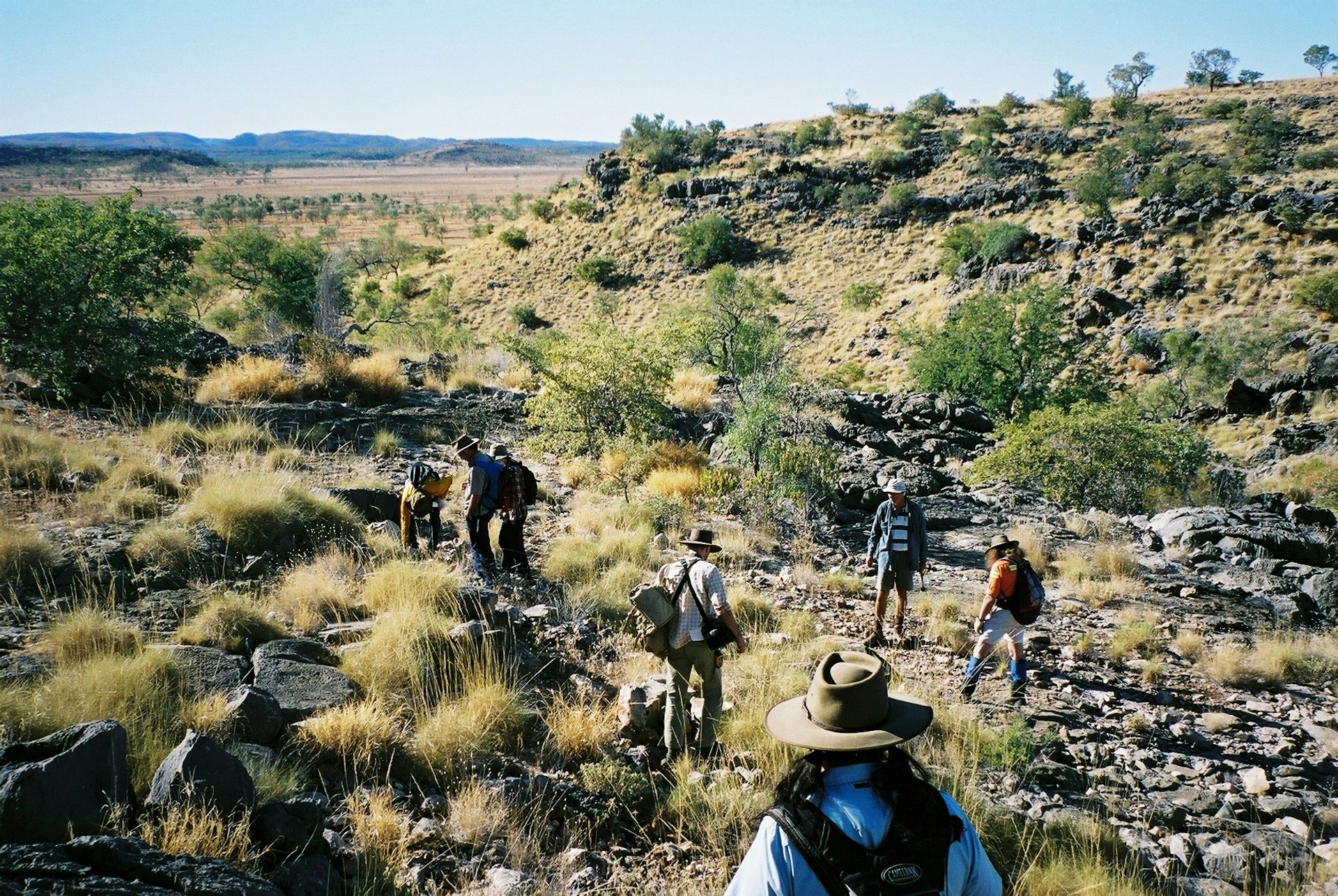
The Riversleigh World Heritage Area on Waanyi country in northwestern Queensland is one of the world’s richest fossil deposits.
Harry Rosenthal
Miyumba chrisdickmani was about the size of a modern antechinus or large dunnart, weighing only around 30 grams.
It is known from six fossil lower jaws recovered from the Riversleigh World Heritage Area on Waanyi country in northwestern Queensland. This is one of the world’s richest fossil deposits. It preserves Australian ecosystems that span more than 25 million years.
Although tiny, the animal’s teeth preserve an important evolutionary clue.
For decades, palaeontologists struggled to identify fossil dasyurids because there was no unique dental feature that clearly separated them from their extinct relatives. Miyumba reveals one at last.
In most primitive marsupial predators, the third lower premolar is the largest of the three premolars. In modern dasyurids, however, that tooth is actually smaller than both the first and second premolars.
Miyumba possesses exactly this arrangement. This makes it the earliest known fossil to display what appears to be a defining feature of the dasyurid family.
That seemingly subtle difference finally gives palaeontologists a reliable way to recognise early members of this important group.
The earliest known dasyurid
To test where Miyumba belonged, we compared its anatomy with living and extinct marsupials using two different evolutionary analyses.
One examined hundreds of anatomical features preserved in fossils. The other combined anatomical evidence with DNA sequence data from living species while also incorporating the ages of fossil species to estimate when major groups evolved.
Both approaches reached the same conclusion. Miyumba chrisdickmani represents the earliest and most primitive known dasyurid.
The analyses also identified another small Riversleigh fossil, Mayigriphus orbus, as one of the earliest members of the lineage that eventually gave rise to today’s dunnarts, planigales and other small arid-adapted dasyurids.
Together these discoveries push the origin of the dasyurid family back to around 23 million years ago, roughly five million years earlier than previous estimates.
An early life in rainforests
Perhaps the biggest surprise is what these fossils reveal about where modern dasyurids came from.
Today, many of Australia’s smallest dasyurids thrive in dry grasslands and deserts. Yet Miyumba lived in the lush rainforest ecosystems that covered much of northern Australia during the Early Miocene. Its anatomy also suggests it was most closely related to modern rainforest species found only in New Guinea.
This hints that the earliest dasyurids evolved in rainforests before some lineages adapted to the increasingly dry environments that spread across Australia over the past 15 million years.
While many ancient rainforest species disappeared from mainland Australia, some of their descendants may have survived in New Guinea’s tropical forests, where similar environments persist today.
A second mystery might be solved
The timing may also explain another long-standing mystery.
Early dasyurids appear just as another group of Australian marsupial predators, the keeunamorphians, disappeared from the fossil record.
It’s possible that as these older predators declined, early dasyurids expanded into the ecological niches they left behind before eventually diversifying into the remarkable array of carnivorous marsupials we know today.
A handful of tiny fossil jaws may not seem like much. But they reveal the missing opening chapter in the evolutionary history of Australia’s most successful marsupial predators and show that sometimes the smallest fossils answer the biggest questions.

Timothy Churchill, Adjunct Associate Lecturer, School of Biological, Earth & Environmental Sciences, UNSW
This article is republished from The Conversation under a Creative Commons license. Read the original article.


Taken together, these six fragments of jaw preserve a history that is irreconcilable with the creationist account. Miyumba chrisdickmani lived in an Australian rainforest about 23 million years ago, possessed the defining dental characteristic of the dasyurid family, yet retained ancestral features expected in an early member of that lineage. Its descendants and relatives subsequently diversified as Australia’s climate and vegetation changed, while related rainforest forms may have survived in New Guinea.
The real difficulty for creationism is therefore not merely the fossil’s inconvenient age. Its geological position, anatomy, inferred environment and placement in phylogenetic analyses all tell the same story. Molecular evidence had indicated that an early dasyurid lineage must once have existed; the fossil record had not yet revealed it. Now a fossil with the predicted combination of characteristics has been found in rocks of the appropriate age. A supposed gap in evolutionary history has become another piece of evidence for that history.
A creationist can, of course, dismiss the geological evidence and insist that the animal belonged to some undefined “created kind”. But that explains neither its age nor its position near the base of a branching family tree. If all dasyurids are placed within a single “kind”, creationists must concede that one ancestral population can diversify into almost 80 species with markedly different sizes, habitats and ways of life. The imagined boundary around the “kind” is simply moved whenever evidence crosses it.
This discovery also illustrates an important difference between science and creationism. When Barinya wangala was shown not to be a dasyurid, scientists corrected its classification and acknowledged that the gap in the fossil record had reopened. When Miyumba was discovered, they tested its relationships using independent analytical methods and revised the family’s history again. Science changes its conclusions to accommodate the evidence; creationism begins with an unalterable conclusion and must continually find ways to make the evidence disappear.
These tiny jaws were not deposited to refute Genesis, but they do so nevertheless. They belong to an animal that lived, hunted and reproduced in an Australian rainforest millions of years before humans existed, occupying a predictable position in a lineage that would later radiate across Australia and New Guinea. Miyumba is not simply too old for creationism: it is part of a coherent evolutionary history for which creationism has no explanation at all.
Advertisement
Amazon

Amazon

Amazon

Amazon

Amazon

Amazon

Amazon

Amazon

Amazon

Amazon

Amazon

Amazon

All titles available in paperback, hardcover, ebook for Kindle and audio format.
Prices correct at time of publication. for current prices.



No comments :
Post a Comment
Obscene, threatening or obnoxious messages, preaching, abuse and spam will be removed, as will anything by known Internet trolls and stalkers, by known sock-puppet accounts and anything not connected with the post,
A claim made without evidence can be dismissed without evidence. Remember: your opinion is not an established fact unless corroborated.