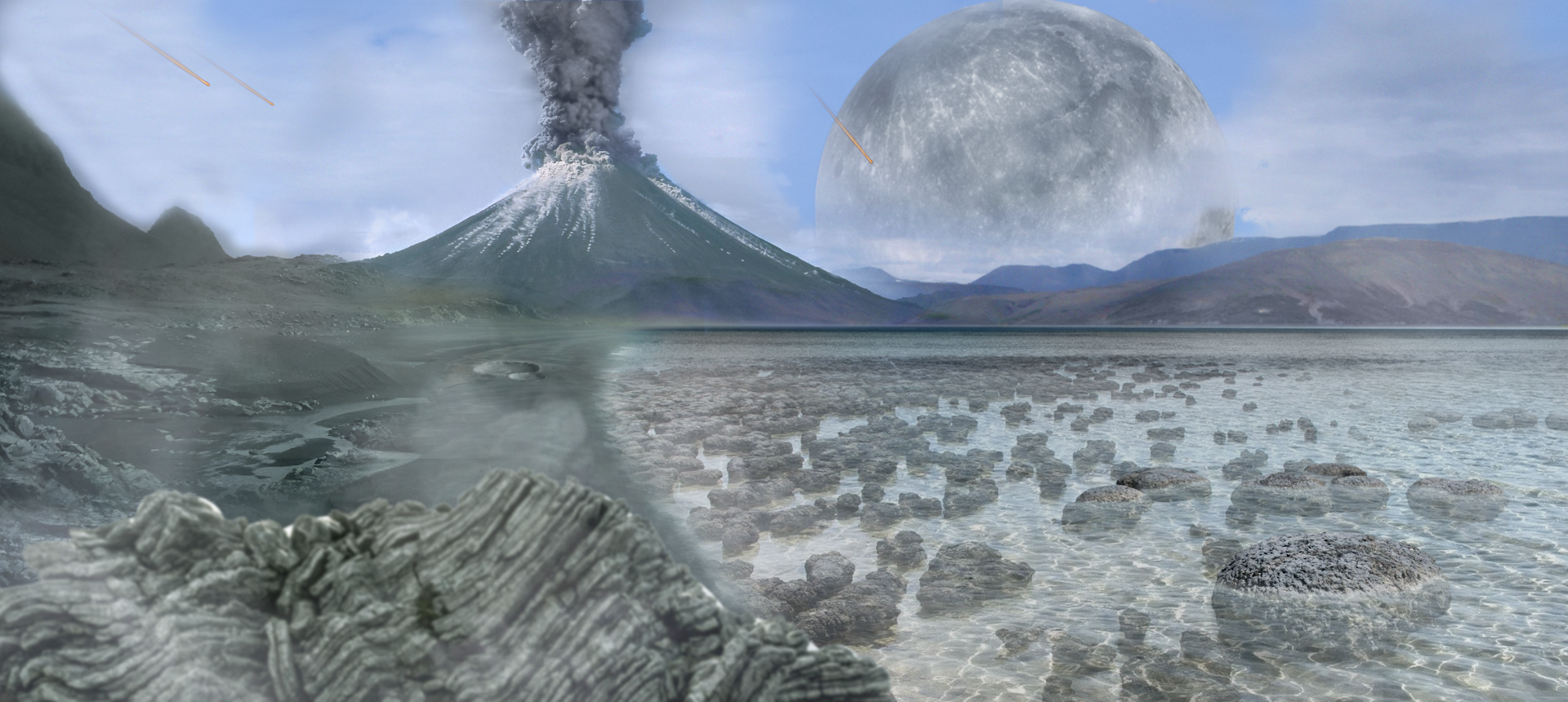
An artist’s impression of Earth during the Archaean period.
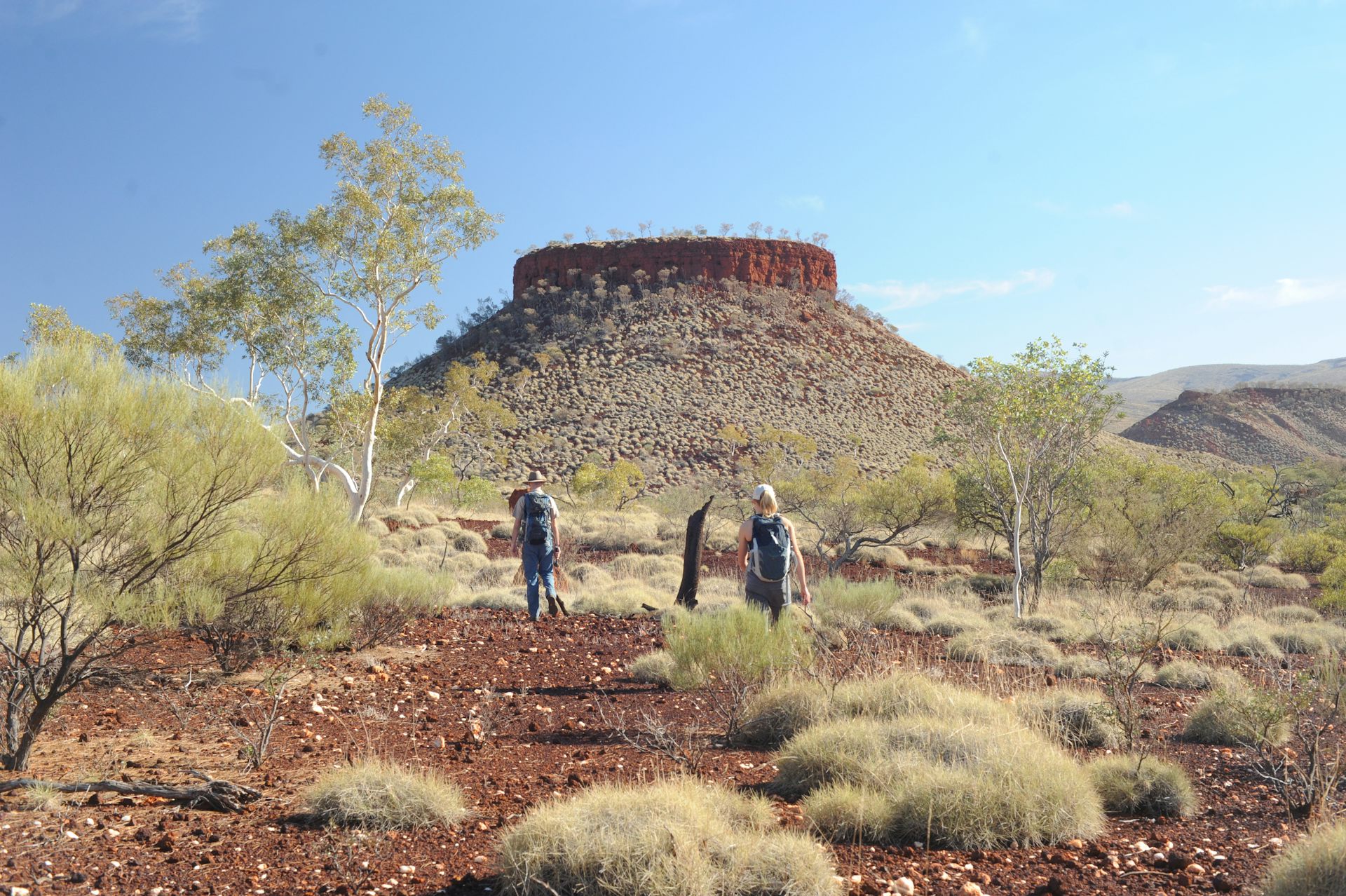
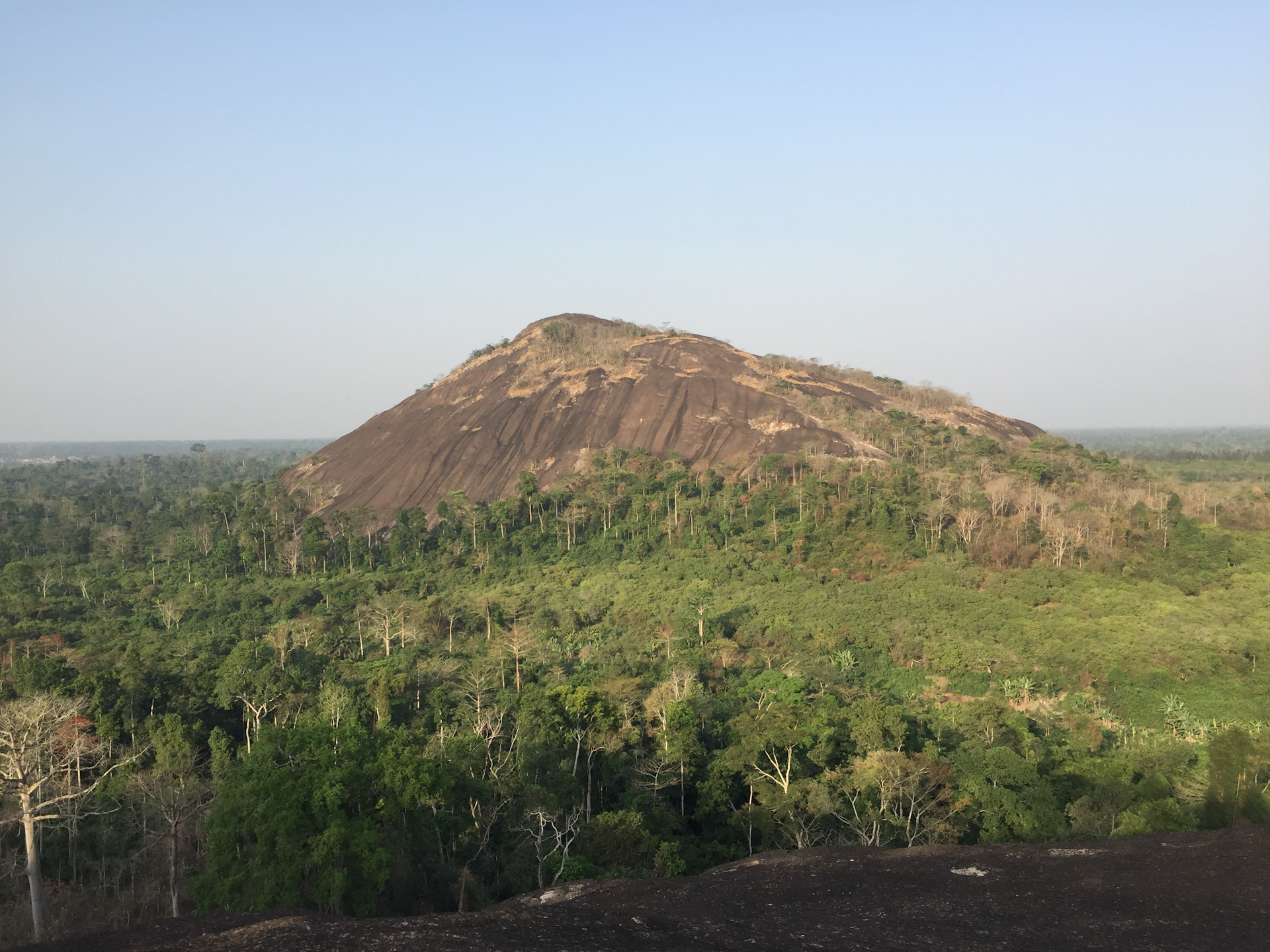
A flat-topped mesa photographed during geological fieldwork in Western Australia.
Photograph: B. Ware.
How do you tell when Earth began to recycle its crust on a planetary scale, given that the recycling itself destroys much of the evidence? One clue survives even when a rock melts. The new rock that crystallises from the melt can inherit a distinctive mixture of lead isotopes from its source. That gives geologists a way to trace the history of crust far older than the rock they hold in their hands.
In a paper published in Proceedings of the Royal Society A, Dr Janne Liebmann of Curtin University and colleagues traced one such signature through rocks from around the world. They found that crust formed about four billion years ago supplied material for successive generations of younger rocks. For roughly a billion and a half years, the same chemical inheritance kept turning up. Then, about 2.5 billion years ago, the trail ends. Across the regions sampled, the team could find no trace of that distinctive signature in younger rocks.
The authors interpret its disappearance as evidence of a change in the scale of crustal recycling. Ancient crust that had repeatedly melted and cooled in much the same place could now be carried away and mixed with other material, as happens on Earth today. Exactly when the first plate moved remains an open question. What these rocks help us to recognise is when the consequences of large-scale recycling became apparent around the world.
For young-Earth creationists, the awkward detail is the interval between the two dates. By the time that lead signature disappeared, the crust that gave rise to it had already undergone some 1.5 billion years of reworking. A recent global Flood offers no explanation for why successive generations of igneous rock should inherit the same chemical signature, or why that inheritance should cease at much the same point on different continents. Even the process that reshapes our planet today has a history far longer than the few thousand years biblical literalists allow for the planet itself.
In the following article from The Conversation, reproduced under a Creative Commons licence and reformatted for stylistic consistency, Janne Liebmann explains how her team followed that chemical trail and what they learned from the point where it ran out.

A chemical fingerprint in ancient rocks suggests plate tectonics began 2.5 billion years ago
Photo taken during fieldwork in Western Australia, where many of the ancient rocks analysed in this study were collected.
Photo by B. Ware
Plate tectonics is one of the reasons Earth looks so different from its planetary neighbours.
The movement of enormous chunks of our planet’s crust builds mountain ranges, triggers earthquakes, shapes our oceans and continents, and helps regulate Earth’s climate and magnetic field over deep time.
This process may also be key to sustaining the kind of long-term habitability that allowed complex life to evolve. But exactly when it began has been a long-standing mystery.
In new research, we studied chemical fingerprints in more than 1,000 rocks to look for clues – and found clear evidence for when this remarkable shift occurred.
Why plate tectonics matters
Many scientists believe plate tectonics provides the long-term stability that keeps our planet life-friendly, unlike tectonically “dead” worlds such as Venus and Mars.
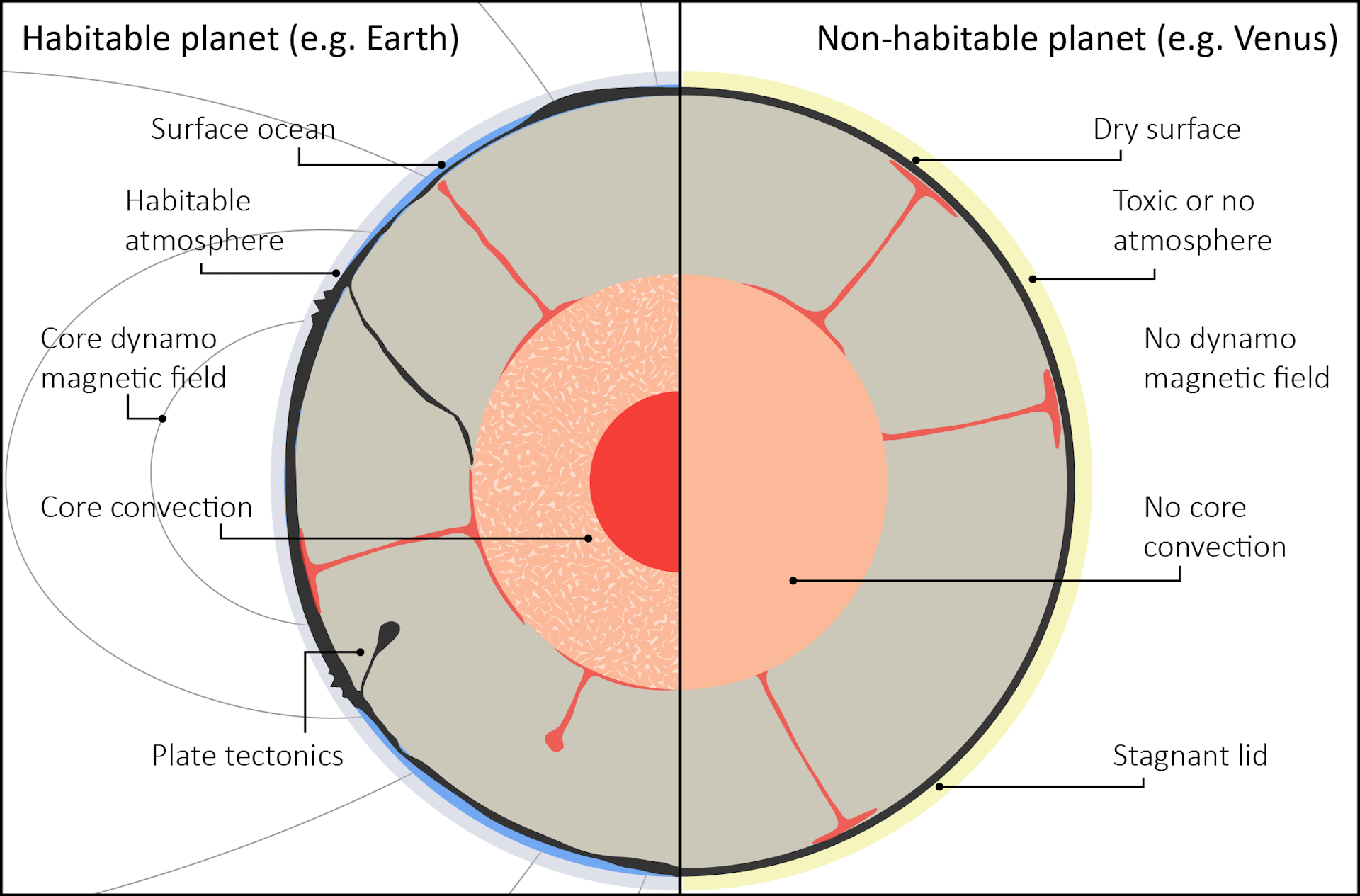
Characteristic features of long-term life-friendly (‘habitable’) and non-habitable planets.
For much of its early history, Earth may have been mostly covered by oceans, without the shifting, colliding plates that build tall mountains – which in turn erode away, supplying the nutrients to feed marine life.
An artist’s impression of Earth during the Archaean period.
Often, all that survives are chemical fingerprints preserved in ancient rocks that have endured for billions of years, against the odds.
Reading the fingerprints in rocks
In our new study, we studied one such fingerprint.
New continental crust – the ground we stand on – doesn’t always form fresh from crystallising mantle magma. Often it’s made from melting older rock that was already sitting inside existing crust.
That process leaves a lasting chemical trace in the new rocks, a bit like the DNA a child inherits from their parents. This is the fingerprint we studied.
In some minerals (feldspar and some sulfide minerals, in our case) this fingerprint can survive largely undisturbed for billions of years.
We analysed over 1,200 rocks, some newly analysed by us, others compiled from earlier studies, from ancient landmasses across Australia, Africa, North America and Europe, spanning nearly four billion years of Earth’s history.
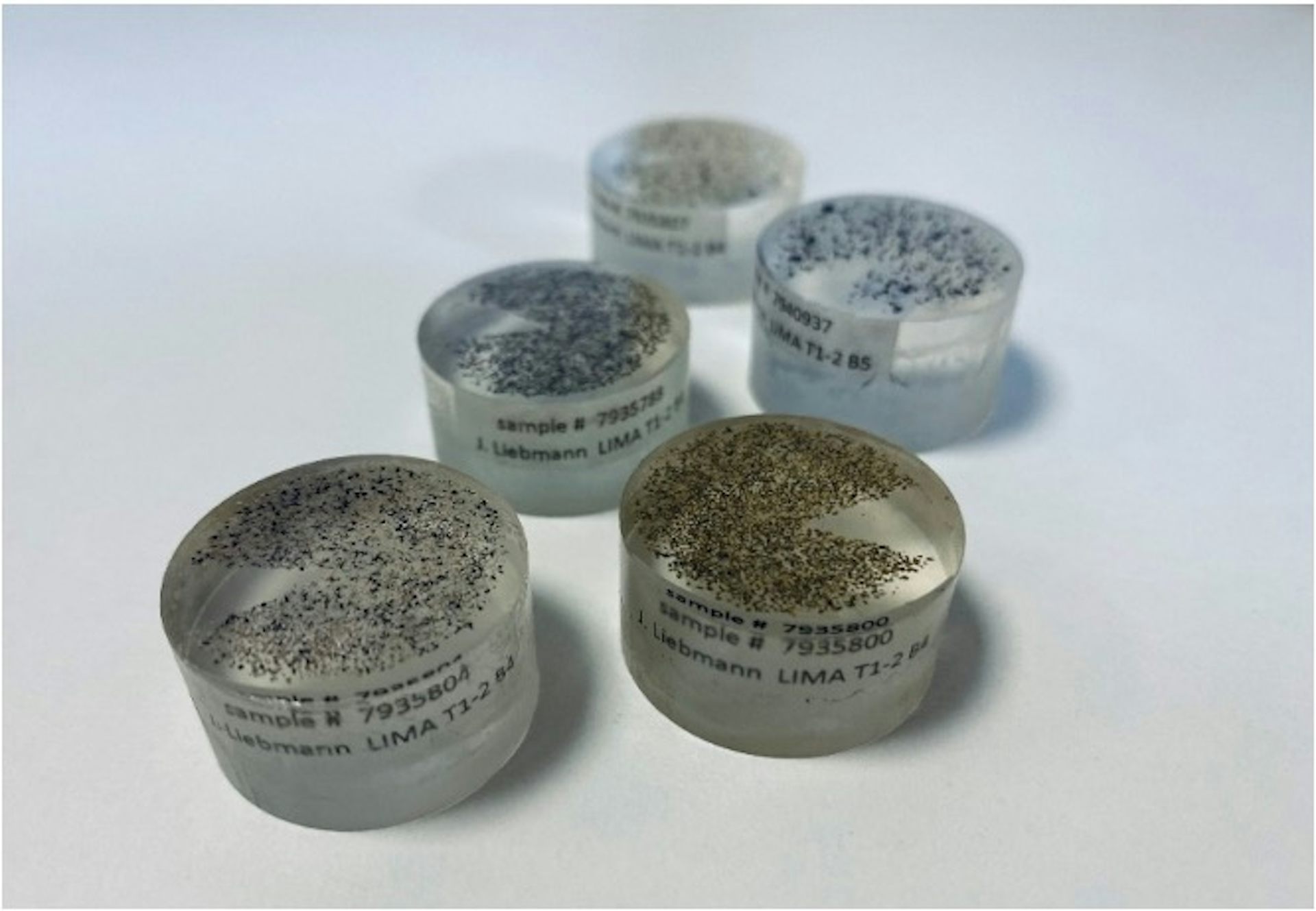
Some of the many samples analysed for this study. The mineral crystals inside retain their chemical fingerprint largely unchanged for millions to billions of years.
J. Liebmann
We found a striking pattern in the fingerprints. Rocks older than about 2.5 billion years carried the unmistakable signature of very ancient crust, which appears to have formed about four billion years ago.
In geological terms, this is not too long after Earth itself formed. This ancient crust material was melted and remelted repeatedly, for well over a billion years, to produce the granite-like rocks that made up much of Earth’s earliest continents.
Then, around 2.5 billion years ago, that fingerprint vanishes abruptly. We searched through hundreds of younger rocks without ever finding the distinctive signature of those ancient crustal reservoirs again.
A granite dome in Ghana, photographed during fieldwork.
J. Liebmann
We think the vanishing of this fingerprint marks a fundamental reorganisation in how Earth builds continents. Before 2.5 billion years ago, our results suggest the same ancient continental material was melted over and over again, with little input from other sources.
Then things shifted. Instead of melting ancient rocks to form new crust, the planet started producing crust from a mix of old and new sources. This is something we still see happening today at the edge of tectonic plates, where volcanoes bring fresh molten rock up from the mantle while older crust is also being recycled.
As a result, the fingerprint of the ancient crust disappeared. So we believe this shift 2.5 billion years ago was when plate tectonics may have begun.
There is other evidence of major changes around the same time, too. There were more changes in rock chemistry and alterations in the thickness and composition of the crust, and Earth’s first supercontinent also formed in this era.
Taken together, all this evidence shows there was a turning point in how our planet works at this time. And as a result, Earth’s surface developed the environment life needed to flourish.
We still don’t know exactly what triggered the start of plate tectonics, but we’re continuing to chase an answer. For now, our results offer another piece of the puzzle of when Earth’s unique tectonic engine kicked into gear.

Janne Liebmann, Research Fellow, Curtin University
This article is republished from The Conversation under a Creative Commons license. Read the original article.


For young-Earth creationists, the awkward question is how one rock can have a history older than itself. A granite forms when a melt cools and crystallises, but some of the lead in its minerals can tell us about the crust that supplied the melt. In this study, rocks of different ages, now found on different continents, repeatedly point back to crust formed about four billion years ago. By the time its distinctive lead signature disappears, about 2.5 billion years ago, that crust had already supplied material for new rocks over an interval some 250,000 times as long as the entire history of Earth allowed by a 6,000-year biblical chronology.
Invoking Noah’s Flood does nothing to explain that sequence. Floodwater can erode a hillside, carry away fragments of granite and deposit them elsewhere. The lead signature in question, however, is preserved inside minerals that crystallised from molten rock. Moving a piece of granite from one place to another leaves its earlier history still to be explained. Why do successive generations of igneous rock carry the signature of the same ancient source, and why does it disappear from younger rocks on different continents at much the same time?
Geologists can disagree about when modern-style plate tectonics began because different observations record different aspects of the process. A plate might have moved locally long before crustal recycling became widespread enough to change the chemistry of rocks around the world. Liebmann and her colleagues have given that debate a specific observation any explanation must accommodate. Future discoveries may revise their interpretation of what happened 2.5 billion years ago. Biblical literalism faces a more basic difficulty. Before it can explain what changed, it has to find room in Genesis for the billion and a half years of geological history that had already elapsed.
Advertisement
Amazon

Amazon

Amazon

Amazon

Amazon

Amazon

Amazon

Amazon

Amazon

Amazon

Amazon

Amazon

All titles available in paperback, hardcover, ebook for Kindle and audio format.
Prices correct at time of publication. for current prices.



No comments :
Post a Comment
Obscene, threatening or obnoxious messages, preaching, abuse and spam will be removed, as will anything by known Internet trolls and stalkers, by known sock-puppet accounts and anything not connected with the post,
A claim made without evidence can be dismissed without evidence. Remember: your opinion is not an established fact unless corroborated.