

The creationist Ken Ham’s website, Answers in Genesis (AiG), is notorious for the way it exploits the ignorance of its target readership and their eagerness for spurious “scientific” validation of evidence-free superstition. For example, AiG recently posted on X, formerly Twitter, asserting that the fossil record is “the graveyard of the global flood”:
The fossil record is the graveyard of the global flood. pic.twitter.com/1OWyNcEk5o
— Answers in Genesis (@AiG) May 20, 2026
Nor do fossil-bearing rocks show the global mixing that a planet-wide genocidal flood should have produced. Instead, they preserve organisms that lived in particular environments at particular times. Marine organisms occur in marine sediments; freshwater organisms in freshwater deposits; terrestrial organisms in terrestrial deposits. Local and regional faunas remain local and regional.
We do not find Australian marsupials randomly mixed through Cambrian marine deposits, nor African mammals churned together with Jurassic dinosaurs and Ordovician trilobites. If a flood had covered even the highest mountains, tearing up ecosystems across the planet and carrying bodies wherever the currents took them, that is exactly the kind of disorder we should expect. It is not what the fossil record shows.
So, far from proving there was a global genocidal flood just a few thousand years ago, fossils in sedimentary rocks demonstrate exactly the opposite. They record a long, ordered, localised and historically structured history of life on Earth. That history is not only incompatible with the childish flood myth promoted by AiG; it is one of the strongest lines of evidence for evolution over deep time. And that is probably why Ken Ham’s creationist organisation needs its followers to believe otherwise. The tactic is perfectly plain and deliberately dishonest: if the facts contradict your claims, misrepresent the facts.
A striking example of this ordered fossil record over geological time has just been published in Nature by a team of palaeontologists and geobiologists led by Maxwell A. Lechte, of the University of Sydney, NSW, Australia, and Leigh Anne Riedman, of the University of California, Santa Barbara, USA. They analysed core samples of ancient sedimentary mudstone, drilled decades ago by mineral exploration companies in Australia’s Northern Territory and later stored by the Northern Territory Geological Survey.
These core samples preserve mudstones formed from seafloor sediment in an ancient inland sea that covered much of northern Australia more than 1.5 billion years ago. Within them are microscopic fossils of organisms that lived and died in those ancient environments. Scientifically, the important point is not merely that these rocks expose the absurdity of AiG’s flood apologetics, but what they reveal about early life and the conditions in which it evolved. In this case, the microfossils suggest that some of the earliest known eukaryotes — the lineage that eventually gave rise to animals, plants, fungi and algae — were associated with oxygenated seafloor settings and were probably dependent on oxygen, unlike many of their prokaryotic predecessors.
Unlike creationists, the scientists were not looking for something they could twist to fit a predetermined conclusion. They were asking what could be learned from the evidence. The result is a clearer picture of the early evolution of complex cells, the environments in which they lived, and the long natural history of life on Earth — a history written in the rocks, not in Bronze Age mythology.
The two lead authors have just published their own account of the research and what they learned from it in The Conversation. Their article is reprinted here under a Creative Commons licence, reformatted for stylistic consistency:

Tiny fossils found in 1.7 billion‑year‑old mud yield clues to the evolution of complex life
Drill cores of sedimentary rock which contains microscopic fossils.
Maxwell Lechte
Stored in an open-air warehouse in tropical Darwin, Australia, are dozens of trays containing cylindrical cores of rock. They are from drill holes bored hundreds of metres below the surface by mineral exploration companies decades ago.
Some of these cores at the Northern Territory Geological Survey are mudstone – a type of sedimentary rock formed from hardened seafloor mud. The companies that drilled these cores were largely unaware that within these mudstones were fossils of microscopic organisms buried on the seafloor of an ancient inland sea that covered much of northern Australia over 1.5 billion years ago.
As our new study, published today in Nature, shows, these fossils are crucial for addressing a longstanding puzzle about the major evolutionary leap that led to all complex life on Earth: the origin of eukaryotes.
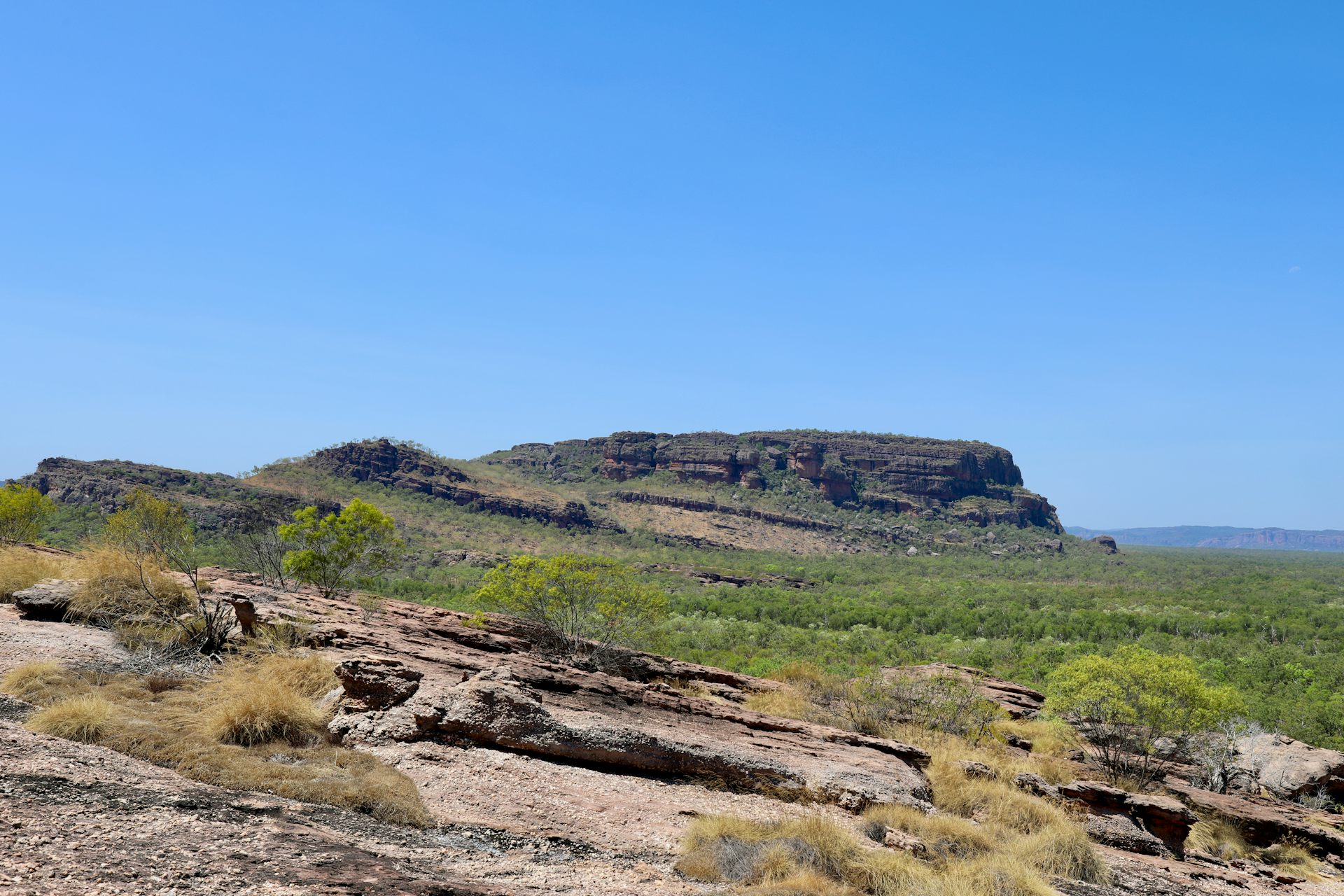
Layers of 1.7 billion-year-old sedimentary rocks, Kakadu National Park, Northern Territory.
Maxwell Lechte
Small but complex
All life on Earth can be placed into one of two types which are fundamentally different at the cellular level.
Prokaryotes (bacteria and archaea) have simple cellular organisation and are mostly single celled. Eukaryotes – including all animals, plants, algae and fungi – are very different. They have much more complicated cells featuring a nucleus and other specialised structures such as organelles which perform specific jobs.
The eukaryotic revolution transformed the planet. It led to the rise of animals and, eventually, to us. Based on observations from the genes of living organisms, it is now widely agreed that the last common ancestor of all living eukaryotes resulted from the symbiotic union of (at least) two prokaryotic microbes: an archaeon and a bacterium.
The first evidence for eukaryotic life comes in the form of these fossils of single-celled organisms. They show a level of cellular complexity not seen among prokaryotes, but common in eukaryotes.
Eukaryote fossils can be found around the world in rocks dating back at least 1.5 billion years. The fossils of the Northern Territory, the oldest of which date back to 1.75 billion years ago, are the oldest currently known eukaryote fossils globally.
But the ancient world in which early eukaryotes evolved remains shrouded in mystery. And so many fundamental aspects regarding their nature are unknown.
Oxygen – friend or foe?
Many types of bacteria can live and grow in places without oxygen. But nearly all eukaryotes alive today use oxygen for their survival. That’s because aerobic respiration – breaking down food using oxygen – provides the vast amounts of energy that complex life demands.
But the idea that oxygen has always been beneficial for all eukaryotes has come under fire in recent years. This follows the surprising discoveries of enigmatic eukaryotes that can thrive in conditions without oxygen.
There is also mounting evidence from the geological record that when eukaryotes were first evolving, oxygen was likely much scarcer. This means oxygen-free marine habitats would have been the norm. Collectively, these observations have called into question the assumption eukaryotes have depended on oxygen since their inception.
Genetic studies of living microbes belonging to groups considered closest to the ancestors of the first eukaryote can offer key insights into eukaryote ancestry. But only the fossil record can tell us about long-extinct lineages. And only geology can offer a window into the kind of world these organisms lived in.
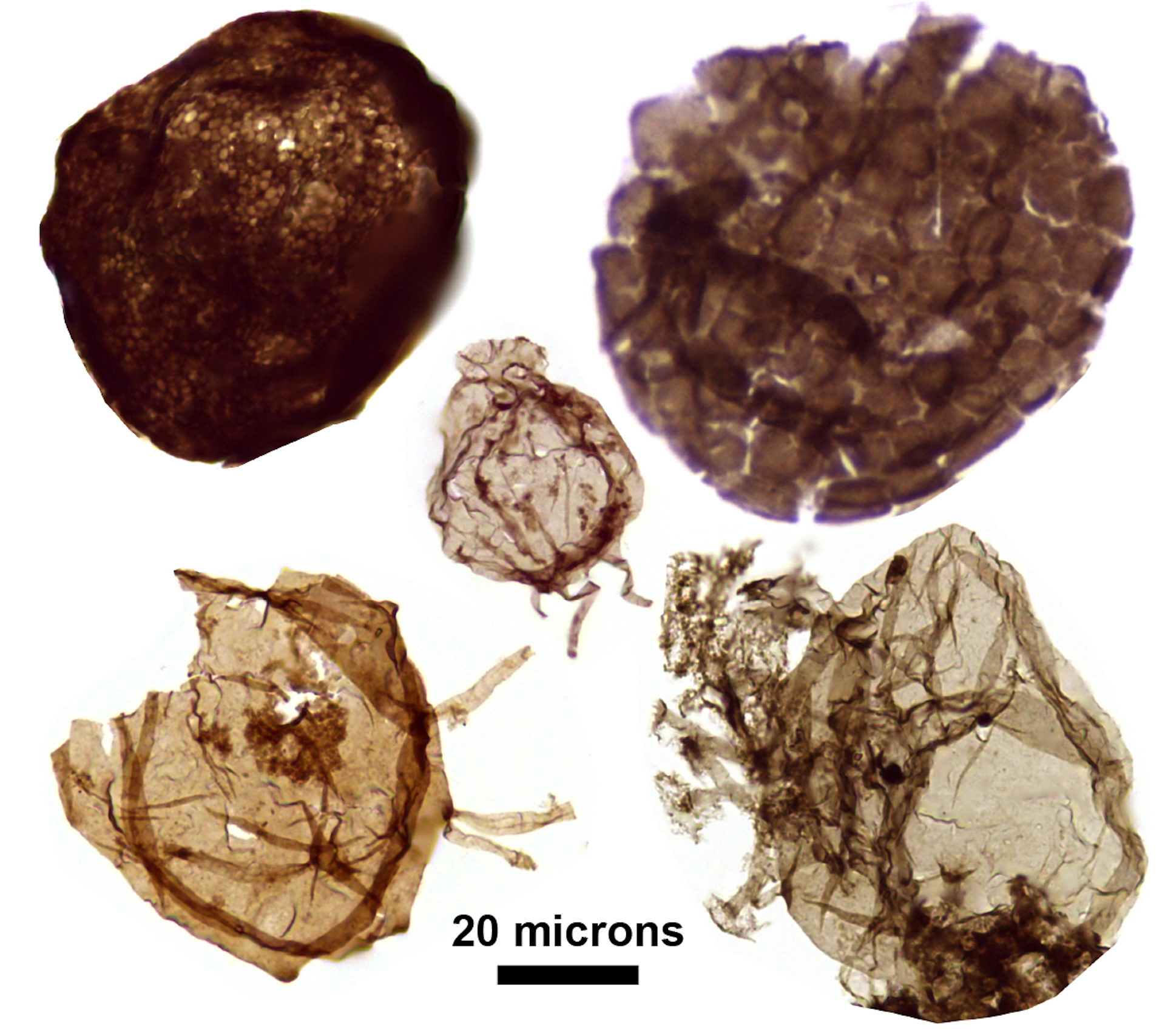
Fossils of single-celled eukaryotic organisms with complex surface features such as extensions and plates.
Leigh Anne Riedman
For our new study, we crushed up samples of the mudstone cores stored in Darwin, then dissolved them. We identified more than 12,000 fossils by analysing the organic residue left behind by this dissolution under a microscope.
We also studied the mudstones the fossils were preserved in to better understand what the environment was like when the sediments were deposited. This offered insight about the habitats in which these eukaryotes lived. And by analysing the chemistry of these mudstones, we could determine whether oxygen was present in the ancient seawater.
Our results show that eukaryote fossils were found in environments ranging from coastal mudflats to the open sea. But they were present only in samples deposited in oxygenated settings. Samples from oxygen-free environments contained only simple, prokaryotic forms.
This suggests that even the oldest known eukaryotes that lived on Earth 1.7 to 1.4 billion years ago were dependent on oxygen. These data lend support to a long-held hypothesis that oxygen played a key role in driving the evolution of early eukaryotes.
Resolving the drivers and context of the major evolutionary leap represented by early eukaryotes is one of the major outstanding questions in the life sciences. Ongoing studies of these enigmatic, ancient microfossils will no doubt tell us more about our own origins – and our place in the cosmos.

Maxwell Lechte, Research Associate in Geobiology, University of Sydney and Leigh Anne Riedman, Postdoctoral Researcher, Department of Earth Science, University of California, Santa Barbara
This article is republished from The Conversation under a Creative Commons license. Read the original article.

The contrast could hardly be clearer. AiG’s claim depends on treating the fossil record as though it were a single catastrophic dump of dead organisms, swept together in one brief episode of divine violence. But the rocks do not show that. They show order, sequence, locality, environmental context and immense age. They show organisms preserved where they lived, in sediments laid down under recognisable conditions, in layers that can be correlated and dated by multiple independent methods.
In this case, the evidence is not a chaotic graveyard from a recent flood, but a window into an ancient Proterozoic seafloor more than 1.5 billion years old. The microscopic fossils in these mudstones are not randomly mixed with dinosaurs, mammals, flowering plants or modern marine life, as a genuine global flood should have produced. They belong to their own time and place, and they help scientists reconstruct the slow emergence of complex cellular life in an oxygenated world long before animals, plants, or Ken Ham’s preferred mythology had appeared.
That is the central problem for creationism. The evidence does not merely fail to support its claims; it positively contradicts them. The fossil record is not a jumble; it is a sequence. Sedimentary rocks are not an indiscriminate flood deposit; they are archives of changing environments over deep time. Fossils are not props in a Bible story; they are data points in the long, natural history of life on Earth.
So, when Answers in Genesis declares that “the fossil record is the graveyard of the global flood”, it is not making a scientific argument. It is selling a slogan to people it hopes will not look too closely. Science, by contrast, does look closely — at the rocks, the chemistry, the fossils, the dating, and the environmental context — and what it finds is not a recent act of supernatural destruction, but a deep, ordered, evolving history of life, written patiently in stone.
And that, of course, is why creationist apologetics has to misrepresent it. The facts do not need faith, slogans, or special pleading. They only need to be examined.
Advertisement
Amazon

Amazon

Amazon

Amazon

Amazon

Amazon

Amazon

Amazon

Amazon

Amazon

Amazon

Amazon

All titles available in paperback, hardcover, ebook for Kindle and audio format.
Prices correct at time of publication. for current prices.



No comments :
Post a Comment
Obscene, threatening or obnoxious messages, preaching, abuse and spam will be removed, as will anything by known Internet trolls and stalkers, by known sock-puppet accounts and anything not connected with the post,
A claim made without evidence can be dismissed without evidence. Remember: your opinion is not an established fact unless corroborated.