Religion, Creationism, evolution, science and politics from a centre-left atheist humanist. The blog religious frauds tell lies about.
Friday, 2 August 2024
Unintelligent Design - Cancer in Birds - Malevolence, Incompetence or Evolution
ASU researchers explore cancer susceptibility in birds | ASU News
Researchers at Arizona State University (ASU) have discovered a statistical link between the incidence of cancer in birds and their reproductive rates. As species, birds that lay more eggs are more liable to die of cancer.
The team attribute this to an evolutionary tradeoff between reproduction and survival. Those species which are more susceptible to cancer - which is a function of aging as the longer an individual lives the greater are its chances of developing a cancer - have evolutionary pressure to produce more offspring while young, where as those with a lower susceptibility can afford to expend less energy in reproducing and to spread it over a longer average lifespan.
This is easily understood as the result of an evolutionary process, as are cancers, which result from mistakes in cell replication, which is a sub-optimal, utilitarian process in multicellular organisms with specialised cells and tissues, resulting from inheriting the same mechanism that single-celled ancestors used so the whole genome is replicated in every cell, regardless of which genes those specialized cells will need.
Refuting Creationism - How a Mass Extinction 66 Million Year Before Creation Week Triggered The Rappid Evolution Of Birds
University of Cambridge
Another major milestone in the history of life on Earth happened, like almost everything else, in that long pre-Creation Week history that creationists need to ignore. It was the mass extinction about 66 million years ago that killed the non-avian dinosaurs and most megafauna, leaving vacant niches that could be exploited by the descendants of survivors. It's no surprise to anyone who understands how evolution works, that this led to a proliferation of new species as existing species diversified to fill those niches.
That much was known already from the fossil record, but now a University of Michigan study has found how this maps onto changes in the genome of the major bird families, as a kind of DNA fossil, just as the TOE predicts.
The major difference between the different taxons is how developed the chicks are on hatching and how dependent they are on their parents. In ducks, geese, the ratites and ground-nesting birds such as the plovers, chickens and turkeys, the chicks are mobile and able to feed themselves (precocial) almost as soon as they've hatched. At the other end of the scale, many passerines are helpless on hatching and are entirely dependent on their parents for food and shelter (altricial) for several weeks.
As the birds evolved and diversified, they tended to become smaller and also more altricial. This reduction in body size and increased altriciality are reflected in the genomes. It was these transitional changed that the researchers detected.
These major changes were occurring within 3-5 million years after the mass extinction.
Wednesday, 31 July 2024
Malevolent Designer News - Is Creationism's Divine Malevolence Hedging Its Bets With SARS-CoV-2
The virus that causes COVID-19 is widespread in wildlife, Virginia Tech scientists find | Virginia Tech News | Virginia Tech
If you've got money to invest, don't invest it all in one product. If that product fails you lose everything, so spread it around, that way you're reducing your risk and should have something left even if your main investment crashes. In other words, don't have all your eggs in one basket.
And Creationism's malevolent designer, who invested heavily in the SARS-CoV-2 virus as its preferred way to make people sick and die and to ruin national economies on a world-wide scale, understands that principle well. But the problem is, humans fought back and not only invented an effective vaccine that cut down the malevolence’s return on investment, but they also developed immunity which reduces the death toll down to a mere headache and feeling a bit lethargic for a few days.
Do you have any information on how many other species can also be infected with the SARS-CoV-2 virus? Yes, many other species can be infected with the SARS-CoV-2 virus, the virus responsible for COVID-19 in humans. Research has identified several animals that can be naturally or experimentally infected. Here is an overview of some of the species known to be susceptible to SARS-CoV-2:By the divine malevolence was crafty and hedged its bets by designing the virus so it also infects wild animals so it can build up a nice little nest egg with which to launch another big raid on the futures market which could pay dividends in terms of human lives and increased suffering. All it need do is give the virus a little tweak and we could have another pandemic to rival the 2020 one all over again.
The list of species continues to evolve as more research is conducted. Surveillance and studies are ongoing to better understand the range of susceptible species, their role in the transmission of the virus, and the potential implications for human and animal health.
- Domestic Animals:
- Cats: Both domestic and big cats (like lions and tigers in zoos) have been infected. Cats can also transmit the virus to each other.
- Dogs: Some dogs have tested positive, but they generally show no or mild symptoms.
- Ferrets: Highly susceptible and can transmit the virus to other ferrets.
- Mink: Infected minks have been found on farms, with some cases leading to large outbreaks and human infections.
- *Wildlife:
- Big Cats: Lions, tigers, snow leopards, and cougars in zoos have contracted the virus.
- White-tailed Deer: Studies have shown that these deer can be infected and spread the virus among themselves.
- Non-Human Primates: Various species of monkeys, such as rhesus macaques, cynomolgus macaques, and marmosets, can be infected and exhibit symptoms similar to humans.
- Laboratory Animals:
- Hamsters: Both Syrian and Chinese hamsters are susceptible and can transmit the virus.
- Mice: Wild-type mice are generally not susceptible, but genetically modified mice expressing the human ACE2 receptor can be infected.
- Rabbits: Some susceptibility has been observed, although with mild or no symptoms.
- Tree Shrews: Can be infected and are used in research studies.
- Farm Animals:
- Pigs: Some studies have shown low susceptibility with no significant symptoms.
- Cows** and **Chickens: Generally considered not susceptible based on current evidence.
We have known about the zoonotic abilities of the virus for some time - after all it is believed to have evolved in another species before transferring to humans in 2019, but a team of Virginia Tech researchers have discovered that it may be more widespread in the wild animal populations, especially those near human habitation, than was previously thought.
Their results are published, open access in the journal Nature Communications and are explained in a Virginia Tech news release:
The virus that causes COVID-19 is widespread in wildlife, Virginia Tech scientists findDetails of the carrier species appear in the team's open access paper on Nature Communications:
Six of 23 common wildlife species showed signs of SARS-CoV-2 infections in an examination of animals in Virginia, as revealed by tracking the virus’s genetic code.
SARS-CoV-2, the virus responsible for COVID-19, is widespread among wildlife species, according to Virginia Tech research published today in Nature Communications. The virus was detected in six common backyard species and antibodies indicating prior exposure to the virus were found in five species with rates of exposure ranging from 40 to 60 percent depending on the species.
Genetic tracking in wild animals confirmed both the presence of SARS-CoV-2 and the existence of unique viral mutations with lineages closely matching variants circulating in humans at the time, further supporting human-to-animal transmission, the study found.
The highest exposure to SARS CoV-2 was found in animals near hiking trails and high-traffic public areas, suggesting the virus passed from humans to wildlife, according to scientists at the Fralin Biomedical Research Institute at VTC, the Department of Biological Sciences in Virginia Tech’s College of Science, and the Fralin Life Sciences Institute.
The findings highlight the identification of novel mutations in SARS-CoV-2 in wildlife and the need for broad surveillance. These mutations could be more harmful and transmissible, creating challenges for vaccine development.
The scientists stressed, however, that they found no evidence of the virus being transmitted from animals to humans, and people should not fear typical interactions with wildlife.
Investigators tested animals from 23 common Virginia species for both active infections and antibodies indicating previous infections. They found signs of the virus in deer mice, Virginia opossums, raccoons, groundhogs, Eastern cottontail rabbits, and Eastern red bats. The virus isolated from one opossum showed viral mutations that were previously unreported and can potentially impact how the virus affects humans and their immune response.
The virus can jump from humans to wildlife when we are in contact with them, like a hitchhiker switching rides to a new, more suitable host. The goal of the virus is to spread in order to survive. The virus aims to infect more humans, but vaccinations protect many humans. So the virus turns to animals, adapting and mutating to thrive in the new hosts.
Professor Carla Finkielstein, Co-corresponding author
Professor of biological sciences
Department of Biological Sciences
Virginia Tech, Blacksburg, VA, USA.
SARS CoV-2 infections were previously identified in wildlife, primarily in white-tailed deer and feral mink. The Virginia Tech study significantly expands the number of species examined and the understanding of virus transmission to and among wildlife. The data suggests exposure to the virus has been widespread in wildlife and that areas with high human activity may serve as points of contact for cross-species transmission.The research team collected 798 nasal and oral swabs across in Virginia from animals either live-trapped in the field and released, or being treated by wildlife rehabilitation centers. The team also obtained 126 blood samples from six species. The locations were chosen to compare the presence of the virus in animals in sites with varying levels of human activity, from urban areas to remote wilderness.This study was really motivated by seeing a large, important gap in our knowledge about SARS-CoV-2 transmission in a broader wildlife community. A lot of studies to date have focused on white-tailed deer while what is happening in much of our common backyard wildlife remains unknown.
Assistant Professor Joseph R. Hoyt, co-corresponding author
Assistant professor of biological sciences
Department of Biological Sciences
Virginia Tech, Blacksburg, VA, USA.
The study also identified two mice at the same site on the same day with the exact same variant, indicating they either both got it from the same human, or one infected the other.
Researchers are not certain about the means of transmission from humans to animals. One possibility is wastewater, but the Virginia Tech scientists believe trash receptacles and discarded food are more likely sources.While this study focused on the state of Virginia, many of the species that tested positive are common backyard wildlife found throughout North America. It is likely they are being exposed in other areas as well, and surveillance across a broader region is urgently needed, Hoyt said.I think the big take home message is the virus is pretty ubiquitous. We found positives in a large suite of common backyard animals.
Dr Amanda R. Goldberg, first author
Department of Biological Sciences
Virginia Tech, Blacksburg, VA, USA.The virus is indifferent to whether its host walks on two legs or four. Its primary objective is survival. Mutations that do not confer a survival or replication advantage to the virus will not persist and will eventually disappear. We understood the critical importance of sequencing the genome of the virus infecting those species. It was a monumental task that could only be accomplished by a talented group of molecular biologists, bioinformaticians, and modelers in a state-of-the-art facility. I am proud of my team and my collaborators, their professionalism, and everything they contributed to ensure our success.
Professor Carla Finkielstein.
The Roanoke lab was established in April 2020 to expand COVID-19 testing.
Scientists should continue surveillance for these mutations and not dismiss them, the scientists said. More research is needed about how the virus is transmitted from humans to wildlife, how it might spread within a species, and perhaps from one species to another.This study highlights the potentially large host range SARS-CoV-2 can have in nature and really how widespread it might be. There is a lot of work to be done to understand which species of wildlife, if any, will be important in the long-term maintenance of SARS-CoV-2 in humans.
Assistant Professor Joseph R. Hoyt.The team will continue its research supported by a $5 million grant from the U.S. Department of Agriculture’s Animal and Plant Health Inspection Service.But what we’ve already learned is that SARS CoV-2 is not only a human problem and that it takes a heck of a multidisciplinary team to address its impact on various species and ecosystems effectively.
Professor Carla Finkielstein.
Other authors on the paper include:
- Kate Langwig, associate professor, Department of Biological Sciences, Fralin Life Sciences Institute
- James Weger-Lucarelli, assistant professor, Department of Biomedical Sciences and Pathobiology, Virginia-Maryland College of Veterinary Medicine
- Anne Brown, associate professor, Department of Biochemistry
- Amanda Goldberg, former postdoctoral associate, Department of Biological Sciences
- Jeffrey Marano, graduate research assistant, Department of Biological Sciences
- Pallavi Rai, graduate research assistant, Department of Biomedical Sciences and Pathobiology, Virginia-Maryland College of Veterinary Medicine
- Kelsi King, graduate research assistant, Genetics, Bioinformatics, and Computational Biology
- Amanda Sharp, graduate research assistant, Genetics, Bioinformatics, and Computational Biology
- Christopher Kailing, graduate research assistant, Department of Biological Sciences
- Macy Kailing, graduate research assistant, Department of Biological Sciences
- Members of the Virginia Tech Molecular Diagnostics Laboratory: Katherine L. Brown, Alessandro Ceci, Russell Briggs, Matthew G. Urbano, Clinton Roby
Abstract
Pervasive SARS-CoV-2 infections in humans have led to multiple transmission events to animals. While SARS-CoV-2 has a potential broad wildlife host range, most documented infections have been in captive animals and a single wildlife species, the white-tailed deer. The full extent of SARS-CoV-2 exposure among wildlife communities and the factors that influence wildlife transmission risk remain unknown. We sampled 23 species of wildlife for SARS-CoV-2 and examined the effects of urbanization and human use on seropositivity. Here, we document positive detections of SARS-CoV-2 RNA in six species, including the deer mouse, Virginia opossum, raccoon, groundhog, Eastern cottontail, and Eastern red bat between May 2022–September 2023 across Virginia and Washington, D.C., USA. In addition, we found that sites with high human activity had three times higher seroprevalence than low human-use areas. We obtained SARS-CoV-2 genomic sequences from nine individuals of six species which were assigned to seven Pango lineages of the Omicron variant. The close match to variants circulating in humans at the time suggests at least seven recent human-to-animal transmission events. Our data support that exposure to SARS-CoV-2 has been widespread in wildlife communities and suggests that areas with high human activity may serve as points of contact for cross-species transmission.
Introduction
Severe acute respiratory syndrome coronavirus 2 (SARS-CoV-2), the causative agent of coronavirus disease 2019 (COVID-19), has resulted in over 771 million human cases and over six million deaths worldwide1. As SARS-CoV-2 becomes endemic in humans, one of the greatest threats to public health is the resurgence of more virulent and transmissible variants. The considerable pathogen pressure imposed by the pandemic has caused concern as to whether SARS-CoV-2 will spill into wildlife populations, establish a sylvatic cycle, and potentially serve as a source for new variants.
Transmission of SARS-CoV-2 to captive animals has been well documented2,3,4, but detections in free-ranging wildlife are currently limited to only a few species including white-tailed deer (Odocoileus virginianus5,6,7), feral mink (Neovison vison8), and Eurasian river otters (Lutra lutra9). Experimental infections and modeling of the functional receptor for SARS-CoV-2 (angiotensin-converting enzyme 2: ACE2) have shown that numerous wildlife species may be competent hosts10,11,12,13,14,15. However, it remains unexplored whether a diversity of wildlife species are infected in natural settings, where exposure to SARS-CoV-2 is likely to be indirect and at a lower exposure dose.
Since the emergence of SARS-CoV-2 in 2019, numerous variants have been detected in humans and animals. Many variants that have become dominant have mutations that increase their infectivity in humans16, and may also impact the virus’s ability to infect new wildlife species. SARS-CoV-2 collected from white-tailed deer have included lineages circulating in humans, caused by human-to-deer transmission5, but have also included lineages with unique mutations suggestive of deer-to-deer transmission17. This implies that only minimal adaptation may be needed for transmission to occur among deer following initial human-to-animal transmission events18. Other human peridomestic species, such as deer mice (Peromyscus maniculatus)12,13 and skunks (Mephitis mephitis)14 have been shown to be capable of viral shedding in laboratory settings11. Collectively, these studies raise important questions about the extent of human-to-wildlife transmission and the ability of other wildlife species to sustain transmission.
Establishment of SARS-CoV-2 infections in wildlife communities could result in novel mutations that increase virulence, transmissibility, or confer immune escape, negatively impacting both human and wildlife populations. Furthermore, as SARS-CoV-2 adapts to not only human hosts, but potentially a wide diversity of wildlife species, SARS-CoV-2 evolution may become more unpredictable19. This could present several challenges for human health, including concerns related to vaccine development targeting human-specific lineages, and novel impacts to pathogenicity and transmissibility of the virus.
Here, we examine how widespread SARS-CoV-2 exposure has been in wildlife communities between May 2022 and September 2023. We used quantitative reverse transcription polymerase chain reaction (RT-qPCR) to examine 789 nasopharyngeal/oropharyngeal samples from 23 species sampled across Virginia and Washington D.C., USA and documented the presence of SARS-CoV-2 RNA in six of these species. In addition, we analyzed 126 serum samples from six species collected before and after the arrival of SARS-CoV-2 and detected neutralizing antibody titers in five of the six species. Finally, we detected an effect of urbanization and human use on seropositivity in animals, and examined genomic data associated with positive samples.
Goldberg, A.R., Langwig, K.E., Brown, K.L. et al.
Widespread exposure to SARS-CoV-2 in wildlife communities. Nat Commun 15, 6210 (2024). https://doi.org/10.1038/s41467-024-49891-w
Copyright: © 2024 The authors.
Published by Springer Nature Ltd. Open access.
Reprinted under a Creative Commons Attribution 4.0 International license (CC BY 4.0)
The fact that this virus is so capable of infecting other species is a cause for concern because the wider it spreads and the more species it come into contact with, the greater the chance of it crossing over to new species, and the more species it infects, the greater the probability of new variants evolving that can transfer back into humans with unpredictable consequences.
Creationists must be very proud of the devious nastiness of their favorite malevolence.
Tuesday, 30 July 2024
Refuting Creationism - Interactions Between Earth’s Early Life Forms And The Environment - Over 500 million Years Before 'Creation Week'
Scientists Untangle Interactions Between the Earth’s Early Life Forms and the Environment over 500 million Years - College of Arts & Sciences at Syracuse University
One of creationism's problems is that, by insisting the Universe is only 10,000 years old or less, they place 99.9975% of Earth's history in that very long, pre-Creation period when, according to their mythology, there wasn't any history.
This, of course, is trivially easy to refute simply by finding evidence of something that happened during this period, and since almost all of history did, this is not much of challenge.
As I've remarked before, creationism is not a problem for science; science is a problem for creationism - which is why creationists spend almost all their time attacking science and lying about it to get new recruits, while all science need do is produce a few facts now and then - something it does incidentally, without even thinking about creationism.
Monday, 29 July 2024
Creationism Refuted - Cosmologists Are Changing Their minds Again - But It's Not What Creationists Hoped For
A picture shows the tracks of particles produced in a lead ion smashup in the Large Hadron Collider.
Like all good scientists, cosmologists are re-examining what they thought they knew and, because there are new facts, they are allowing these facts to dictate their understanding. The issue is when exactly the matter in the Universe was created by natural forces.
But before creationists start celebrating, these cosmologists would laugh at the childish notion that it was all made by magic 10,000 years ago. In fact, the revision is over whether it was all produced in the first few picoseconds after the Big Bang, or 0.000001 seconds later. There is no doubt about whether the Big Bang happened or how long ago it happened and it was many orders of magnitude longer ago than Creationists like to imagine.
The problem is that in the immediate aftermath (and we are talking of picoseconds) the Universe was far too hot (some 250,000 times hotter than the sun's core) for even elementary particles to form in the high-energy electromagnetic field in which quarks couldn't even interact.
Sunday, 28 July 2024
Unintelligent Designer News - Is Creationism's Incompetent Designer Also A Racist?

The realisation that Australian Aboriginal people and Torres Strait Islanders are not only more prone to the autoimmune condition lupus but suffer a more severe form of it than Europeans, would be an embarrassment for creationists if they were aware of it and understood the implications for some of their most cherished superstitions.
It has long been known that Africans and Asians are more prone to lupus, but this study shows that Australian Aboriginal people and Torres Strait Islanders may have been singled out for special attention, if you believe these things are designed by creationism's putative designer.
In general terms. lupus is a failure if the immune system in that something triggers it to turn against the person instead of protecting them. As an example of design, it is an example of incompetence in the extreme. It's like creating an army to protect a country, only to have it turn on the people of that country and start massacring them, because it's mistaken them for invaders. This might be a feature of mal-formed banana republics, but it's hardly a sign of a well-designed civilised society.
But, of course, creationists have been primed to blame these design failures, like parasites, on the scientifically nonsensical 'genetic entropy' and 'devolution', but if that were to blame for the greater suffering of these Austronesians that would mean that they have 'devolved' further than other humans and so must have been subject to more 'genetic entropy'. But all humans have been around for the same length of time, whether you accept the science or believe the childish magic creation just a few thousand years ago, so what would cause this accelerated rate of 'genetic entropy' in a regional population?
Saturday, 27 July 2024
Bible Blunders - Why the Bible Could Not Have Been Written Or Inspired By The God Described In It

Assuming you could speak whatever ancient form of Hamito-Semitic language the Bronze Age authors of Genesis spoke; what do you think they would say if you asked them how to weigh a neutron star?
They might just about grasp the meaning of 'weigh' but 'neutron' and 'star', let alone 'neutron star'?
The plain fact is that we not only speak a different language but have words for ideas and objects which would have been incomprehensible to people who thought the entire Universe was a small, flat planet with a dome over it, that contained nothing that couldn’t be found within a day or two's walks of their pastures in the Middle Eastern petty state of Canaan, later to split up into even smaller waring tribal area under the leadership of despotic warlords.
You could have done the same with words like 'electricity', 'atom', bacteria', 'virus', 'genes', 'energy', 'galaxy', 'thermodynamics', 'chemistry', 'physics' and, of course 'evolution'. These are all as absent from the Bible as are elephants, penguins, north and south-poles, democracy, civil rights, or gender equality, because the authors knew nothing about them and had no way of knowing anything about them.
It wasn't that they were stupid, after all it probably takes a lot of intelligence and a long apprenticeship to understand the needs of a herd of sheep and/or goats and where the best grazing is without encroaching on the neighbouring tribes grazing rights. My dear old maternal grandfather was a highly-respected third-generation shepherd in his day who was head-hunted to look after a prize-winning flock of Oxford Downs and given a cottage to live in, that his family then lived in for four generations. He was by no means a stupid man - simplistic in his understanding of many things. A fundamentalist Christian who knew the Bible by heart and took everything in it as 'Gospel truth' and misogynistic to the core, but not stupid.
But they not only lacked the technology (how can you learn about bacteria when you don't have glass good enough to make a microscope) but they believed they knew the answers already. They thought they knew the answers to the questions their limited horizons suggested - and the answer was always the same - a god did it (which god or gods didn't matter, it was the god or gods the rest of the tribe believed in), so what would you want a microscope for? there is nothing in water that you can't see, except water. There is nothing over the earth but the dome with the sun and moon and stars fixed to it, so why would you need a telescope to find out about galaxies?
Refuting Creationism - A Surfeit of Lamprey Evolution
Great Lakes Fishery Commission
Lampreys possess a ‘jaw-dropping’ evolutionary origin - Northwestern Now
It's a basic delusion of the creation cult that evolutionary biologists are turning their backs on the Theory of Evolution in favour of their childish notion of magic by a magic creator for which there is not an iota of scientific evidence. This probably tells us more about the ignorant gullibility of their target dupes and the contempt in which they are held by the cult leaders, than creationist frauds would want us to know.
The lie is designed to fool creationists into thinking that their childish superstition is ahead of science because their abysmal ignorance of the subject gives them a better understanding of biology than people who have university degrees in the subject and who use it every working day to reveal new facts and develop new medicines or more efficient agriculture, or simply to reveal the truth about the world we live in.
Creationists have also been fooled into thinking these millions of working biomedical scientists, their research assistants and staff of research institutes, together with those who publish the science journals, are all lying to mislead people because they 'hate' the imaginary, unproven creator, and none of them has ever broken ranks and blown the whistle on the 'deception'.
Meanwhile, in the grown-up world outside the creationist rabbit hole, real scientists are discovering facts that show how evolution from common ancestors involves genetic changes, just the way the Theory of Evolution predicts.
Unintelligent Design - The Divine Loser - Or How Creationism's Divine Malevolence Was Just Too Clever
Evolution Tamed Once-Deadly Western Equine Encephalitis. Should We Still Worry? | Harvard Medical School
Creationism's divine malevolence is nothing if not sneaky and underhand, so we always need to be wary of what it is up to. For instance, following its early success with the western equine encephalitis virus (WEEV) in the early part of the 10th century, the virus seems to have lost its virulence and stopped infecting humans and horse, spending all its time in the body of the birds that were its reserve hiding places when it was at its most dangerous in the early 20th century.
The virus was spread by the divine malevolence’s favourite insect vector - mosquitoes, especially the usual suspects, the Culex and Aedes genera. In 1941 it accounted for3000 human cases with a mortality rate of 3-7%, but such has been its decline that there were only 600 human cases between 1964 and 2009 in the USA.
But is its designer merely biding its time and waiting for another chance to launch another attack on us, or is this an example of the malevolent designer being just a bit too clever, and having a plan that wasn't worth the paper on which it was written? We had a warning against complacency last year with an outbreak in Argentina and Uruguay with 2.400 horse cases and 103 human cases with a 10% morality rate in humans.
Friday, 26 July 2024
Malevonet Designer News - How Herpes Uses Sneak Tactics To Infect More People
Suppression of the host antiviral response by non-infectious varicella zoster virus extracellular vesicles | Journal of Virology
If you're going to design pathogens to overcome the immune system and make people sick, it helps that you know the weaknesses of the immune system you designed earlier to protect people from the pathogens you design.
To devotees of creationism's divine malevolence, the sheer brilliance of its designs is breathtaking, but the question they always avoid is why did it design the immune system with so many flaws and weak points in the first place? Was that merely incompetence, or did it intend to exploit them.
Creationists also carefully avoid questions about why any intelligent designer would have these arms races with itself, like someone with multiple personality syndrome and amnesia who constantly forgets what it designed yesterday and designs a new solution to the same problem today, and who sees the solutions to problems it designed yesterday as new problems to be solved today.
This is the supposed designer that creationists call 'intelligent', and which they would rather people believe in than have them accept the materialist explanation - mindless evolution proceeding without a plan in which one organism with its strengths and weaknesses is merely part of another organism's environment, presenting opportunities and threats, and selectors which pushes the population of organisms in a direction which makes them better fitted to survive and produce the next generation.
Alas, the excuses creationists try to make for this appearance of incompetent stupidity in design that parasites provide us with when we look below the superficial - genetic entropy and the ludicrous notion of 'devolution' - is demonstrably nonsensical, since an advantageous mutation can't logically be described as 'devolutionary' or somehow less perfect than its predecessor without private definitions of the words, 'perfect' and 'better' to mean the exact opposite of what normal people mean by them.
The latest example of a parasite appearing to be designed to increase the suffering in the world by sneaking past the incompetently designed immune system, if you believe in the childish 'intelligent design' notion, is the way the herpes virus that causes chicken pox and shingles manages to spread throughout the body where it lies dormant until something like illness, old age or infirmity triggers it to reactivate an cause shingles.
Thursday, 25 July 2024
Unintelligent Design News - When Genes Misbehave - Another Design Blunder?
‘Gene misbehaviour’ widespread in healthy population
Creationism's putative designer is like William Heath Robinson but without the competence.
Like creationism's putative designer, William Heath Robinson's 'irreducibly complex' designs are ludicrously over-complicated solutions to simple problems, but at least Heath-Robinson's machines look as though they would work if ever anyone constructed one.
Designed by creationism's supposed omniscient, omnipotent designer the bits of knotted string used to connect things together, and originally designed for a different purpose altogether, would have knots that came undone, or they would be made of elastic, or the chair used to stand something on to make it tall enough would have a broken leg.
The problem starts with the clunky workaround for the problem caused by using the same method for replicating cells in a multicellular organism that is used in single-celled organisms where the entire genome has to be duplicated in each daughter cell. But in a multicellular organism, where there is cell specialisation to gain any benefit from multicellularity, each specialist cell only needs a few genes, so the rest have to be switched off. Creationism's divine incompetence came up with the usual overly complex solution to this problem of its own making in the form of the epigenetic system, adding an unnecessary layer of complexity when the simple solution would have been to give each specialist cell just the genes it needs and no more.
And this become even more complicated when, during the life of a multicellular organism, specialist cells need to change slightly according to the needs of the organism as a whole, so a system of signals had been devised to tell the cells when to switch on some genes and switch off others. Another layer of complexity, and this is where things start to go wrong - the equivalent of Heath-Robinson's knotted string coming undone or stretching, or the chair supporting the entire structure starting to buckle.
Scientists at the Wellcome Sanger Institute's Wellcome Genome Campus, Hinxton, Cambridgeshire, UK, Cambridge University and AstraZeneca have discovered that genes are sometimes active when they should be switched off, even in healthy people.
Wednesday, 24 July 2024
Malevolent Designer - It's A Frog Eat Frog World Out There!
Meal or mate: Exploring the evidence of sexual cannibalism among amphibians - Gould - 2024 - Ecology and Evolution - Wiley Online Library
Adult female green and golden bell frogs, Litoria aurea, preying on adult spotted marsh frogs, Limnodynastes tasmaniensis in proximity to an exclusion fence on Kooragang Island, NSW, Australia. The females can be seen swallowing their frog prey vent first, with the back legs already consumed.
But even if the claim of there being a set of objective moral which their god has handed down to them (and only them) had any merit, you would expect it to be true for all species, not restricted to human cultures. After all, if eating people is wrong, then you would expect cannibalism to be unknown in the animal kingdom, and yet it's commonplace.
Creationism Refuted - Why Did The 'Creator' Get It So Wrong?
The fundamental problem for creationists is their dependence on a book that can so easily shown to be wrong on almost every level. It's rather like taking an imaginative story made up by an uneducated 6-year-old to explain the world as he or she saw it and pointing out the errors in it.
Trivially easy, especially for someone with a little education, especially in the relevant subject like biology, geology, cosmology and history.
One of the more glaring errors is very early on in the Bible narrative which describes how a magic creator created all the animals for human use. It comes mostly from the first version of creation. In this version, the animals were all created before a man and a woman who were both created together, and then the animals and plants were all given to them for 'meat'.
In the second version, a man was created alone, then the animals, then a woman.
Obviously, both can be true, but it is mostly from the first version that creationists get the idea that all the animals and plants in the world were created especially for them. And that's where things begin to fall apart on close inspection of the facts.
Here is how the story goes. The first version:
Tuesday, 23 July 2024
Malevolent Designer - Now Creationism's Divine Malevolence Is Throwing New Versions Of SARS-CoV-2 At Us
LB.1, or D-FLiRT, is the newest COVID subvariant. What do we know about it? Where has it come from?
Creationism's divine malevolence is not giving up on its stunningly successful SARS-CoV-2 virus that killed millions, made hundreds of millions suffer and wrecked economies worldwide in the worst pandemic since its 'Spanish Lady' influenza pandemic of 1918-19.
Just because medical science produced the very effective mRNA vaccines against in in record time, bringing the pandemic under control, and its effects down to manageable proportions, is no reason to give up on it and admit defeat.
It is now designing ever more variants, some of which, like the latest, LB.1 (aka D-FLiRT) is currently surging in parts of the world, having succeeded XBB, JN.1, FLiRT and FLuQE.
How Sars-CoV-2 needs to keep infecting people, or it will become extinct as its supply of hosts dries up by becoming resistant to it. How it keeps on evolving to keep infecting people by overcoming natural and acquired immunity as vaccines are updated to try to keep up with it, is the subject of an article in The Conversation by Professor Adrian Esterman, Professor of Biostatistics and Epidemiology, University of South Australia. His article is reprinted here under a Creative Commons License, reformatted for stylistic consistency:
Malevolent Designer News - How To Make Hospital Patients Even Sicker
Scientists identify possible new transmission factor in hospital-acquired Klebsiella infections - Forsyth
Creationism's divine malevolence is nothing if not ingenious in its determination to increase the suffering in the world with its specially designed pathogens - parasitic microorganisms such as bacteria that cause diseases, sickness and death.
And what better location for increasing suffering is there than a hospital where people are already unwell and easy victims for more infections with life-threatening pathogens?
One of the nastier examples of just such a pathogen is Klebsiella, and not content with one species, creationism's favourite sadist have designed two - Klebsiella pneumoniae and K. aerogenes, both of which are multi-resistant, i.e. resistant to multiple antibiotics and both of which actually thrive and multiply rapidly in conditions where other bacteria are being killed off with antibiotics.
Malevolent Design - The Brilliance of Dengue - Designed To Make Us Suffer More
Today it's the turn of researchers at Oklahoma's Stowers Institute for Medical Research to expose the brilliance of creationism's divine malevolence in the way it's designed the Dengue virus to enable it to spread out of the tropics and infect more people. Currently, according to the World Health Oragnisation, the mosquito-borne virus, infects around 400 million people a year and there is no cure.
The Stowers Institute team led by Predoctoral Researcher Luciana Castellano in the lab of Associate Investigator Ariel Bazzini, Ph.D., has discovered how it, and hundreds of other viruses, replicate in their hosts.
Creationism't intelligent designer, for those who believe in magic, uses it's tried and tested mosquito delivery system, especially the Aedes eagypti mosquito which it used so successfully to spread the Zika virus to cause microcephaly in children.
The sneaky trick it used to get past the immune system it allegedly designed to protect us from things like its viruses, is breathtaking in its simplicity. In order to replicate inside a host cell, the virus needs some specific protein enzymes. It has the RNA code for these enzymes, but the problem is, the host's immune system would recognise those as foreign and launch an attack, so the virus uses the hosts enzymes. Proteins are coded for with a three-nucleotide code, one for each amino acid in the chain. However, the same amino acid can be coded for by several different triplet codes, some of which are more efficient than others. To ensure the cell makes its own enzymes for the virus, the virus uses less efficient codons in its own RNA!
This way, the virus tricks the cell into cooperating in its own destruction.
Neat, eh?
It's a classic example of how an apparently deleterious mutation works in favour of a parasite, and something creationists will find impossible to explain away with the biologically nonsensical 'genetic entropy' causing 'devolution' because the mutation was undoubtedly evolutionary, enabling the dengue virus (DENV) to produce very many more copies of itself than before, and something better can't be less perfect than the original.
Monday, 22 July 2024
Creationism in Crisis - Decline in Creationism in USA is Accelerating While Acceptance of Evolution Increases
Majority Still Credits God for Humankind, but Not Creationism Evidence of the continuing decline in creationism, which coincides with increased access to the Internet and exposure to creationist fundamentalists, was published by Gallop today.
The percentage of American adults who believe in creationism has fallen to a new low of just 37% (a figure which would be astonishingly high for most of the developed world where creationists languish in the lower few percentiles) while those who believe God played no part in the evolution of humans from less advanced life forms has risen to a new high of 24%.
The equivalent figures for 1999 were 47% and 9% respectively, and the signs are that these changes are accelerating.
Although correlation is not proof of causation, it is evidence of correlation and there is a strong correlation between access to the Internet (and so exposure of creationism to critical analysis, and exposure of the hypocrisy and inherent intellectual dishonesty of most creationists). This exposure has revealed that many creationists are using it as an excuse to pose as the superior of other people.
The arrogant assumption that the Universe was created with them in mind and that they have a special relationship with the creator of everything, so this provides an excuse to pose as more expert than the experts, without the bother of learning.
Good News For Creationists - Evidence That The Bible Is Hopelessly Wrong Has Been Destroyed
The first published results from Juukan Gorge show 47,000 years of Aboriginal heritage was destroyed in mining blast
On of the first pieces of good news for the creation cult emerged from Australia a couple of days ago. It was that one of the best pieces of evidence of continuous human occupation with no signs of ever being submerged in a flood, has been destroyed by mining activities.
It was an ancient rock shelter at Juukan Gorge in Puutu Kunti Kurrama Country in the Pilbara region of Western Australia, which had evidence of human occupation going back 47,000 years, i.e. 37,000 years before Bible literalist creationists believe the Universe was magicked up out of nothing, and 43,000 before it was supposedly submerged in deep flood water that would have obliterated any trace of human habitation.
It was the kind of solid, incontrovertible evidence of biblical errancy that keeps creationist cult leaders awake at night trying to make up lies to tell about it or discredit it in some way that a creationist will believe (not hard; just say the scientists hate God and make up lies, that'll make a creationist feel special).
How the site came to be destroyed and the attempts to recover the artifacts it contained is the subject of an article in The Conversation by Michael Slack, Director, Scarp Archaeology and Adjunct Associate Professor of Archaeology, James Cook University; Jordan Ralph, Adjunct Lecturer, Archaeology, Flinders University and Wallace Boone Law, Postdoctoral Researcher, Geospatial Science and Archaeology, University of Adelaide. Their article is reprinted here under a Creative Commons license, reformatted for stylistic consistency:
Sunday, 21 July 2024
Refuting Creationism - Evolution Observed As Killifish On Trinidad Respond To Predation
Fish adjust reproduction in response to predators - News Center - The University of Texas at Arlington
The killifish on the Caribbean island of Trinidad are ideal subjects for studying evolution because they can quickly adapt to environmental change. Some have even become amphibious, spending time out of water, probably to avoid predation, while others lay their eggs out of water on damp moss as an evolved adaptation to predation. However, eggs out of water bear the additional risk of desiccation which needs to be balanced against the risk of predation in water.
This paper by Professor Matthew R. Walsh, a biology professor at the University of Texas at Arlington, Arlington, TX, USA and his laboratory technician, Christopher Roden shows that the eggs of fish that lay them out of water hatch earlier than those in water, reducing the risk of desiccation, showing how predation has driven a change in the rate of embryo development to reduce the risk of desiccation, while avoiding predation.
Their findings are published open access in Proceedings of the Royal Society B and explained in the University of Texas press release:
Refuting Creationism - The Bible Is Nonsense - So 42 Million-Year-Old Amber Tells Us
(100 million years old)
Earth Archives
Australian amber has revealed ‘living fossils’ traced back to Gondwana 42 million years ago
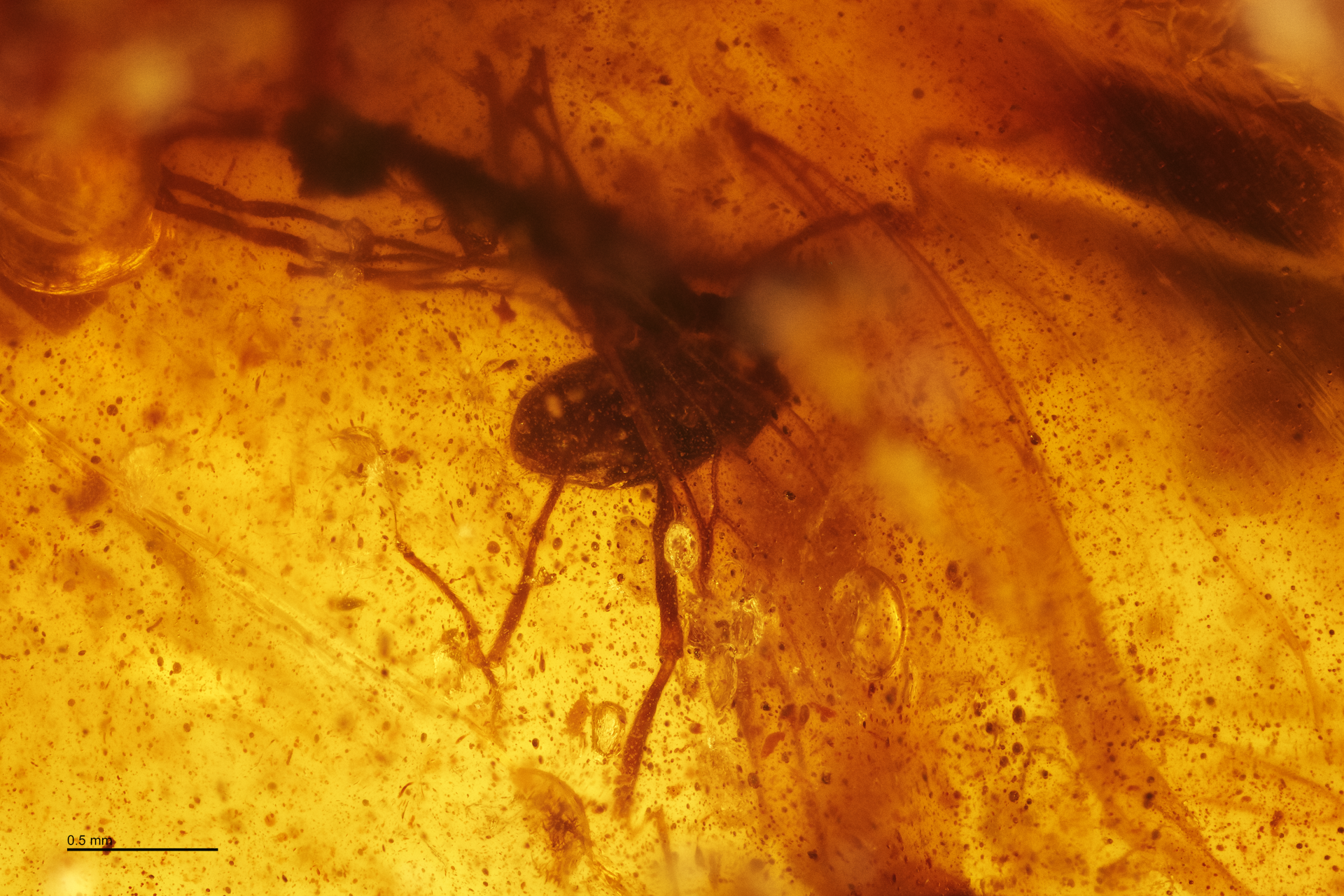
Amber is especially good for preserving in exquisite details, small arthropods which don't fossilise well in rocks, like larger vertebrates with hard body parts, and we can be confident that the age of the fossil is the age of the amber in which it is preserved.
Some years ago, on holiday in Kassandria, Greece, I came across a small group of Mediterranean pines that were being use to collect the resin used to flavour the local wine, Retsina. This wine is something of an acquired taste but is best drunk chilled, with Greek food, on a warm summer evening at sunset, overlooking the Aegean - and probably after a bottle or two of Demestica.
The fascinating thing was how many ants had managed to get themselves trapped in the resin in the plastic containers it was draining into from the cuts in the tree bark.
There were so many that I can only assume that when ancient amber was being produced there were either fewer ants or less resin.
So, what can we tell from the fossils preserved in amber?
Partly from their occurrence in amber, we know that some 85% of all living species were arthropods, rather than the 0.3% of species that were the much more noticeable vertebrates. We can also tell where and when major orders evolved and how long some of them have existed for. Since amber is formed from tree resin, it follows that it only occurred after trees evolved and from the resin produced by specific species of tree in areas where these trees grew.