Sunday, 4 October 2026

Refuting Creationism - Californian Creationists May Be In For A Catastrophic Shock


Earthquake model reveals: Stress in California at record level

Californian creationists who imagine that Earth was fine-tuned for human life — and perhaps arranged with their own comfort and security particularly in mind — might want to consider what is happening beneath their feet. A planet supposedly designed as our ideal home has an unfortunate habit of accumulating stresses capable of turning homes, roads and other essential infrastructure into wreckage. Southern California provides a particularly awkward example of this discrepancy between reassuring theology and indifferent geology.

A study published in Journal of Geophysical Research: Solid Earth examines stress accumulation along the southern San Andreas and San Jacinto fault systems. Led by Liliane Burkhard, the researchers combined a reconstructed earthquake history with a computer model that follows changes in three-dimensional space and through time. Their results indicate that some fault segments have reached or exceeded the highest stress levels in the modelled thousand-year history.

Of particular interest is Cajon Pass, northeast of Los Angeles, where the two fault systems approach one another. This junction can behave as an “earthquake gate”: under some conditions, a rupture stops there; under others, it can propagate between fault systems. The research suggests that the relative stresses on neighbouring segments help determine whether this gate remains closed or allows a more extensive rupture. Understanding those interactions matters because the surrounding region contains densely populated communities and major transport and energy routes.

The underlying mechanism requires neither supernatural intervention nor concern for the people living above it. Continuing tectonic movement loads faults whose shallow portions remain locked, allowing stress to accumulate between earthquakes. A long quiet interval is therefore no guarantee of safety. The apparent tranquillity of the landscape can conceal the continuing development of conditions that favour another major rupture.

This is not a prediction that a catastrophic earthquake will happen tomorrow, nor does “record stress” mean that scientists have been measuring these faults continuously for a millennium. These are estimates produced by a model constrained by geological and historical evidence. The researchers explicitly distinguish their assessment from a prediction of when the next earthquake will occur. Its value lies in improving our understanding of possible rupture scenarios and informing preparedness.

Saturday, 3 October 2026

Refuting Creationist - The Case For Science Keeps Getting Stronger - Science Works While Creationism Fails

a. DNH 8 occlusal view; b. DNH 8 left lateral view; c. DNH 8 inferior view; d. DNH 8 right lateral view.

Fossils confirm human ancestors first appearance, News, La Trobe University

Two million years ago, southern Africa was home to different human relatives sharing the same landscape and following different evolutionary trajectories. That is the picture strengthened by newly described fossils from Drimolen Main Quarry in South Africa’s Cradle of Humankind. For creationists, the difficulties begin with the date: these hominins lived almost two million years before the supposed magical creation of the Universe out of nothing in a literal reading of Genesis. But the evidence also challenges the familiar caricature of human evolution as a single procession of increasingly human creatures, marching towards a predetermined destination.

In a paper published in Annals of Human Biology, Jesse M. Martin and colleagues describe 18 previously undescribed cranial and mandibular specimens from Drimolen. Among them is DNH 127, an adult skull fragment attributed to Homo erectus. This provides valuable support for the earlier identification of DNH 134, a young child’s partial skull from the same site. Identifying a species from an immature individual can be difficult because some diagnostic features develop during growth; an adult specimen provides an additional test of that interpretation.

The significance is therefore corroboration: DNH 127 strengthens the case that Homo erectus was present in South Africa approximately 2.04–1.95 million years ago. It does not, by itself, establish that the species originated there. The earliest fossil yet recognised is evidence of a species’ presence at a particular place and time, rather than a birth certificate identifying its evolutionary birthplace.

Friday, 2 October 2026

Refuting Creationism - Self-Correcting Science Finds Another Transitional Fossil

A reconstruction of Westlothiana based on x-ray scans of the fossil.
Famous "First Reptile" Fossil Wasn’t a Reptile After All | AMNH

One of the supposed earliest reptiles has lost its place in the reptile family tree — and, in doing so, has provided a revealing example of how evolution works and how science improves its understanding of it. For creationists hoping that a revised classification means evolutionary biology is collapsing, the disappointment is twofold: the fossil remains approximately 345 million years old, and its newly revealed anatomy makes the transition towards life on land more interesting, not less evident.

The animal is Westlothiana lizziae, affectionately known as “Lizzie”, a small, superficially lizard-like vertebrate discovered in Scotland in 1984. Its limbs and apparently clawed digits helped establish its reputation as an early representative of the evolutionary transition towards amniotes — the group encompassing mammals and reptiles, including birds. However, interpreting a crushed fossil from its exposed surfaces has limitations. Structures hidden inside the rock can tell a different story, as researchers have now demonstrated using powerful X-ray scans at the European Synchrotron Radiation Facility in Grenoble, France.

The two slabs of NSM G.1990.72.1, the Westlothiana fossil studied by this new research.

Photo by Roger Benson.
The research, published on 30 September in Nature reveals an unexpected combination: a skull retaining ancient anatomical features, bony supports for internal gills, and a mouth bearing thousands of tiny teeth. These are indications of an aquatic or amphibious animal. The researchers place Westlothiana among stem tetrapods, on an evolutionary branch outside the group comprising living amphibians and amniotes and their last common ancestor.

Yet Lizzie also possessed five-digit feet and superficially claw-like finger and toe bones. That combination is the significant point. Features associated with terrestrial vertebrates were already appearing in animals that retained substantial adaptations to life in water. This is an example of mosaic evolution: different parts of the body change at different rates, producing combinations that do not fit the tidy categories we recognise among living animals. It also means that claw-like impressions in ancient trackways cannot, by themselves, establish that the animals making them were early amniotes.

Creationism Refuted - How an 'Irreducibly Complex' Process Evolved Naturally

Kenneth Loi shows how VIPR RNA (in pink) snakes around the double helix of DNA (yellow and green) to form a unique triplex structure.

Photo: Glenn Ramit.
VIPR Systems Break the Rules of the Genetic Code to Target and Twist Around DNA

One of the recurring mistakes in creationist arguments is to assume that a complex biological system must always have performed its present function. If its components now work together, the argument goes, they must have been created together for that purpose. Evolution, however, can recruit existing machinery for new roles. Two papers in *Science* now provide evidence that this process may help explain the origin of an important form of microbial immunity—with the intriguing possibility that bacteria acquired the precursors of their antiviral weapons from viruses themselves.

To appreciate the discovery, it helps to understand what CRISPR immunity actually is. Although CRISPR is familiar as a tool for editing genes, its natural role is defence. Many bacteria and archaea possess CRISPR–Cas systems that retain molecular records of past invaders. Short pieces of foreign DNA are incorporated into the cell’s genome, between repeated sequences. These stored fragments provide templates for small RNA molecules, which guide CRISPR-associated—or Cas—proteins to matching genetic material during subsequent infections. Depending on the system, the resulting response can destroy invading DNA or RNA. This is adaptive immunity: protection directed against particular threats, with a genetic memory that can pass to descendants.

CRISPR stands for “clustered regularly interspaced short palindromic repeats”, a description of the DNA arrangement in which those memories are stored. The best-known gene-editing protein, Cas9, belongs to class 2, whose targeting machinery centres on one large protein. Class-1 systems instead use assemblies of several proteins to recognise their targets. It is the evolutionary origin of this latter machinery that the new research addresses.

The studies, published on 17 September 2026 investigate a compact system called VIPR, short for viral interference programmable repeat. Found in viruses and bacteria, it combines a small protein with a guide RNA. The researchers propose that an ancestral VIPR-like system involved in competition between viruses was recruited into bacterial defence, eventually contributing to the evolution of class-1 CRISPR. This would be evolutionary co-option: machinery favoured in one context becoming useful in another.

Wednesday, 30 September 2026

Malevolent Design - A Newly-Identified Tick-Borne Virus That Teams Up With Another Virus And Kills People - Malevolent Intelligence Or Evolution?

Engorged Tick"
Timothy Takemoto / Flickr cc
Scientists in China discover new tick-borne virus that causes flu-like illness | CIDRAP

One of the problems with claiming that biological complexity proves intelligent design is that the argument cannot stop conveniently at butterflies, flowers and the human eye. If complex biological machinery requires a designer, then the same reasoning must apply to parasites and pathogens. A virus’s ability to infect us cannot become an unfortunate accident merely because crediting the supposed designer would now be embarrassing. Nor can the animal that carries it from host to host be excluded from the reckoning.

A newly identified tick-borne virus in China provides another uncomfortable example. Described in a correspondence in The New England Journal of Medicine, Asian longhorned tick nairovirus, or ALTNV, is associated with fever, fatigue, gastrointestinal symptoms and, in some patients, reduced platelet counts. Its vector is the already familiar Asian longhorned tick, Haemaphysalis longicornis; experiments demonstrated transmission to mice. “New” here means newly recognised by science, not shown to have come into existence recently.

The clinical findings deserve care. All 56 patients reported with ALTNV alone recovered without lasting effects. However, seven of 38 patients infected with both ALTNV and Dabie bandavirus died. These deaths do not establish that ALTNV alone is lethal, or determine its contribution to the fatalities. They do place the discovery within a system of tick-borne infections capable of causing serious illness and death.

Now apply the creationist rule that functional complexity and genetic information require an intelligent author. On that premise, the designer must take responsibility for the infectious agent and its means of delivery. Here is a blood-feeding animal whose activities provide a route for viruses to enter other animals, including humans. If every relevant adaptation was knowingly intended by an all-knowing creator, then the resulting suffering cannot be dismissed as an unforeseen side-effect. The alleged designer knew what its creations would do.

That is the force of the malevolent-designer argument. It does not require us to believe that a supernatural intelligence actually makes viruses. It asks why features that serve pathogens should count as evidence of loving craftsmanship when equivalent features serving their victims are routinely presented as precisely that. If the designer receives credit for our defences, it must also answer for the threats those defences sometimes fail to overcome. Deliberately creating the means of making people ill is hardly an obvious expression of benevolence.

Tuesday, 29 September 2026

Creationism Refuted - A Stem Amphibian from 309 Million Years Before 'Creation Week'.

Photo and illustration of the fossil of Jeanerpeton mazonensis.

Credit: Allison Sefcovic. © Field Museum.
Mother of amphibians: New species of proto-amphibian described by two student scientists, named in honor of their moms - Field Museum

One of the recurring problems for young-Earth creationism is that Earth’s history contains so much life before the supposed beginning of Earth’s history. A newly recognised fossil species from Illinois adds another example: a small, amphibian-like animal that lived approximately 309 million years ago, when the area around modern Chicago was a swampy river delta. That places it more than 300 million years before the creation event that biblical literalists insist accounts for all life on Earth. Explaining away a discrepancy of that magnitude requires rather more than pointing to an uncertainty in a scientific paper.

The animal is Jeanerpeton mazonensis, described by Allison J. Sefcovic, Payton J. Kohlberg and colleagues in a new paper in the Journal of Vertebrate Paleontology. Its recognition resulted from a fresh examination of a fossil already held in a museum collection. Previously assigned to Amphibamus grandiceps, the specimen proved sufficiently different in its skull and skeleton to warrant a genus and species of its own. The authors also suggest that other known specimens conceal more diversity among these early amphibamiforms than has previously been recognised.

The fossil comes from the exceptionally productive Mazon Creek deposits. Its preservation includes a body outline, scales, tiny abdominal skeletal elements called gastralia, and even impressions of the eyes. The genus honours the two student lead authors’ mothers, both named Jean. This is a reminder that important discoveries can begin with someone taking a closer look at a specimen collected long ago.
Left: Allison Sefcovic and Payton Kohlberg hold epoxy sculptures of their new species, Jeanerpeton mazonensis.

Photo credit: Arjan Mann. © Field Museum.
Of particular interest are structures previously interpreted as toe pads resembling those of living amphibians. Alongside the skeletal anatomy, such features help researchers investigate the combinations of characteristics present in these ancient animals. That does not establish Jeanerpeton as the direct ancestor of modern frogs or salamanders: resemblance and evolutionary relationship are not proof of direct ancestry. Its significance lies in adding another anatomically distinctive animal to the record against which explanations of amphibian evolution must be tested.

Why Science Works - And Creationism Fails - A Fossil From Mongolia Changes Scientific Minds, But Creationists Will Just Ignore It

Field photos of the Khugenetsavkhlant badlands in the Eastern Gobi Desert of Mongolia today, where Tamirkhan balcarceli was discovered.

Michael Novacek/© AMNH
Gobi Fossil Reshapes the Mammal Family Tree | AMNH

One of the most revealing differences between science and creationism is what happens when new evidence challenges an established explanation. In science, that is an opportunity to improve our understanding. In creationism, where the conclusion has already been declared unquestionable, it becomes a problem to explain away. A remarkable fossil from Mongolia’s Gobi Desert provides a particularly instructive example: a small mammal whose combination of teeth, skull and limb bones has prompted scientists to reconsider an enduring hypothesis about mammalian evolution. Predictably, there is no comfort here for anyone hoping that revising an evolutionary family tree means abandoning evolution.

The animal, Tamirkhan balcarceli, is described in a paper in Nature by Andres Giallombardo and colleagues. Discovered in 2004, the exceptionally informative specimen preserves a skull and part of a hind limb. This provides something researchers had previously lacked for the enigmatic mammals known as zhelestids: teeth and substantial skeletal remains belonging to the same individual.

Until now, zhelestids were known principally from teeth and fragmentary jaws. Their relatively low, rounded molar cusps resembled those of plant-eating hoofed placental mammals, encouraging suggestions that they represented an early radiation of placentals during the Cretaceous. The new fossil tests that interpretation against a much broader sample of anatomy. Its zhelestid-like molars occur alongside distinctive incisors, skull structures and hindlimb features characteristic of another ancient mammalian group, the zalambdalestoids. The researchers conclude that zhelestids belong within that group. Their apparently revealing resemblance to later herbivorous placentals arose through convergent evolution.

The significance extends beyond moving a name from one branch of a family tree to another. Identifying which ancient mammals belong within the placental radiation helps establish when that radiation began and how its early members diversified. An animal can possess teeth resembling those of a later group without belonging to that group: similar feeding demands can favour similar dental adaptations in separate evolutionary lineages. More complete fossils allow researchers to distinguish those similarities from the wider anatomical evidence of ancestry. This discovery therefore changes how an important set of Cretaceous fossils contributes to the history of placental origins; it does not, by itself, settle every question about their timing.

For young-Earth creationists, the chronological problem remains as severe as ever. This is a Late Cretaceous mammal, part of a world that existed tens of millions of years before the few thousand years into which they attempt to compress the history of Earth and its inhabitants. Revising its evolutionary relationships does nothing to bring that world within the biblical timetable. Nor does a previously mistaken interpretation of its teeth supply evidence for separately created “kinds”. To establish that claim would require positive evidence of separate creation, not merely the discovery that one proposed relationship needs correction.

Monday, 28 September 2026

Refuting Creationism - Fossils of Complex Cells In Australian Mudstone - From 1.7 Billion Years Before 'Creation Week'

Large brown rocks rising from a grassy plain.
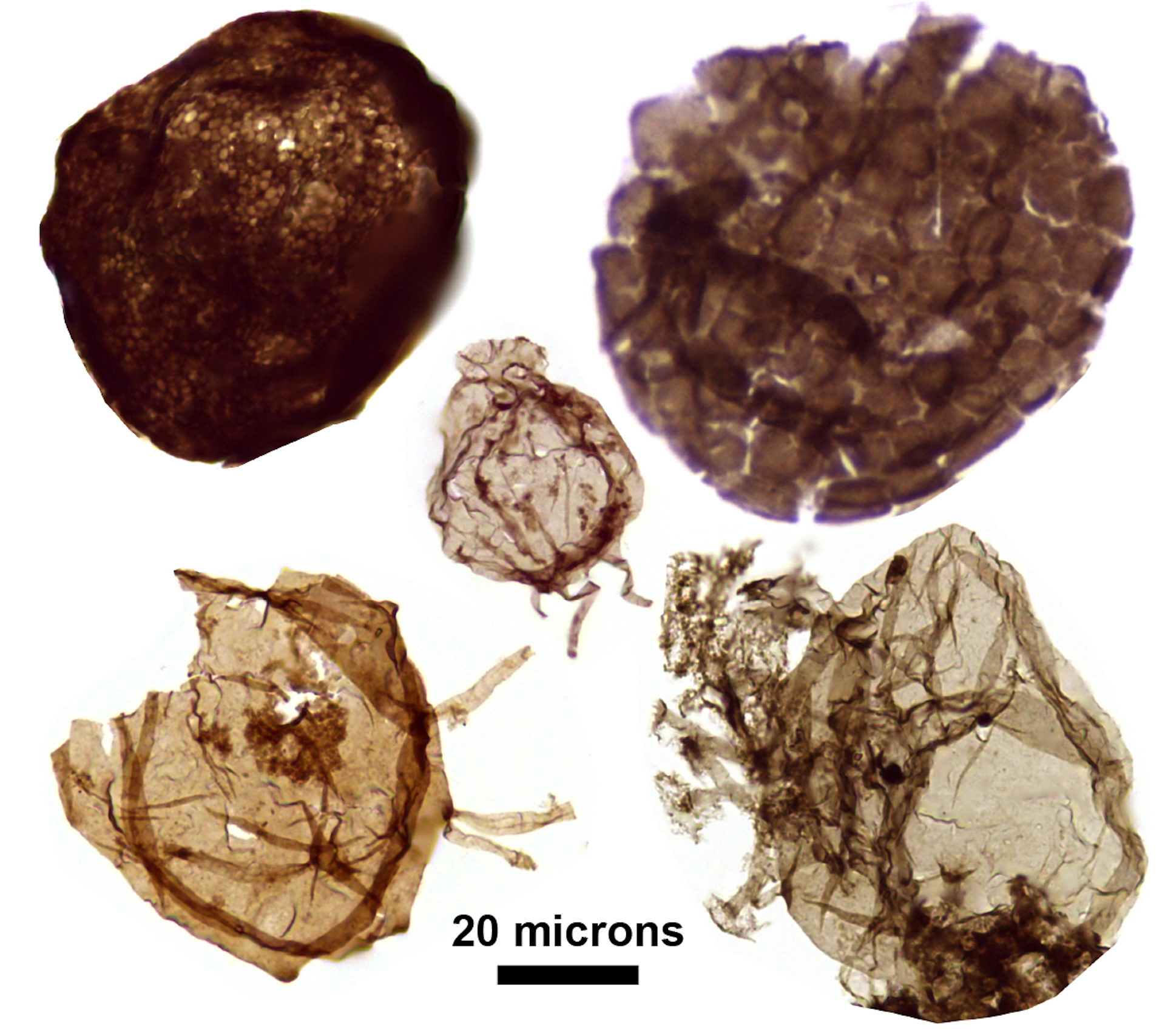
A microscopic image of five fossils.
Fossils of single-celled eukaryotic organisms with complex surface features such as extensions and plates.
Leigh Anne Riedman
Tiny fossils found in 1.7 billion-year-old mud yield clues to the evolution of complex life

For young-Earth creationists, some of the most troublesome evidence comes in the smallest packages. Microscopic fossils preserved in ancient Australian mudstones record organisms living approximately 1.75–1.4 billion years ago — an antiquity impossible to reconcile with the few thousand years allowed by a literal reading of the biblical genealogies. These organisms were already part of aLayers of 1.7 billion-year-old sedimentary rocks, Kakadu National Park, Northern Territoryn evolving biosphere more than a billion years before the supposed “Creation Week”. Their existence presents a chronological problem that no amount of argument about the meaning of “kind” can resolve.

These fossils are the subject of a paper in Nature, by Maxwell A. Lechte and colleagues, investigating the environments inhabited by some of the earliest known eukaryotes. Eukaryotes are organisms with structurally complex cells, typically containing a nucleus and specialised internal compartments; they include animals, plants, fungi and numerous microscopic organisms. Here, “complex life” refers to cellular organisation, not to miniature animals swimming through those ancient seas. Understanding these early cells helps explain the evolutionary foundations upon which much later forms of life depended.

Sunday, 27 September 2026

Spot The Differences


Readers will have noticed that I have been using ChatGPT to generate illustrations for my articles. Generally, the results are very good, but earlier versions had a habit of introducing anachronisms: Neanderthals accompanied by dogs and other livestock, for example, or Stone Age hunters carrying what appeared to be metal-tipped spears. Correcting these could become an amusing — and sometimes frustrating — exercise. Removing one error would introduce another, and the next attempt might restore the original mistake.

This time, however, something rather encouraging happened. For my previous article, about a Neolithic village in Serbia that archaeologists have re-examined, I asked ChatGPT to produce an impression of everyday life in the settlement. It generated an image, then identified an anachronism in its own output and produced a corrected version without my having to point out the problem. That does not mean historical inaccuracies are now a thing of the past, but it was a welcome example of checking and correction.

Naturally, this also presented an opportunity for a little fun. Below are the two images, side by side. Can you spot what does not belong in the image on the left? If you would like a helping hand — or simply want to cheat — click the button to reveal a nifty tool for comparing them.
AI-generated impression of life in a Neolithic Serbian village.

Creationism In Crisis - People Were Living In A Serbian Village From Before 'Creation Week' - The Archeology Shows No Signs of A Genocidal Flood

A minimally invasive look into the late Neolithic

One recurring difficulty for young-Earth creationism is that people were apparently building communities before the Earth on which they built them had been created. At Opovo Ugar-Bajbuk, in present-day Serbia, archaeologists place the principal occupation of a substantial Neolithic settlement around 4850–4725 BCE. That is more than seven centuries before Archbishop Ussher’s famous creation date of 4004 BCE, and long before the supposed global Flood of conventional young-Earth chronologies. These people were inconveniently getting on with their lives before that particular biblical timetable allowed them to exist.

The settlement covered more than nine hectares, with up to 220 identified house structures across its development and an estimated peak population exceeding 700. This was a substantial community whose inhabitants could organise the labour needed to construct extensive enclosing ditches. The findings are reported by Fynn Wilkes and an international team in Archaeologia Austriaca.

There is another lesson here that creationist polemics routinely misrepresent: scientists revise their conclusions. Earlier investigations, based on a much more limited excavated area, had produced a picture of a smaller settlement, estimated at about five hectares. The new researchers returned with geomagnetic surveying, coring, systematic surface collection and targeted excavation, combining their findings with radiocarbon evidence. The resulting reconstruction changes our understanding of the settlement’s scale and development. Indeed, Ruth Tringham, who led the research project in the 1980s, is herself a co-author of the reassessment.

That is how scientific knowledge improves. Earlier interpretations remain open to testing, and better evidence produced by improved techniques and better technology, can require them to change. A revision does not make every alternative explanation equally credible, nor does it give an ancient religious narrative a free pass. In this case, the revised chronology still places the community centuries before Ussher’s proposed Creation Week. Changing the reconstructed size and history of a Neolithic settlement does nothing to rescue a timetable that places the creation of the entire planet after its inhabitants had already lived there.

The researchers also distinguish evidence from interpretation. House sizes suggest relatively limited differences in material wealth, while the enclosing ditches indicate an ability to coordinate substantial communal work. Those observations are consistent with a comparatively egalitarian community, but they cannot establish that everyone enjoyed equal status or that coercion was absent. Such qualifications express the limits of the evidence — precisely the limits that responsible scholarship should acknowledge.

Opovo therefore presents two related difficulties for biblical literalism: a human history that refuses to fit its preferred chronology, and a demonstration of how knowledge advances when conclusions remain accountable to evidence. Archaeologists can reconsider what they thought they knew about the settlement because their task is to discover what happened. The evidence is allowed to change the story. Creationism by contrast refuses to change the story and attempts to change the inconvenient evidence.

Saturday, 26 September 2026

Creationism Refuted - Bats Evolved In Europe - 65 Million Years Before 'Creation Week'


New study reveals bats originated in Europe and rewrites the bat family tree | University of St Andrews news

Corynorhinus townsendii.
Credit: Elizabeth Clare.
Bats present creationists with a multitude of problems: firstly, there is the fact that they have a vastly more effective immune system than humans, so creationists need to explain why an omnibenevolent creator god would not give his favourite special creation, humans, the best available immune system. Secondly, there is the famous Bible blunder where, in most English language translations, bats appear to have been classified as birds (Leviticus 11:13-19) by the ignorant people who wrote it.

Now the facts have become even more difficult in the form of an awkward combination: remarkable adaptations that invite declarations of “design”, and an evolutionary history that researchers can investigate using evidence. Calling a bat a specially created “kind” explains neither its relationships with other bats nor when and where those relationships arose. Those are questions that require fossils, genomes and testable hypotheses.

Now, a major international study, published in Nature, has brought these questions into sharper focus. Researchers working within the Bat1K consortium assembled genomic data from 103 species, representing all 21 recognised living bat families, and combined this resource with anatomical evidence from 44 fossil bats. The university summarises their findings as pointing to a European origin for bats and mammalian powered flight around 65 million years ago — tens of millions of years before the supposed “Creation Week” of young-Earth creationism.

The research reconstructs a branching history of ancestry, migration and diversification. Its geographical model favours Europe as the ancestral region, followed by dispersal into Africa and subsequent expansion into other continents. These are historical inferences that can be tested and revised as further evidence becomes available.

The study also sheds light on echolocation: the ability to use returning echoes to detect surroundings and prey. The inferred position of the extinct bat Vielasia supports the conclusion that laryngeal echolocation — using calls generated in the voice box — arose before the diversification of the group containing all living bats. This places another celebrated bat adaptation deep within their evolutionary history.

Creationism Refuted - How Life Could Have Started On Earth 4.33 Billion Years Before 'Creation Week'

New Study Pinpoints When Early Earth May Have Become Ready for Life’s Chemistry - Planetary Science Institute

For creationists who depend on gaps in scientific knowledge, research into the origin of life presents a recurring difficulty: scientists keep finding ways to investigate those gaps. One question is when the early Earth became sufficiently stable for the chemistry preceding life to persist. Producing potentially useful molecules would have achieved little if repeated impacts then destroyed them. Before life could gain a foothold, its chemical ingredients needed somewhere they could survive.

A new study by Oleg Abramov and colleagues, published in Nature Communications investigates that problem using a three-dimensional model of impact heating. The researchers identify approximately 4.33 billion years ago as a particularly favourable time for persistent prebiotic chemistry. That places the proposed opportunity billions of years before the entire universe supposedly appeared in the chronology of Young-Earth creationism.

The emerging picture scarcely resembles a world prepared as a comfortable home for living things. Early Earth endured bombardment by asteroids, comets and leftover planetary building blocks. As that bombardment declined, regions of the shallow crust could remain cool enough for fragile molecules to persist. Around 4.4 billion years ago, the simulations begin to show environments that escaped subsequent reheating above the study’s specified threshold.

There is an interesting complication: impacts could also help create opportunities for life’s chemistry. Water circulating through heated, fractured rock can produce hydrothermal environments with sources of chemical energy. The researchers therefore sought an overlap between enduring cooler regions and continuing hydrothermal activity. Their proposed favourable window represents a changing balance between destructive heating and potentially useful geological activity, with no foresight required.

The distinction between opportunity and occurrence matters. This study does not demonstrate that life began 4.33 billion years ago, nor establish that an “RNA world” actually existed then. It constrains the thermal conditions under which such a proposed stage could have persisted. The date also depends on assumptions about bombardment: a lower estimate of the incoming mass moves the favourable window earlier, towards 4.4 billion years ago.

For creationism, the difficulty extends beyond the enormous timescale. An unanswered question about life’s beginnings is being broken down into physical conditions that researchers can calculate, compare and challenge. Uncertainty remains, but uncertainty supplies questions for further investigation; it supplies no evidence for a supernatural designer. Here, another part of the origin-of-life problem becomes a tractable question about the history of a changing planet.

Thursday, 24 September 2026

Creationism Refuted - 'Jumping Genes' Create New Functional Genetic Information - No Magic needed.

Ants look back on an evolutionary story of success. The photo shows workers of the Asian weaver ant.
© Lukas Schrader
“Jumping genes” helped ants in their evolutionary triumph after the extinction of the dinosaurs

One of creationism’s favourite assertions is that evolution cannot produce “new genetic information” without an intelligent designer. What usually goes missing is a clear definition of information, an explanation of why known genetic mechanisms cannot generate novelty, or any evidence of the supposed designer doing anything. Meanwhile, evolutionary biologists continue to investigate the natural processes by which genomes change and organisms acquire new capabilities. A new study of ants provides another example of how productive that scientific approach can be.

As reported in Science Advances, an international team led by Dr Lukas Schrader has investigated the contribution of transposable elements, commonly called “jumping genes”, to ant evolution. These mobile DNA sequences can move or copy themselves within genomes. Their activity can be disruptive, but it can also supply material for evolutionary innovation. The research links their activity to the expansion of gene families, including those encoding the odour receptors so important to ants’ chemical communication.

The researchers compared genomes from 163 ant species, representing twelve of the sixteen living subfamilies. They identified independent bursts of transposable-element activity in the ancestors of major ant groups, preceding their rapid diversification following the Cretaceous–Palaeogene, or K–Pg, mass extinction approximately 66 million years ago. The findings support a connection between changes within genomes and the evolutionary opportunities created by a profoundly altered world.

The evolutionary significance is straightforward. A mass extinction changes the conditions under which survivors live: ecological relationships are disrupted, resources become available in different ways, and opportunities arise as ecosystems recover. A genetic variant that previously offered little advantage may become useful under these new conditions. Natural selection can then favour organisms carrying it. Neither the mutation nor the environmental upheaval needs to anticipate the outcome.

Nor does genetic novelty require a complete, finished gene to appear from nowhere. Duplication supplies additional copies of existing sequences, which can subsequently diverge; changes to the regulation and arrangement of DNA can also alter what an organism does. Calling the starting material “existing information” does nothing to prevent its descendants from acquiring new functions. The relevant questions concern what changed, how it changed, and what consequences followed—not whether creationists are willing to call the result “information”.

Here, the specific finding is an association between mobile DNA, expanding gene families and subsequent diversification. It should not be inflated into a claim that every extra receptor acquired a demonstrated new function, or that the asteroid impact directly produced particular beneficial mutations. Nevertheless, the study supplies evidence for a natural route connecting genomic change with evolutionary diversification, precisely where the creationist argument substitutes an assertion of impossibility.

For young-Earth creationists, there is the additional inconvenience of the timescale. This diversification followed an extinction event some 66 million years ago—thousands of times further into the past than their entire supposed history of the Universe allows. Ant evolution was already unfolding in a world unimaginably ancient by biblical standards. What emerges is a history of genetic change, environmental catastrophe and opportunities exploited by surviving lineages, without foresight or a predetermined destination.

Wednesday, 23 September 2026

Fine-Tuned Fallacy Exposed - Earth Fine-Tuned For Regular Mass Extinctions - Malevolence, Incompetence Or Nature?

AI-generated impression of the End-Permian mass extinction.
UNM researcher helps uncover recurring climate regimes linked to elevated extinction risk | UNM UCAM Newsroom

One of the more ridiculous of creationist claims is that Earth was perfectly ‘fine-tuned’ for life by an omniscient, omnibenevolent designer. Ridiculous because a mere glance at the reality should tell them that natural disasters such as earthquakes, seismic activity and flash-floods regularly devastate huge areas and kill vast numbers of people. The rose-tinted view requires a remarkably selective reading of the planet’s history: admire the organisms alive today, but overlook the environmental upheavals that wiped out so many of their predecessors. A world capable of supporting life is not necessarily a world designed to protect it, and the geological record provides abundant evidence of that distinction.

New research, paper, published in Nature Communications, adds another dimension to this problem. An international team, including UNM palaeobiologist Corinne “Cori” Myers, examined approximately 539 million years of Earth’s history and identified five major, persistent ‘mega-climate’ regimes. Transitions between these regimes were associated with heightened vulnerability in the biosphere and elevated extinction risk. The history emerging from this analysis is one of prolonged climatic states punctuated by potentially dangerous reorganisations.

The study brings together carbon and oxygen isotope records, statistical analyses and a conceptual model of the interacting climate and carbon cycle. The researchers compared the environmental patterns with a measure of biological vulnerability incorporating fossil diversity and the rates at which groups appeared and disappeared. Their findings suggest that the consequences of an environmental disturbance depend partly on the state of the planetary system it affects: a perturbation can help push that system into a different regime, with serious consequences for its inhabitants.

This does not establish that every mass extinction had the same cause, or that each climate transition inevitably produced one. Volcanism, asteroid impacts and their associated environmental effects remain essential parts of the explanation. The study instead offers a broader framework for understanding why some episodes of disruption coincided with particularly severe biological crises. Its central finding concerns an association between changing climate–carbon regimes and increased vulnerability, rather than a single universal extinction mechanism.

For the creationist argument, however, the difficulty is plain. If Earth’s suitability for living organisms is to count as evidence of benevolent design, what are we to make of its capacity to become catastrophically unsuitable for organisms already living here? Invoking a designer’s concern for life while dismissing the destruction of entire evolutionary lineages is an exercise in choosing the evidence to fit the conclusion. Survival receives the credit; extinction disappears into the small print.

Creationism Refuted - The History Of Viticulture - Uninterrupted By A Global Genocide

Grape seeds from Huelva, Vitis vinifera L.

Image: Guillem Pérez Jordà.
Ancient DNA reveals that the first grapevines cultivated in the Iberian Peninsula arrived from the eastern Mediterranean 3,000 years ago

If fruit-bearing plants were created for human use by an omnipotent, omniscient god, why have humans spent thousands of years modifying them to suit our needs? Genesis 1:29 presents seed-bearing plants and fruit trees as divine provisions for humanity, yet agriculture tells a rather different story: people taking what nature supplied and, through cultivation and selection, producing crops better suited to their purposes. Grapevines provide another example of this gap between the claim of providential design and the biological history of our food.

Research published in Current Biology, traces part of that history through ancient DNA. An international team analysed 28 archaeological grape seeds from Iberia and Sardinia. Their findings indicate that cultivated vines of eastern Mediterranean ancestry reached Iberia approximately 3,000 years ago, associated with Phoenician settlement and trade. These were already domesticated plants, arriving in a landscape where wild grapevines also grew.

The imported vines subsequently crossed with local wild populations. This mixing contributed to the ancestry of traditional Iberian varieties, with characteristic lineages already identifiable in seeds from the fourth century BCE. Ancient DNA also revealed connections between medieval seeds and varieties preserved today. The record therefore contains both change and continuity: new combinations of ancestry alongside lineages maintained across centuries.

More worryingly for Bible-literalist creationist, the genetic evidence shows that viticulture (the cultivation and growing of grapes) has a continuous history from before 'Creation Week' through the mythical global flood and biological reset of Earth, right up to the present, with no evidence of interruption of either the culturally-inherited methods or of the grape varieties used.

This is a useful illustration of how evolution works. Populations do not have to acquire all their useful variation through new mutations arising on the spot. Reproduction can reshuffle existing variation, while interbreeding brings together genetic variants from previously separated populations. Cultivation then provides opportunities for people to retain and propagate plants with desirable characteristics. Human preferences influence which vines reproduce or are multiplied, but the inheritance and variation on which that selection acts are ordinary biological processes.

Tuesday, 22 September 2026

Refuting Creationism - Earth Fine Tuned For Catastrophe And Mass Extinction

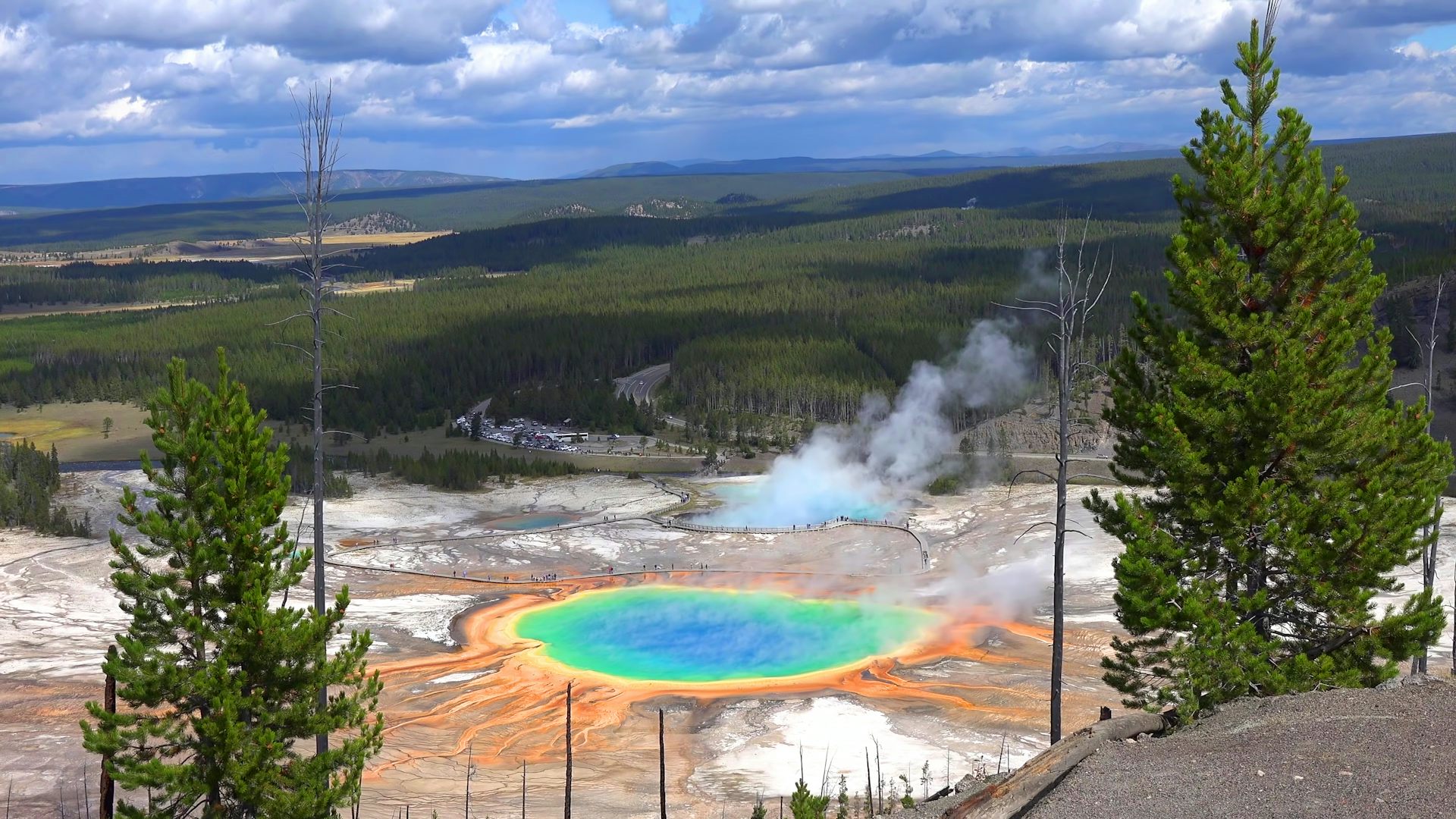
Yellowstone international biosphere reserve, UNESCO world Heritage site, the world's first national Park (founded on March 1, 1872)
Yellowstone hot spring.
End of humanity? Blow-by-blow account of what would happen if the Yellowstone supervolcano erupted now

One of the more curious creationist claims is that Earth was perfectly designed for human life by an all-powerful, all-knowing and omnibenevolent creator. This comforting picture tends to concentrate on pleasant scenery, sunshine and things we can eat, while overlooking the planet’s considerable capacity to kill us. Yellowstone provides a particularly impressive example of what must be left out of the picture. It tends to be made by those fortunate individuals born to the relative comfort and security of a technologically-advanced society and it of course attributed to the locally-popular god.
Beneath the spectacular landscape of Yellowstone National Park lies a volcanic system whose history includes enormous explosive eruptions. Its most recent caldera-forming eruption occurred approximately 631,000 years ago — long before the supposed ‘Creation Week’ of young-Earth creationism. A comparable event today could devastate surrounding regions, spread ash across large areas of North America and disrupt the global climate, with serious consequences for agriculture. That is an extraordinary feature to include in a world supposedly engineered for our benefit.

None of this means Yellowstone is ‘overdue’ for a supereruption, or that such an event would wipe out humanity. As the US Geological Survey explains, volcanoes do not follow a timetable, and another catastrophic eruption at Yellowstone is by no means inevitable. Scientific accuracy matters here: the argument against benevolent design needs no assistance from exaggerated claims of impending doom. The existence and geological record of these hazards are quite sufficient.

The underlying problem for creationism is the difference between a planet on which humans can live and one perfectly arranged for human welfare. Our existence establishes the former; it does not demonstrate the latter. Evolution provides a straightforward reason why organisms possess adaptations to the environments in which their ancestors survived. It gives us no reason to expect those environments to remain safe, or the physical processes shaping them to take account of our needs.

An omnipotent designer, however, cannot be excused as an engineer forced to work within constraints beyond its control. If the planet’s life-supporting features are to be credited to deliberate benevolence, its destructive features also require an explanation. Pointing to the beauty of Yellowstone while overlooking the processes capable of devastating its surroundings is selective accounting. Invoking a mysterious divine purpose merely assumes the benevolence that the design argument was supposed to establish.

The creationist difficulty remains even without the worst-case details: a habitable Earth is not a promise of a hospitable Earth. Our protection from its hazards depends on understanding natural processes and acting on the evidence — a rather more useful response than assuming that everything was arranged with our welfare in mind.

How Science Works - Scientists Revise The Age Of Mammoth Fossils - But It's Even Worse News For Creationists

The center of the sinkhole has thin laminated sediments and extensive bone galleries. We sampled near here for MS-16-4 and MS-16-5 using metal tubes.

Luminescence Data for the Mammoth Site, Black Hills, South Dakota 2016-19 | U.S. Geological Survey

Creationists who seize on revisions in scientific dating as evidence that scientists cannot be trusted might want to read this particular example to the end. A famous mammoth graveyard in South Dakota has indeed been reassessed, and its previously accepted age has been substantially revised. Unfortunately for young-Earth creationism, the revision moves it much further into the past. An age already incompatible with the biblical timetable has become an even greater problem.

In a paper published in Quaternary Research, Shannon A. Mahan and colleagues report new dates for the fossil-bearing sediments at the Mammoth Site in Hot Springs, South Dakota. Long associated with an age of approximately 26,000 years, the deposit now yields luminescence ages of roughly 160,000–232,000 years — around six to nine times that familiar estimate. These are dates for the surrounding sediments, rather than direct measurements of each mammoth’s death, but they place the assemblage in a substantially earlier chapter of the Pleistocene.

How can a fossil’s age change so dramatically? A scientific date is a measurement of a particular physical process. Its reliability depends on choosing suitable material, understanding what happened to it after burial, and checking the result against other evidence.

What was dated originally?

The mammoth bones lacked preserved collagen — the protein commonly used for radiocarbon dating bone. Researchers therefore analysed carbon in the bones’ mineral component, apatite. However, interactions with groundwater can alter that carbon after burial. The resulting measurement may reflect later chemical changes rather than the animal’s death, making ancient remains appear much younger. This is a problem with the sample’s history, not evidence that radioactive decay is unreliable.

What does luminescence measure?

The new study dated feldspar grains in the surrounding sediment. Natural background radiation gradually builds up a trapped-electron signal within these minerals. Sufficient exposure to sunlight empties those traps, effectively resetting the clock. After burial, the signal accumulates again. Measuring it, together with the local radiation dose rate, allows researchers to estimate the time since the grains were last exposed to light.

Does that date the mammoths?

It dates sediment burial, rather than an animal’s death directly. The connection depends on geological evidence that the bones and sediment accumulated together. At the Mammoth Site, the main feldspar results place the fossil-bearing deposits approximately 160,000–232,000 years ago, although the detailed chronology still requires refinement.

Why trust a revised date?

Confidence grows through independent checks, not through refusing to change an answer. Here, analyses at two laboratories and comparisons with earlier dating work exposed weaknesses in the accepted chronology. Further uranium-series dating is planned. Revising an interpretation when better evidence becomes available is precisely how science improves its account of the past.

As described in Sandee Oster’s report for Phys.org, the site contains more than 60 mammoths, predominantly young male Columbian mammoths. The prevailing explanation is that a warm, spring-fed sinkhole became a lethal trap: animals entering the water could not climb back up its steep, slippery sides. Their remains accumulated in the basin. The earlier radiocarbon measurements were problematic because the bones lacked preserved collagen, leaving researchers to analyse bone apatite, whose carbon can be altered by interaction with groundwater.

The new investigation used infrared-stimulated luminescence dating of feldspar grains, with analyses undertaken at two laboratories. This estimates the time since sediment grains were last exposed to sufficient light to reset their dating signal. The researchers also identify thin sediment layers deposited by runoff entering the pond. Uncertainty remains over the detailed chronology, and further uranium-series work is planned.

For creationists, the awkward point is not merely the increased age. It is how the correction was made. Scientists questioned an established interpretation, investigated the limitations of the material previously dated, and tested the chronology using a different physical process. If dates were simply manufactured to produce predetermined answers, why expose the discrepancy and publish a substantial revision? Here, changing the answer is evidence that the answer remains accountable to observations.

Monday, 21 September 2026

Creationism Refuted - Relative Bone Strengths Adds More Evidence Of Human Evolution

On the right is a depiction of an early Homo human ancestor characterized by relatively greater bone strength of the femur in the thigh compared to the humerus in the arm. To the left is a depiction of an older human ancestor, Australopithecus, characterized by more equivalent strength in the bones of the arm and thigh.

Image: Cullen Townsend
Study of bone strength reveals new clues about human evolution | EurekAlert!

One of the persistent problems for creationism is that our ancestors left evidence of their existence millions of years before the supposed biblical “Creation Week”. Worse still for the claim that humans were created separately from the other apes, those ancestors possessed combinations of characteristics that make sense as stages in an evolutionary history. The creationist insistence that a fossil must be either “just an ape” or “fully human” cannot accommodate the very mixtures of ancestral and derived features that evolution predicts.

A new study published in Science Advances adds another piece to this picture. Led by Kristian J. Carlson of the Keck School of Medicine of the University of Southern California, the researchers examined CT scans of limb bones from seven fossil hominins, dating from approximately 3.7 million to 1.5 million years ago. By analysing the structure of their bone shafts, they estimated resistance to bending and twisting and compared strength across the limbs.
Bone responds to the mechanical loads placed upon it during life, so its internal structure offers clues to habitual activity. In the sampled Australopithecus individuals, relatively strong upper arms suggest substantial climbing, while the relationship between thigh-bone and shin-bone strength was more human-like. Early Homo, by contrast, showed relatively stronger thighs compared with upper arms, consistent with greater reliance on terrestrial walking. These findings support a change in locomotor behaviour, although seven individuals cannot establish every step or the precise pace of that transition.

The evolutionary significance lies in the combination. Upright walking could coexist with continued use of the trees: acquiring one capability did not require the immediate abandonment of another. An ancestor with this mixture was a functioning animal in its own environment, with no need to anticipate the anatomy or lifestyle of its distant descendants. Evolution has no destination, and modern humans were never a goal towards which these populations were consciously or inevitably progressing.

For young-Earth creationism, the chronological difficulty is equally stark. Even the youngest fossils examined are about 150 times older than a generously extended 10,000-year biblical chronology. Their bone structure provides evidence about how these individuals lived; their geological ages place those lives in a past that the creationist narrative simply does not allow. Together, they present a much more substantial account of human origins than an assertion that fully formed humans appeared by supernatural decree a few thousand years ago.

Refuting Creationism - A Day at Hengistbury Head and Millions of Years of Missing Biblical History.


I have just spent the day at Hengistbury Head in Dorset, where a visit to the coast brings you face to face with a history that young-Earth creationism cannot accommodate. It’s a place where creationists can take a stroll and see for themselves how far removed from reality the creation account in the Bible is.

Long before anyone made a flint tool here, let alone wrote the stories later collected into Genesis, the sediments beneath this familiar headland were accumulating in environments very different from those we see today.

Refuting Creationism - A Star Is Born - And Rewrites The Story Of The Origin Of Starfish

Artist's impression of Yujingia glutenotunica
Credit: Kaiyue He, et al
A star is born: half billion-year-old fossil rewrites the origin story of starfish | University of Cambridge

One of creationism’s favourite misrepresentations of the fossil record, promulgated By Stephen S. Mayer of the Discovery Institute, is that the Cambrian ‘explosion’ was a sudden creation event, when the major animal groups appeared without evolutionary ancestors, already equipped with their modern body plans. This depends on treating ‘rapid’ in the geological sense as ‘instantaneous’, and overlooking the transitional fossils that reveal how those body plans evolved. A newly described animal from China provides another awkward example for that narrative. And of course the existence of transition fossils themselves are a major problem for creationists who insist that they don't exist because their creation myth can't accommodate them.

Named Yujingia glutenotunica, this small, soft-bodied creature lived approximately 518 million years ago. As described by Kaiyue He and colleagues in their paper in Current Biology, its combination of anatomical features places it close to the common ancestor of two groups that now look remarkably different: the echinoderms, including starfish and sea urchins, and the hemichordates, including acorn worms. Together, these constitute the animal group known as Ambulacraria.

The fossils preserve a digestive tract and feather-like feeding tentacles, together with another set of appendages that may have anchored the animal to the seabed. Crucially, Yujingia possessed an elaborate feeding apparatus without a mineralised skeleton. Its anatomy therefore supports the evolutionary interpretation that specialised feeding structures preceded some of the defining features of later echinoderms.
This is what makes transitional fossils so informative. They need not resemble an animal caught halfway through changing into a modern species, nor must they be demonstrably the direct ancestors of anything alive today. They preserve combinations of characteristics that help scientists reconstruct the order in which evolutionary changes occurred. A fully functioning animal can be transitional in its anatomy: ‘transitional’ describes its relationship to other forms, not an inability to survive until evolution has finished building it.

Sunday, 20 September 2026

Creationism Refuted - 55-Million-Year-Old Crocodile Eggshells From Queensland, Australia

AI-generated reconstruction of an early mekosuchine crocodilian beside a lakeshore nest in Eocene Australia.
ChatGPT-6 Astra
55 million years: Australia’s oldest crocodile eggshells found in Queensland

A major problem for young-Earth creationists is that so much of Earth’s history occurred millions or billions of years before their biblical chronology allows the planet to have existed. Fossils repeatedly confront them with evidence of animals living, reproducing and evolving in worlds that supposedly never existed. Dismissing this evidence as scientific incompetence or dishonesty does nothing to explain it. Nor does accusing researchers of manipulating dates become an acceptable substitute for evidence simply because the accusation is made in defence of the Bible.

The latest addition to this inconvenient record comes from approximately 55-million-year-old crocodilian eggshells found at Murgon in south-eastern Queensland, Australia. These animals were laying eggs more than 5,000 times further back in time than even a generous 10,000-year creationist chronology permits. The fragments are described in a paper in the Journal of Vertebrate Paleontology by an international team including Michael Stein of the University of New South Wales.

The oldest known crocodilian eggshells from Australia, they are attributed to the mekosuchines, an extinct group with a long evolutionary history in the region. These crocodilians belonged to a different branch of the family tree from Australia’s living saltwater and freshwater crocodiles. Their significance therefore extends beyond their inconvenient age: they help document an ancient crocodilian fauna that cannot simply be equated with the species inhabiting Australia today.

Eggshells also preserve information that bones and teeth alone cannot provide. Their microscopic structure offers clues to reproduction and nesting conditions; in this case, the researchers interpret the evidence as indicating nesting around the margins of an ancient lake. These tiny fragments therefore add another dimension to our understanding of how extinct crocodilians lived and interacted with their environment.

The broader evolutionary picture is one of branching lineages, ecological diversity and eventual extinction over immense spans of time. The eggshells contribute to that picture without, by themselves, revealing every evolutionary relationship or the precise identity of the animal that laid them. That distinction matters: science builds its explanations from what the evidence supports, while leaving room for further discoveries. None of that uncertainty reduces 55 million years to a few thousand.

Michael David Stein, a research associate in UNSW’s School of Biological, Earth and Environmental Sciences and a co-author of the paper, describes the discovery and its significance in an article in The Conversation, reprinted below under a Creative Commons licence and reformatted for stylistic consistency:

Saturday, 19 September 2026

Creationism Refuted - Scientists Got It Wrong Again - But It's Still Bad News For Creationists

Photograph of the outcrop at locality Z143 where NMT RB462 was collected

Photograph: K. Angielczyk.
George, H., et al. (2026) (CC-BY 4.0)
September: New species of 240-million-year-old prehistoric animal from Tanzania discovered | News and features | University of Bristol

Scientists have revised their understanding of some fossils once thought to include the oldest dinosaurs. Scientists getting it wrong and having to change their minds should be music to creationist ears — until they discover what the revision actually means. The animals concerned still lived hundreds of millions of years before the supposed ‘Creation Week’ of biblical literalism. A reassessment within the Triassic does nothing to squeeze the history of life into a few thousand years.

Creationists have an almost schizophrenic attitude towards science: On the one hand they claim scientists are not allowed to publish anything which doesn't conform to some assumed scientific orthodoxy; on the other hand they point to scientific disagreement and debate and scientists even changing their mind as evidence that science is unreliable. And they readily use a computer to inform the world via the Internet that science doesn't work, without the slightest appreciation of the irony!

The research, led by Hady George of the University of Bristol and published in the Journal of Vertebrate Paleontology, describes a new species of dicynodont from Tanzania: Dinodontosaurus isiyavamanda. Despite its name, this herbivore was a member of the mammalian evolutionary lineage, rather than a dinosaur. This discovery extends a genus previously known only from South America into Africa, around 240 million years ago.
<br
Web Analytics