Friday, 29 December 2023

Creationism in Crisis - How New Genetic Information Arises Naturally


The 'Christmas tree (Norwegian spruce) Picea abies
Seven times more DNA than a human.
It is a basic axiom of creationism that no new genetic information can arise in a species genome without the assistance of a magic designer. This is based on some half-baked interpretation of 'Shannon Information Theory' and misrepresentation of the second law of thermodynamics in which 'information' is confused with energy and a species genome with a closed system.

Try to get a creationist to explain the science behind that claim and you're likely to get nothing but rehearsed parrot squawks made in response to trigger words, if they don't run away hurling abuse and passive aggressive threats over their shoulder, or quickly change the subject. There will be no understanding of either information theory or thermodynamics.

The natural world is full of examples of how gene or even whole genome duplication creates redundant DNA and copies of genes than can mutate and be selected by natural selection to create new meaning in the genetic information. The Christmas tree, or Norwegian spruce, Picea abies, has about 29,000 functional genes (marginally more than a human) yet it has a genome seven times larger than the human genome, all packed into 12 chromosomes. The reason for this, according to a research team from Umeå universitet, Sweden, is because the mechanism for correcting duplication errors broke millions of years ago, so these duplications have been accumulating in the Picea abies genome ever since.

Creationists seem incapable of understanding the difference between information and the meaning in that information or how meaning is given by the environment. For example, a mutation which gave Streptococcus aureus resistance to the antibiotic, methicillin, would have had no meaning before medical science invented methicillin; now the same information makes MRSA an intractable condition and a highly successful pathogen. The point being that new meaning can arise without any change in the genome simply by a change in the environment, so evolution is not always dependent on change in genetic information.

Thursday, 28 December 2023

Malevolent Designer - How Creationism's Intelligent [Sic] Designer' Denied Us The Ability To Regenerate Limbs But Gave It To A Jellyfish


Cladonema pacificum
How jellyfish regenerate functional tentacles in days | The University of Tokyo.

Imagine for a moment that you're creationism's putative intelligent [sic] designer (the one on whom they've bestowed all the 'omnis' like omnipotence, omniscience and omnibenevolence) and you've created lots of creatures with the ability to regenerate body parts like limbs, tails and tentacles when they lose them, but you haven't given this ability to all of your creation, especially the one you supposedly love above all the others because its designed to be in your own image and you created all the other species to be at the disposal of your favourite.

What are some of the reasons you might have created them without the ability to regenerate missing body parts?
  • Incompetence? It can't be that because you're omnipotent, so nothing is impossible for you.
  • Amnesia? You just forgot to! It can't be that because you're omniscient, so know all things, past present and future so must remember creating the ability to regenerate limbs in salamanders, for example.
  • If it wasn't incompetence and it wasn't amnesia, it must have been deliberate. You chose not to because you didn't want your special creation to have this ability - even though you're allegedly omnibenevolent.

So creationists must be mistaken in at least one and possibly all of the qualities they've bestowed on you.

Or you've chosen to create humans and other animals, especially mammals, birds and most reptiles, less perfectly than you could have created them because you prefer to see them suffer when they have accidents.

And yet, according to recently published research by a Japanese research team, you gave that ability to a small jellyfish so it can regenerate its tentacles. Unless you prefer to see a human amputee struggle but not a jellyfish, why would you do that?

I'll leave that question for creationists to perform their usual intellectual gymnastic over, so they can continue to feel like the special creation of an omnipotent creator of the universe who loves them above the rest of its creation that it created just for them, like a narcissistic toddler, who thinks the world is just for him/her and someone must be making sure it stays that way.

Malevolent Design - How A Cat Poo Parasite Can Change Your Personality


Toxoplasma gondii is an obligate intracellular, parasitic protozoan that causes the disease toxoplasmosis. Diagram of Toxoplasma structure.
Image Credit: Designua / Shutterstock
Toxoplasma 'cat poo' parasite infects billions – so why is it so hard to study?

In my last blogpost, I described how the parasitic organism, cryptosporidium, is one of those 'irreducibly complex' organisms that creationists have been fooled by Michael J Behe into believing are proof of their putative creator god, because, so their ignorant intuition tells them, there can only be one intelligent designer capable of designing an irreducibly complex structure such as the bacterial flagellum or the apical complex structure that all members of the Apicomplex phylum characteristically possess.

Sadly for them, though, their reliance on this 'proof' of their god precludes them from arguing that these nasty little pathogens that appear to be designed to make us and other animals sick is the work of another intelligent creator, 'Sin', so the inescapable conclusion must be that their beloved creator god is designing these pathogens to make us sick and to increase the suffering in the world.

As though that wasn't bad enough, we now have another related parasite, also a member of the Apicomplex phylum, that on the face of it, seems to be an even more determined attempt to make us sick. It's a parasite that once you have it, you have it for life, and the evidence is that it manipulates your behaviour and changes your personality too. This then raises doubts about the idea of free will that is a central part of creationist superstition, and notions of 'Original Sin' (that thing that can supposedly create parasites too).

This organism is Toxoplasma gondii which is carried by about 25% of the world's people, so the chance of you or me or any of your friends and family having it is quite high.

Wednesday, 27 December 2023

Malevolent Design - More Nastiness From The Pestilential Designer, Or God, As Creationists Call It


Infections from a diarrhoea-causing parasite are on the rise in the UK – but experts aren't quite sure why

Cryptosporidium is a eukaryote protozoan parasite which creationists dogma says must have been designed by their favourite designer because that is the only entity capable of designing complex organisms, including 'irreducibly complex' structures.

Embarrassingly for creationists who are hoping to be able to blame 'Sin' for them, they are hung out to dry on the same hook that Michael J. Behe hung them on with the flagellum of the pathological E. coli bacterium, which they now happily wave as 'proof' of their designer good. Protozoans of the Apicomplexa phylum, of which the cryptosporidia are species, all have the apical complex organelle which is essential for them to break into a cell in order to infect it.

The characteristic apical complex organelle of the Apicomplexa phylum
Cryptosporidia appear to have two functions: to increase the suffering in the world by causing gastrointestinal disorders, usually resulting in severe diarrhoea; and to make more copies of themselves to infect more people and animals and spread the suffering more widely. They have no known beneficial functions in respect of humans or their other host species.

The species Cryptosporidium hominis is an obligate parasite on humans, so, according to creationists superstition, must have infected one or two of the Ark survivors, assuming there were no more than two individuals of the species present. Either that, or, according to creationist mythology, it has been created in the last four thousand years, which rules out being created by 'Sin' as a result of 'The Fall', which would mean it predates creationism's genocidal flood.

First, some AI background by way of introduction to the subject:

Tuesday, 26 December 2023

60 Years Ago Today - Remembering the Big Freeze - From My Book, 'In The Blink Of An Eye: Growing Up In Rural Oxfordshire'


The winter of 1962–63 was something else. It deserves a special mention. It came almost as a punctuation mark for me as my life was about to change when I left school and entered the working class in Oxford.

I was the village’s provider of Sunday newspapers! I felt I had an important job to do because without me, no–one would have anything to read on Sunday mornings! It was my sacred duty to get the Sunday newspapers delivered!

So, on Sunday, 30th December 1962 I got up as usual to go to Charlbury to buy my 60 newspapers for which I charged a penny each for delivery. I noticed there had been some snow and, unusually, the snow on the lower window frame on the back door seemed to be three or four inches up the glass.

The winter had actually started a few days earlier with snow on Boxing Day, the next best thing to a white Christmas, but it was nothing more than the usual few inches which everyone assumed would be gone in a few days. How wrong we were, as I was about to find out!

I opened the door to go to the outside toilet. A pile of snow fell into the kitchen. The back yard was full of snow, literally. It wasn't just piled up on the edges of the windowpanes, but against the door itself.

I went out of the front door to find the world had changed beyond recognition! The Lane was full of snow! A snowdrift came straight off our garage roof, across the front garden, over the garden wall and up to the wall of the house opposite. It was deeper by far than my, by now, 5 feet 10 inches.

And the snow was still falling thick and fast, driven by a gale-force wind! Southern England was in the grip of a major blizzard not seen since 1947 and probably much earlier. Bitterly cold Arctic winds drove the dry, powdery snow into every hollow and piled it up until the hollow was full, then moved on to fill the next, deeper hollow, until the countryside was a smooth as plastered wall.

But the newspapers had to get through!

So, donning wellies with two pairs of thick socks, jumpers, overcoat, scarves – one over my head and over my mouth, another round my neck twice – a balaclava helmet and two pairs of gloves, I slung my paper bag, made out of an old hessian corn sack, over my shoulder and set out. It was a strange landscape, but Main Road wasn’t too deeply covered. There were no car tracks!

I trudged up through the village to just beyond the Finstock turn, marveling at the deepening drifts, and even stopping to help a man trying to get his car out of his drive. He wasn't going to get very far. It was there I met our neighbour’s son-in-law walking over from Charlbury to check on her.

“You goin’ to get yer papers?” he asked incredulously.

“Well, Dad can’t drive me so I’m walkin’!” I explained.

“Well, turn round and go ‘ome” he said. “No–one’s goin’ to get their papers today!”

“Is it that bad?”

“Corse it is! Even the trains ent runnin! Nothin’s movin’ anywhere.”

So, I turned round and walked ‘ome with him, and had a cup of hot soup made out of the remains of the Christmas goose. The village was totally shut off! For the first time on my watch, the Sunday newspapers had not been delivered.

We dug out the lane down to The Green so people could get to Wally Scarrot's shop, but the shop couldn’t get supplies in and was beginning to run down as a village shop anyway, as people got cars and could shop at the new supermarkets in Witney and Chipping Norton. The bakery had ceased to operate several years earlier. It was a time for community action!

Monday, 25 December 2023

Malevolent Design - Parasitic Mistletoe - Unintelligent Design, Malevolent Creation Or Evolution?


Mistletoe haustorium on a birth branch.
At a time of giving and receiving, our many Australian mistletoes do it too

Mistletoe is a hemiparasitic plant and obligate parasite on many different species of tree. It can kill a heavily infested tree. Although mistletoe is photosynthetic, so produces its own sugars, it is dependent on its host for water and the nutrients such as nitrates and other minerals that the host plant obtains from soil. There is no evidence that mistletoe gives anything back to the host in the form of sugars.

Mistletoes and similar parasitic plants obtain the nutrients from their host via a structure called a haustorium which infiltrates the host tissues and forms a close association with the vascular bundles.

But why would an intelligent designer create all the complexity needed for a parasitic lifestyle when it had supposedly designed other plants to obtain nutrients from the soil, and simply added another layer of complexity between the host's roots and the parasitic plant's tissues to achieve the same result? In fact, this is just another example of the needless complexity that characterises evolved systems and distinguishes them from intelligently designed systems, which are characteristically minimally complex.
And it hasn't just done it once! There are over 100 parasitic species of similar plants in Australia alone, which I'll come to next, but first, a little AI background on mistletoe:

Sunday, 24 December 2023

Creationism in Crisis - Insects Had Already Evolved An Array Of Defence Strategies 100 Million Years Before 'Creation Week'.


Figure 7. Flat wasps (Bethylidae) trapped in Kachin amber while stinging into host larvae for oviposition
(A) Snakefly larva as host, PED 2351.
(B) Beetle larva as host.81
(C) Lepidopteran caterpillar as host, PED 2575.
Insects already had a variety of defense strategies in the Cretaceous - LMU Munich

On top of the evidence of people practicing animal husbandry in the Pyrenees Mountains before, during and after the legendary genocidal flood inflicted on Earth by creationism's 'omni-benevolent' god according to their superstition, and the fact that the predictable layer of silt from such a flood failed to materialise or was away the evidence of this occupation, we have more bad news for creationists.

A paper which describes how insects had evolved a whole array of defensive strategies, 100 million years before the legendary 'creation Week', when the universe was allegedly magicked up out of nothing by a magic man made of nothing, has just been published in the journal iScience.

The significance of this is that it shows an already mature and established ecosystem with predators against which insects needed protection. Defence is one aspect of an evolutionary arms race, of course, and arms races are entirely inconsistent with any notion of intelligent [sic] design because it is not intelligent to create predators to eat your designs, then created mechanisms and structure for the victims of predation to prevent your designs doing what they were designed to do. Arms races are examples of the needless complexity and prolific waste that can result from a mindless, undirected natural process. Needless complexity and prolific waste are the antithesis of intelligent design which should be minimally complex and minimally wasteful.

And of course, the existence of these fossil insects set in amber from 100 million years ago, alone falsifies the childish notion that Earth has only existed for 10,000 years.

The paper is the work of a team of palaeoarchaeologists from Ludwig-Maximilians-Universität München (LMU Munich), Germany and University of Greifswald, Greifswald, Germany, led by Professor Carolin Haug of MMU. It is explained in a brief news release from Ludwig-Maximilians-Universität:

Creationism in Crisis - Agriculture and Animal Husbandry Were Practiced Uninterupted In The Pyrenees Through The Biblical Genocidal Flood


First high mountain settlers at the start of the Neolithic already engaged in other livestock activities apart from transhumance - Universitat Autònoma de Barcelona - UAB Barcelona

Figure 1. Location of Coro Trasito cave (Huesca, Spain).

There is no let up for Creationists this week as science continues to reveal facts about the world that casually refute creationism, utterly and irredeemably. Their only hope is for a couple of day's respite over the holiday period when there will be few new science papers published, but we can be sure the onslaught will continue in the New Year.

One of today's clutch shows that there were people living in a cave in the Pyrenees who were practicing animal husbandry before, during and after the mythical genocidal flood. Perhaps someone forgot to tell them that they should all be drowing as the flood waters covered their mountain homes and killed all their livestock.

Curiously, the predicted layer of silt containing a jumble of fossils from disconnected landmasses, which would inevitably result from such a flood, failed to materialise and miraculously, the flood waters failed to wash away the evidence of these farmers' existence. Nor is there any evidence of an abrupt change of culture as the exterminated inhabitants of this cave were replaced by later immigrants from the Middle East.

The Pyrenees is a mountain barrier between the Iberian Peninsula and the rest of Europe. It's not particularly high as mountain ranges go, the highest peak being Pic Aneto, at 3404 metres (a little under 11,200 feet). According to the genocidal flood account in the Bible, however, this peak was under water to a depth sufficient to cover Mount Everest under 15 cubits of water (about 30 feet), so the flood would have been about 29,030 feet deep, covering the tallest peak in the Pyrenees by about 27,000 feet.

Sadly for the Bible narrative, however, archaeologists from the Universitat Autònoma de Barcelona (UAB) Archaeozoology Laboratory and the High Mountain Archaeology Group, have shown that from the Early Neolithic (about 7,000 years ago) humans had moved into the Huescan Pyrenees and had taken a number of domesticated animals with them, including cows, goats, sheep and pigs (Bos taurus, Capra hircus, Ovis aries and Sus domesticus). The archaeologists have published their findings, open-access, in the journal Frontiers in Environmental Archaeology. Their research and its significance are explained in a UAB news release:

Saturday, 23 December 2023

Small Gods - More Magnificance Of The Real Universe Revealed,


The Running Chicken Nebula comprises several clouds, the most prominent of which are labelled in this vast image from the VLT Survey Telescope (VST), hosted at ESO’s Paranal site. The bright star labelled Lambda Centauri is actually much closer to us than the nebula itself, and can be seen with the naked eye. The clouds shown in wispy pink plumes are full of gas and dust, illuminated by the young and hot stars within them. Overall, this image spans an area in the sky of about 25 full Moons, one of which is shown to scale for reference.

Credit: ESO/VPHAS+ team. Acknowledgement: CASU
New 1.5-billion-pixel ESO image shows Running Chicken Nebula in unprecedented detail | ESO

Astronomers using the European Southern Observatory in Chile have revealed in unprecedented detail, the so-called, 'Running Chicken' nebula, named not after creationists when asked a direct question, but because some people think it resembles a running chicken. The photographs were taken using the Very Large Telescope (VLT) as a series of images capturing different wavelengths of light, then carefully stitched together to form this detailed composite image.

The Running Chicken Nebula actually comprises several regions, all of which we can see in this vast image that spans an area in the sky of about 25 full Moons [1]. The brightest region within the nebula is called IC 2948, where some people see the chicken’s head and others its rear end. The wispy pastel contours are ethereal plumes of gas and dust. Towards the centre of the image, marked by the bright, vertical, almost pillar-like, structure, is IC 2944. The brightest twinkle in this particular region is Lambda Centauri, a star visible to the naked eye that is much closer to us than the nebula itself.

There are, however, many young stars within IC 2948 and IC 2944 themselves — and while they might be bright, they’re most certainly not merry. As they spit out vast amounts of radiation, they carve up their environment much like, well, a chicken. Some regions of the nebula, known as Bok globules, can withstand the fierce bombardment from the ultraviolet radiation pervading this region. If you zoom in to the image, you might see them: small, dark, and dense pockets of dust and gas dotted across the nebula.

Other regions pictured here include, to the upper right, Gum 39 and 40, and to the lower right, Gum 41. Aside from nebulae, there are countless orange, white and blue stars, like fireworks in the sky. Overall in this image, there are more wonders than can be described — zoom in and pan across, and you’ll have a feast for the eyes.

This image is a large mosaic comprising hundreds of separate frames carefully stitched together. The individual images were taken through filters that let through light of different colours, which were then combined into the final result presented here. The observations were conducted with the wide-field camera OmegaCAM on the VST, a telescope owned by the National Institute for Astrophysics in Italy (INAF) and hosted by ESO at its Paranal site in Chile’s Atacama Desert that is ideally suited for mapping the southern sky in visible light. The data that went into making this mosaic were taken as part of the VST Photometric Hα Survey of the Southern Galactic Plane and Bulge (VPHAS+), a project aimed at better understanding the life cycle of stars.

Contrast this small fraction of the visible universe (it occupies an area of the night sky about the size of 25 full moons) with the laughably naïve description of the Universe in Genesis 1: 6-18:
And God said, Let there be a firmament in the midst of the waters, and let it divide the waters from the waters. And God made the firmament, and divided the waters which were under the firmament from the waters which were above the firmament: and it was so. And God called the firmament Heaven. And the evening and the morning were the second day.

And God said, Let the waters under the heaven be gathered together unto one place, and let the dry land appear: and it was so. And God called the dry land Earth; and the gathering together of the waters called he Seas: and God saw that it was good. And God said, Let the earth bring forth grass, the herb yielding seed, and the fruit tree yielding fruit after his kind, whose seed is in itself, upon the earth: and it was so. And the earth brought forth grass, and herb yielding seed after his kind, and the tree yielding fruit, whose seed was in itself, after his kind: and God saw that it was good. And the evening and the morning were the third day.

And God said, Let there be lights in the firmament of the heaven to divide the day from the night; and let them be for signs, and for seasons, and for days, and years: And let them be for lights in the firmament of the heaven to give light upon the earth: and it was so. And God made two great lights; the greater light to rule the day, and the lesser light to rule the night: he made the stars also. And God set them in the firmament of the heaven to give light upon the earth. And to rule over the day and over the night, and to divide the light from the darkness: and God saw that it was good. And the evening and the morning were the fourth day.
The Universe as described in Genesis 1: 6-19
And, just to reinforce the ignorance of the authors of Genesis who guessed what they didn't know and got it so spectacularly wrong, here is a selection of deep-space images from the ESO:

Friday, 22 December 2023

Malevolent Designer News - How Does Killing Millions of Seabirds Punish Humans For Adam's & Eve's 'Sin'?


Emperor penguins and southern elephant seals on South Georgia.
Both species at risk from avian flu.
Avian influenza has killed millions of seabirds around the world: Antarctica could be next

Avian flu is currently devastating flocks of seabirds, wiping out breeding colonies and even spreading to mammalian species such as sea lions and the southern elephant seal, the mass deaths of which are believed to have been caused by the H5N1 strain of the influenza virus.

Creationists claim that pathological parasites like the influenza viruses are the result of Adam's & Eve's sin which their beloved god inflicted on the world without prior warning in a tyrannical act of mass punishment for an arbitrary 'wrong', designated as such without any logical reason and applied to a couple of people who weren't equipped to know right from wrong and who hadn't been made aware of the real consequences.

But how killing millions of seabirds, elephant seals and other species punishes mankind or why the entire creation is being punished for a human 'crime' is never explained, leaving creationists to perform the most contorted mental gymnastics and denial of basic logic to simultaneously ascribe this to their putative designer god and make excuses to absolve it of blame for its criminal behaviour, for fear it'll come after then for not loving it enough.

Enough of the childish superstition and now for the real-world science:

Malevolent Designer News - How Creationism's Favourite Sadist Designed Ebola to Sneak Past Our Defences


Scientists discover new method Ebola virus uses to infect cells - Texas Biomed

Ebola virus.
Creationism's favourite malevolence is nothing if not sneaky in the way it designs its pathogens to make us sick and die by getting around the immune system it repeatedly designed to protect us from the pathogens it designed to make us sic and die.

For example, as researchers from the Texas Biomedical Research Institute (Texas Biomed) have discovered, the nasty little ebola virus uses a sneaky back-door approach to pass from cell to cell in a way which keeps it hidden from our immune system. Instead, it usurps the system our cells use to pass substances like proteins, nutrients and RNA from one cell to another via a network of nanotubes.

Thursday, 21 December 2023

Creationism In Crisis - How We Have Evolved To Understand What Other Primates Are Saying


Can we decode the language of our primate cousins? - Medias - UNIGE

The UNIGE team wanted to find out whether the frontal and orbitofrontal regions of our brain activate in the same way when faced with human and simian vocalisations.
© Leonardo Ceravolo

One of the things that creationist frauds hate is the evidence of common descent in the form of redundant structures that now serve little or no function, but which were present in an ancient ancestor. Their problem with them is that they are evidence of common ancestry and make no sense as the work of an intelligent designer. What rational designer includes details and complications that have no function?

For example, humans and many herbivores such as rhinoceroses still have the enzymes for digesting the chitin exoskeleton of insects and other arthropods, even though they never eat them. However, the ancestral stem mammal was an insectivore, but there has been no selection pressure to remove the mechanism for digesting them as the herbivores evolved, so this retention is like a fossil, showing evidence of common ancestry.

Another example is the tendency for the hairs on our neck (and back, arms and shoulders if we have any hair there) to stand up when we are startled as an automatic part of the fight or flight response and a remnant of when making yourself look bigger was a benefit to a hairy ape suddenly surprised by a potential predator.

Now scientists at the University of Geneva, Switzerland, have discovered another largely redundant ability that only makes sense as something retained from an ancient primate ancestor which is present in modern primates where it still has a useful function, and in humans where its function is redundant for all practical purposes; humans subconsciously recognise the vocalisations of other primates.

This is just another in the list of redundant structures that are evidence of evolution and common ancestry:

Tuesday, 19 December 2023

Unintelligent Design - How Creationism's Intelligent [Sic] Designer Stupidly Competes With Itself In An Arms Race.


Oral Herpes simplex
How the Immune System Fights to Keep Herpes at Bay | Harvard Medical School

Throughout the Cold War, starting soon after World War II and continuing through most of the second half of the 20th Century, the world's great powers, led by America on one side and Russia on the other, competed in a wasteful arms race where one side tried to outdo the other by building more powerful bombs and better delivery systems while also building better defences capable of preventing successful attack by the other. Money and resources that went into this ultimately pointless arms race could have been used for better, more peaceful projects like better world health care, better education or ending poverty and famine, yet neither side could afford to do the sensible thing because neither side trusted the other to abandon the race and compete with peace instead.

Although we can understand the pressures and insecurities that caused these wasteful arms races, we can also see the ultimate futility of it all and how the costs escalate with every turn of the spiral.

But how much more stupid would it have been if both 'sides' had the same people running them - if both America and Russia had the same political and military leaders? In other words, if the arms race was being run by one side alone, for no better reason than that the leaders had amnesia and didn't know why they built a bigger bomb or a better defence system yesterday and woke up today faced with a threat they had designed yesterday and needed to spend today designing ways to cope with these new threats?

One might be tempted to call into question the sanity of these leaders and wonder about their fitness to lead. What on Earth had allowed them to behave so stupidly? And for what reason? It certainly would have had nothing to do with the health and welfare or safety of the populations of Russia or America, or indeed the rest of the world, so could not be excused as some sort of well-intentioned altruism. An OCD or sheer malevolence, maybe, but not benevolence.

And yet creationists worship what they believe is a supernatural entity who behaves exactly like the amnesiac maniac I've just described. The natural world it reputedly designed, according to creationists, is full of example of these pointless and wasteful arms races for no ultimate long-term benefit to either 'side'.

Creationism in Crisis - The Periodic Greening Of The Sahara In That Vast Expanse of 'Pre-Creation' History.


Tassili N’Ajjer plateau, Algeria.
A once fertile savannah with lakes and rivers.
The Sahara Desert used to be a green savannah – new research explains why

Having visited the Sahara Desert in April about 10 years ago, I can assure readers that it is not the hot, dry place of repute but can be cold and wet, at least in the Tunisian part. It was so cold with a fine drizzle, that, shivering in a t-shirt, I offered to buy the thick, hooded duffle coat a local troglodyte guide was wearing, but he quoted me 5000 dinars (about £400) with a knowing twinkle in his eye. I elected to shiver until I got back on the coach and the driver turned the heating on. Yes, there are troglodytes in Tunisia!

There have been times in the past when rain in the Sahara was not just freak weather in Spring to annoy tourists, but the norm in much of the year, so much so that the Sahara was mixed savannah and scrub with lakes and rivers, especially the western part.

Readers may recall how I mentioned the periodic greening of the Sahara in my article about the evolution of rock doves and feral pigeons. Briefly, a species of dove resident in West Africa crossed the Sahara during one such period when there was forest, grassland and water in place of sand. Then when the Sahara became desert the two populations diverged and the one which had made it as far as the Middle East hybridized with a resident related dove. This hybrid quickly became the normal form of the rock dove north and east of the Sahara and diversified further into several subspecies, one of which was domesticated and selectively bred to produce lots of different varieties. Some of these eventually reverted to a feral existence and became the ubiquitous town pigeon with a very different lifestyle and habitat to the original rock dove.

This process of African species moving into and across the Sahara during these periods of greening, and then becoming isolated from the African population, is known as the Saharah Pump and accounts for some of the sub-Saharan African species having a closely related counterpart in North Africa and Eurasia.

And this process has been going on since about 8 million years before creationists think Earth was created and may account for the migration of humans out of Africa some 40-50,000 years ago. More recently, however, there was certainly a population of humans living in a green and fertile Sahara up to at least 11,000 years ago (i.e., at least 1,000 years before 'Creation Week'. We know this because they left a record in rock carvings at Tassili N’Ajjer plateau in present-day Algeria, which show us some of the animals that lived there too.

These periods of greening have occurred approximately every 21,000 years and now two geoscientists from Helsinki University, Finland together with colleagues at Birmingham and Bristol universities, UK., have developed a climate model that explains how the climate changed so regularly and so radically. They have published their findings, open access, in Nature Communications. One of them, Edward Armstrong of Helsinki University, has also written an article about their research in The Conversation. His article is reprinted here under a Creative Commons licence, reformatted for stylistic consistency:

Sunday, 17 December 2023

Creationism in Crisis - The Woolly Dogs Of The American Coast Salish People Predate 'Creation Week'


Researchers, Coast Salish People Analyze 160-Year-Old Indigenous Dog Pelt in the Smithsonian’s Collection | Smithsonian Institution
The reconstructed woolly dog shown at scale with Arctic dogs and spitz breeds in the background to compare scale and appearance; the portrayal does not imply a genetic relationship.
Credit: Karen Carr.
During that long period of Earth's 'pre-Creation Week' history, before anyone told the people of Siberia that they should wait to be created then wiped out in a genocidal flood before forgetting all about it and only then going to live elsewhere, they migrated to North America, taking their domestic dogs with them.

This is the sort of nonsense that creationism requires you to believe in order to reconcile the scientific evidence with the creation myths of a bunch of Bronze Age Canaanite farmers who thought Earth was small, flat and had a dome over it to keep the water above the sky out. Obviously, these people had almost certainly never heard of Siberia or North America or realised that there were other people living there and were as ignorant of most of Earth's long history as they were of cosmology, biology and geology.

One of the things the Bronze Age Canaanites would never have guessed was that some of the domestic dogs the Siberians took with them had genes for a dense wooly fur that could be woven into blankets and other fabrics, but now a team of researchers from the Smithsonian’s National Museum of Natural History have carried out a detailed DNA analysis of the pelt of the last known example of this breed of dog (a dog known as Mutton). Mutton died in 1859 and his pelt was sent to the Smithsonian Institute where it remained until it was rediscovered in the early 2000's.

The analysis has shown that the line diverged from the other dogs about 5,000 years ago (i.e., before creationist superstition says all life on Earth was exterminated in a genocidal flood when their 'all-loving' god flew into a rage because its creation wasn't working as intended).

They have shown that its closes genetic relationship is with the pre-colonial dogs from Newfoundland and British Columbia. The Indigenous Coast Salish communities in the Pacific Northwest (in Washington state and British Columbia) for millennia held these wooly dogs in high esteem, regarding them almost as family members and often keeping them in pens or on islands to prevent them interbreeding with other dogs, to maintain the quality of their wool. This isolation prevented the ingress of genes from other dogs and even from the dogs later colonists brought with them. The genes recovered from Mutton's pelt show that 85% of his genes were from pre-colonial dogs.

The Smithsonian researchers have, with the assistance of Coast Salish Elders, Knowledge Keepers and Master Weavers, now traced the place of the woolly dogs in Coastal Salish culture and the reasons for its decline. Their findings are published in Science and tell a sorry tale of colonial destruction of a people and their culture. Instead of, as has been suggested, the arrival of machinery and woven blankets made the wooly dogs expendable, the truth is that, due to disease and colonial policies of cultural genocide, displacement and forced assimilation, it likely became increasingly difficult or forbidden for Coast Salish communities to maintain their woolly dogs and a 1000 years or more of careful selective breeding was wiped out within a couple of generations.

Creationism in Crisis - A French 7-Year Scientific Program To Disover The Origin Of Life!


Aerial view of the construction site of the Extremely Large Telescope (ELT) in the Atacama Desert, Chile.
© G. Hüdepohl (atacamaphoto.com)/ESO
Investigating the origins of life | CNRS News

Although it's nothing to do with evolution, which is the science of how living organisms respond to environmental pressures and diversify over time, abiogenesis is a favourite of creationists because they imagine, without being able to define 'life', that it must involve some magical, God-given quality that turns 'non-life' into 'life'. But then when did facts bother creationists?

So it must be disconcerting to those of them who are still in touch with reality, that 28 French scientific organisations, involving over 100 scientists, have formed a partnership (Programme et Équipement Prioritaire de Recherche - PEPR) led by the Centre National de la Recherche Scientifique (French National Center for Scientific Research - CNRS) to research into the origins of life, not only on Earth but on other planets. The project is already being known as 'Origins'.

According to the CNR News release by Mehdi Harmi:

Saturday, 16 December 2023

Malevolent Design - How A Chicken Virus Got More Deadly - Malice Or Evolution?


Ancient DNA reveals how a chicken virus evolved to become more deadly | University of Oxford

Marek's Disease Virus (MDV) is a serious infection in chickens that costs th4e poultry industry over $1 billion annually. Now an international group of virologists and archaeologists led by researchers from Oxford University, Ludwig-Maximilians-Universitat, Munich, Germany, have discovered how it has evolved over time to become more virulent and deadly, or, as creationists insist, has been intelligently redesigned.

The team reached this conclusion from an analysis of the virus in modern and ancient chickens going back over the past 1000 years. The ancient samples were obtained from DNA extracted from chicken bones recovered from 140 archaeological sites in Europe and the Near East. This analysis showed that MDV was widespread in European chickens for at least 1000 year before being first described in 1907.

Friday, 15 December 2023

Creationism in Crisis - How Early Humans Caused A Decline In Megafauna Numbers Thousands Of Years Before 'Creation Week'


Peré Davids deer, Elaphurus davidianus. Now extinct in the wild.
People, not the climate, caused the decline of the giant mammals

About 90,000 years before creationist superstition says the Universe was created, humans, who had been evolving in Africa, began to expand their range into Eurasia and eventually into Austronesia and the Americas.

About 500,000 years later most large species show a sudden decline in their numbers, and now researchers led by Professor Jens-Christian Svenning, head of the Danish National Research Foundation's Center for Ecological Dynamics in a Novel Biosphere (ECONOVO) at Aarhus University, believe they have shown that this was due to human predation and habitat destruction.

They reached this conclusion from an analysis of the genomes of 139 species. This involved crunching the data from 3 billion or so data points to build evolutionary trees of the mutations in the genomes. The bigger the population, the more mutations there will be in the species genome, so this data shows the population changes over time.

Their work is published, open access, in Nature and is explained in a news release from Aarhus University:

Creationism in Crisis - Human Intelligence Is Not So Much A Matter of Quantity But Of Quality


Human intelligence: how cognitive circuitry, rather than brain size, drove its evolution

Researchers have shown that human intelligence does not depend primarily on the size of our brain - there are animals with bigger brains (elephants, orcas) - but on the cognitive circuitry.

The team, led by Valentin Riedl of the Department of Neuroradiology at Klinikum rechts der Isar, TUM School of Medicine and Health, Technical University of Munich, Munich, Germany, have published their findings, open access, in the journal Science Advances. It is explained in an article in The Conversation by two Cambridge University professors who were not involved in the research.

Their article is reprinted here under a Creative Commons license, reformatted for stylistic consistency:

Thursday, 14 December 2023

Unintelligent Design - Why Some Women Experience Morning Sickness during Pregnancy.


Why seven in ten women experience pregnancy sickness

'Morning sickness, which is common in the earlier stages of pregnancy, and which, in its more severe form, hyperemesis gravidarum, can be seriously debilitating and may even require admission to hospital and iv fluids to prevent life-threatening dehydration, is now known to be caused by a protein hormone, known as GDF15, produced by the foetal part of the placenta.

This discovery, published yesterday in Nature, by a team from Cambridge University, UK, led by Professor Sir Stephen O’Rahilly, and including researchers in Scotland, the USA and Sri Lanka, points to a potential way to prevent pregnancy sickness by exposing mothers to GDF15 ahead of pregnancy to build up their resilience.

Wednesday, 13 December 2023

Creationism in Crisis - The Evolution of the Mammalian Eye From A Common Origin Over 400 Million Years Before 'Creation Week'.


Human eye showing the iris and pupil
Cell types in the eye have ancient evolutionary origins | Berkeley

Despite the claims of creationists frauds who cite Charles Darwin, whom they falsely claim admitted the structure of the eye couldn't be explained, the evolution of the mammalian eye from a simple patch of light-sensitive cells is well known to biological science.

Darwin, of course, was setting out the problem before explaining the solution in a typical literary technique of his time. The paragraph that creationists often try to get away with citing is:

To suppose that the eye with all its inimitable contrivances for adjusting the focus to different distances, for admitting different amounts of light, and for the correction of spherical and chromatic aberration, could have been formed by natural selection, seems, I freely confess, absurd in the highest degree.

'Origin of Species', page 100

What they always fail to cite is the very next paragraph:

Yet reason tells me, that if numerous gradations from a perfect and complex eye to one very imperfect and simple, each grade being useful to its possessor, can be shown to exist; if further, the eye does vary ever so slightly, and the variations be inherited, which is certainly the case; and if any variation or modification in the organ be ever useful to an animal under changing conditions of life, then the difficulty of believing that a perfect and complex eye could be formed by natural selection, though insuperable by our imagination, can hardly be considered real.

'Origin of Species', page 100

Creationism in Crisis - How Wrong The Bible's Authors Were! Why Would Anyone Believe Anything Else They Wrote?


The Universe as described in Genesis 1: 6-10
NASA’s Webb Stuns With New High-Definition Look at Exploded Star - NASA

The description of the Universe in the Bible is so naïve and radically different to the real universe, it beggars belief that there are grown adults who think the Bible is the inerrant word of a creator god.

There is nothing about the authors' description of it which can be described as allegorical or metaphorical, without the most contorted of mental gymnastics. It is not metaphorical or allegorical; it is quite simply wrong; spectacularly and conspicuously, with no shadow of a doubt, wrong!

What we now know are hundreds of billions of galaxies, each with maybe half a trillion stars, many with planetary systems, the authors of the Bible thought were little lights stuck to the underside of a dome over a flat Earth, that can be shaken loose and will fall down to Earth where they can be trampled on by a goat! (Daniel 8:10).

They described this flat Earth with a dome over it as standing on pillars and the fixed and immobile center of the Universe, round which a small sun orbits. They described the sky above the dome as being made of water. Their universe ran on magic.

Tuesday, 12 December 2023

Creationism in Crisis - Here Be Monsters! - 72 Million Years Before Creation Week


The Wakayama Soryu was about the size of a great white shark and lived more than 72 million years ago during the age of Tyrannosaurus rex and other late-Cretaceous dinosaurs.
Illustration/Takumi
UC paleontologist describes Wakayama 'blue dragon' that ruled prehistoric waters off Japan | University of Cincinnati

Today's scientific refutation of the childish creationists superstition that even some otherwise normal adults still believe in, comes from a paper published in Journal of Systematic Palaeontology by Associate Professor Takuya Konishi of Cincinnati University and an international team of co-authors.

It describes a giant mosasaur the size of a great white shark that hunted in the Pacific seas, 72 million years before creationist dogma says Earth was created. And this is no ordinary mosasaur but displays a number of features that show how a similar environment and lifestyle can lead to parallel evolution, just as the Theory of Evolution by Natural Selection predicts.

These mosasaurs have a dorsal fin, just like the only very distantly-related bony fish, sharks (cartilaginous fish), and whales and dolphins. This gives them greater control and mobility in water.

This species of mosasaur was named after the place where it was found (Wakayama Prefecture, Japan) and a mythical creature from Japanese folklore, Soryu (blue dragon).

According to the press release from Cincinnati University:

Sunday, 10 December 2023

Creationism in Crisis - What A Juvenile Tyrannosaurid Was Eating 75 Million Years Before 'Creation Week'


A Gorgosaurus feeding on a Citipes

Illustration by Julius Csotonyi
What’s for dinner? UCalgary paleontologist finds out through remarkable specimen | News | University of Calgary

75 million years before creationists think Earth was created, a juvenile Gorgosaurus, a species of tyrannosaur, was catching young avian dinosaurs like Cities but then selectively eating the fleshiest parts, the legs.

At this stage in its life, the Gorgosaurus was slender, had a narrow skull and blade-like teeth and was able to catch small, swift running dinosaurs, but had it lived to grow into an adult, it's body and particularly its head and teeth, would have become massive and capable of catching the large vegetarian dinosaurs and crushing their bones.

We know this because this particular juvenile Gorgosaurusdied and its body became fossilised, complete with the leg bones of two young Citipes still in its stomach, one more digested than the other, showing they were eaten at different times.

This was discovered by a group of palaeontologists led by Dr. Darla Zelenitsky, PhD, an associate professor in the Department of Earth, Energy and Environment at the University of Calgary, and Dr. François Therrien from the Royal Tyrrell Museum. Their finding is published, open access, in the journal Science Advances. It is described in a University of Calgary news item:

Saturday, 9 December 2023

Unintelligent Design - The Late Devonian Mass-Extinction Or How Earth Is Badly Designed For Life


Fieldwork at Trail Island in East Greenland, near a Late Devonian rock outcrop.
Photo by John Marshall, University of Southampton
Study reshapes understanding of mass extinction in Late Devonian era: IU News

Way back 370 million years before the mythical 'Creation Week' the seas were full of life and angiosperm plants were rapidly replacing the tree ferns and other Tracheophytes and life was looking good, despite the fact that the single large landmass, Pangea, was on the point of breaking up.

Then something happened to cause another of those periodic mass extinctions that have punctuated Earth's long 'pre-Creation' history. What exactly it was has been the subject of ongoing debate by geologists, biologists and climatologists ever since evidence of it was found in the fossil record, particularly in Devonian rocks like those in Greenland.

But whatever the cause, it's not good news for creationists who have been duped by their cult leaders into believing Earth is fine-tuned for life by a designer god, and, by the circular reasoning that characterises creationism, therefore this fine-tuning 'proves' their designer god exists. A cynic might wonder, if faith is any good, why creationists are so desperate to find scientific 'proof' of their god that they perform all manner of ludicrous mental gymnastics and commit just about every logical fallacy in the book, to tell themselves and their target dupes that they have discovered it - and will be producing it any day now, real soon!

But that's by the by.

Sadly for creationists the evidence is that Earth is anything but finely tuned and perfect for life. The simple truth is that an Earth that was perfectly designed for life would never have extinctions, let alone mass extinctions like the ones that ended the Devonian and Cretaceous eras, and the one that's in progress right now. In fact, there would not even be biodiversity on such a planet because there would be no reason to adapt to adverse conditions because since these would not exist on a perfectly designed Earth, so life would not have progressed beyond the simplest of self-replicating molecules.

So, just for any creationists still under the delusion that Earth is finely tuned for life, here is a brief description of the Devonian and the mass extinction at the end of it:

Creationism in Crisis - How De Novo Genes Arise (And Another Creationist Dogma Bites The Dust)


New genes can arise from nothing | HiLIFE – Helsinki Institute of Life Science | University of Helsinki

Present a creationist with a puzzle like, where does new genetic information in the form of new functional genes come from and a typical response will be, "Er... I can't imagine how that's possible... so God did it!". This of course is based on the foundational fallacies of creationism, and most religious apologetics - the argument from ignorant incredulity, and the false dichotomy fallacy.

This intellectual dishonesty appeals to people who are satisfied with not knowing and aren't bothered about the truth, so long as they have an excuse for pretending they know the answer

By contrast, present a scientist with the same question, and the response will probably be, "I don't know, so how can we find out?", because admitting ignorance is the foundation of good science. This approach appeals to people who have the humility to admit they don't know and who are interested enough in truth to want to find out.

An example of this was published recently by three researchers from the Institute of Biotechnology, Helsinki Institute of Life Science, University of Helsinki, Helsinki, Finland, who decided to address the question of where de novo genes arise in the genome, seemingly from nowhere.

This question arose from the observation that a comparison between human and other primate genomes shows that a number of microRNA (miRNA) sequences arose within the human genome, and the genome of other apes apparently as single mutation events.

In addition to the 20,000 genes in the human genome, there are thousands of miRNA sequences of about 22 base-pairs which have a regulatory function. Their role is to stop messenger RNA (mRNA) from continuing to make proteins when enough have been made. They do this by blocking the mRNA molecules and to do this they need to be folded in half like a hairpin. This folding means that they need to be 'palindromes', i.e., reading the same forward as backward, so, when folded in half, each base lines up with a copy of itself.

So, the question was, how do these palindrome miRNAs arise?

Friday, 8 December 2023

Creationism in Crisis - Chemical Fossils Show How Life Evolved Over A Billion Years Before 'Creation Week'


Fig. 6: Summary of smt gene loss in the animals.
A simplified animal phylogeny, with the hypothesized presence of smt visualized with blue lines. This tree provides a conservative estimate of the number of smt losses, as it excludes many understudied animal phyla that may also lack the protein.

Molecular Fossils Shed Light on Ancient Life | UC Davis

Early organisms, particularly from before animals with hard body parts like teeth, bones and hard exoskeletons had evolved, leave few traces in the fossil record, but that's not to say they leave no trace whatsoever. What they leave is a chemical signature in the rocks that can last for hundreds of millions, even billions of years.

Sterol lipids, for example are highly stable chemicals that come from cell membranes and can be found in rocks dated to 1.6 billion years old. Since they can only be produced by living organisms, they are compelling evidence for the existence of life when those rocks were laid down.

In the present day, most animals use cholesterol — sterols with 27 carbon atoms (C27) — in their cell membranes. In contrast, fungi typically use C28 sterols, while plants and green algae produce C29 sterols. The C28 and C29 sterols are also known as phytosterols.

C27 sterols have been found in rocks 850 million years old, while C28 and C29 traces appear about 200 million years later. This is thought to reflect the increasing diversity of life at this time and the evolution of the first fungi and green algae.

Early organisms needed to synthesise their own sterols and did so using a gene called smt, but, as more sources of sterols became available by eating fungi and algae, so this gene became redundant and was eventually lost from many evolutionary lines. When this gene disappeared from these lines shows when they began consuming these new sources of sterols.

By constructing a family tree for this gene using data from first annelids then across animal life in general, the UCDavid team were able to map when this gene was lost onto changes in the sterol record in rocks - and they mapped closely to the chemical record in the rocks.

According to a news release from the University of California Davis (UCDavis), where David Gold, associate professor in the Department of Earth and Planetary works in this new field of molecular paleontology, using the tools of both geology and biology to study the evolution of life:

Thursday, 7 December 2023

Unintelligent Design News - How A Badly Designed Protein Causes Autoimmune Diseases


William Heath Robinson
Fungus-fighting protein key to overcoming autoimmune disease and cancer | Australian National University

The more you learn of creationism's putative intelligent [sic] designer, the more like William Heath Robinson it becomes.

The main difference is that, no matter how ramshakled they were, William Heath Robinsons inventions actually worked, even if they didn't produce the required result. The same can't be said for creationism's god's designs. They resemble piecemeal designs where each part is designed in isolation in response to a problem, often a problem somewhere else in the design, where near enough is good enough and there is no joined up thinking.

Rather like a William Heath Robinson machine, conbbled together from disparate parts, but where when a knotted piece of string breaks, instead of replacing it with a new piece of string or tying the broken ends together, like Heath Robinson would, a different, weaker sort of string is designed and tied across the broken ends, but then that keeps breaking too.

An example of this inept design was discovered recently and found to be the cause of autoimmune diseases such as iritable bowel syndrome (IBS), type 1 diabetes, eczema and other chronic disorders. The problem is with a protein called DECTIN-1 (also known as CLEC7A) which is producd by the immune system in response to fungal infections. Researchers at The Australian National University (ANU) have discovered that a mutated form of DECTIN-1 limits the production of T regulatory cells or so-called ‘guardian’ cells in the immune system.

Mutations arise, of course, because of another poor design - the process for replicating DNA, which is so prone to errors that another mechanism for repairing it is needed. However this is also prone to errors, the result of which means that many of our cells carry mutations, some of which cause cancers.

The research is publshed in Science Advances and ex[lained in an Australian Nationa University News release:

Creationism in Crisis - A 15 Million-Year-Old Former Lake in Southern Germany Is Drowning Creationism With Facts


Drill core from borehole taken in 1981 from the Nördlinger Ries. There are distinctive layers of light-coloured dolomite between fine-layered dark sediments of the former crater lake.
Photo: Gernot Arp, Göttingen University
Information for the Media - Georg-August-Universität Göttingen

15 million years before 'Creation Week', when creationists think Earth was magically created out of nothing, a meteorite struck in what is now southern Germany, just north of the Danube, creating a circular crater that filled with water to form a lake, in an area surrounded by the hills known as the Nördlinger Ries.

Now the sedimentary rocks formed on the lakebed are revealing their locked-up record of the geological and biological changes in the intervening 15 million years of Earth's 'pre-Creation' history.

They are also providing useful information about what any signs of life in Martian craters might look like.

First, a little AI information about Nördlinger Ries:

Wednesday, 6 December 2023

Malevolent Designer News - How A Bacterium Is 'Intelligently Designed' To Turn Plants Into Zombies


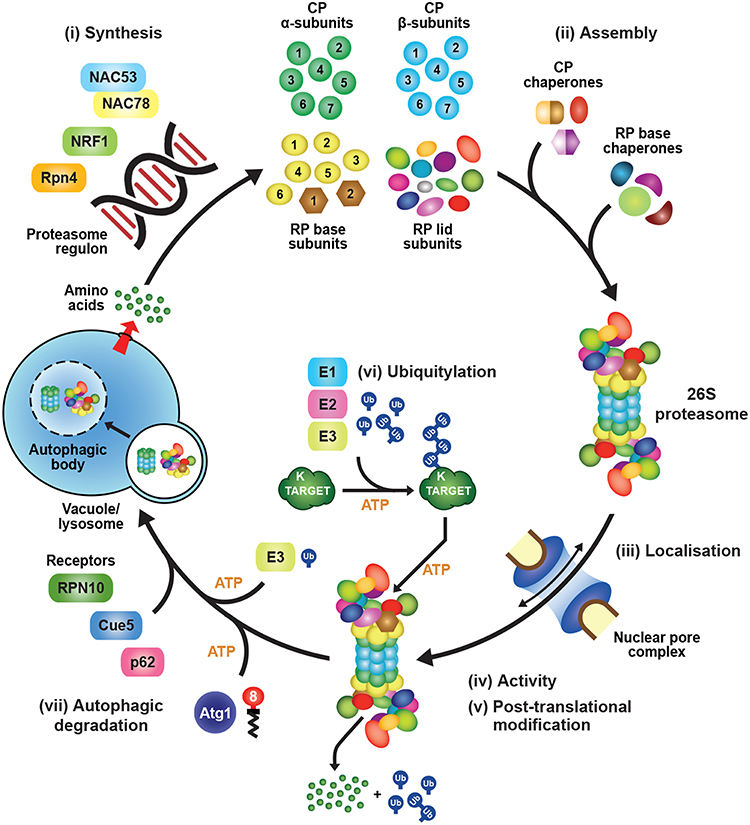
The Life Cycle of a 26S Proteasome.

From Infamy to Ingenuity – Bacterial Hijack Mechanisms as Advanced Genetic Tools | John Innes Centre

Scientists working at the John Innes Centre, Norwich, Norfolk, UK., have worked out the sneaky way a bacterium converts an internal cell mechanism in plants to suit its own purpose at the expense of the host, in another example of how a parasite can zombify its host.

Creationists looking at this mechanism from the arrogant perspective that sees their own ignorant incredulity as scientific data, would conclude that it must be intelligently designed, but would then need to perform intellectual summersaults to explain why, even though their own putative creator god is the only supernatural entity capable of designing complex living organisms, something called 'Sin' also creates complex living organisms, so their omnipotent god is not responsible for parasites.

The parasitic Phytoplasma bacterium is transmitted by insects and causes diseases like Aster Yellows, significantly diminishing yields in leaf crops including oilseed rape, lettuce, carrots, grapevines, onions, and a variety of ornamental and vegetable crops worldwide. It is also responsible for the familiar 'witches' brooms' in trees in which the plant produces a proliferation of thin branches and leave.

How it does this is explained in an open access research paper in PNAS. It does it by hijacking the protein recycling function of a cell organelles, the 26S proteasome, so first a little AI background about the 26S proteasomes:

Creationism in Crisis - Humans and Other Apes Are Born With Similar Brains


Contrary to current understanding, the brains of human newborns aren’t significantly less developed compared to other primate species but appear so because so much brain development happens after birth.

Brains of newborns aren't underdeveloped compared to other primates | UCL News - UCL – University College London

Scientists are revising what was believed about the state of development of a human baby's brain at birth compared to that of a newborn Chimpanzee - but not in a way that brings any comfort to creationists.

This research compares the brain development of a human baby with that of other apes because the scientists have no doubt that humans are apes, so comparisons are scientifically valid.

It had been thought that a newborn human's brain was underdeveloped, or altricial, compared to the other apes, but this paper shows that to be a false impression caused by the fact the a human baby's brain grows more quickly and becomes more complex than that of our close relatives, however, the starting point is very similar to that of a chimpanzee.

The paper by researchers Aida Gómez-Roblesa and Christos Nicolaou of the Department of Anthropology, University College London (UCL) together with colleagues Jeroen B. Smaers of the Department of Anthropology, Stony Brook University, New York, USA and Chet C. Sherwood of the Center for the Advanced Study of Human Paleobiology, Department of Anthropology, The George Washington University, Washington, DC, USA, is published open access in Nature Ecology & Evolution.

The research and its significance are explained in a UCL News release:
Web Analytics