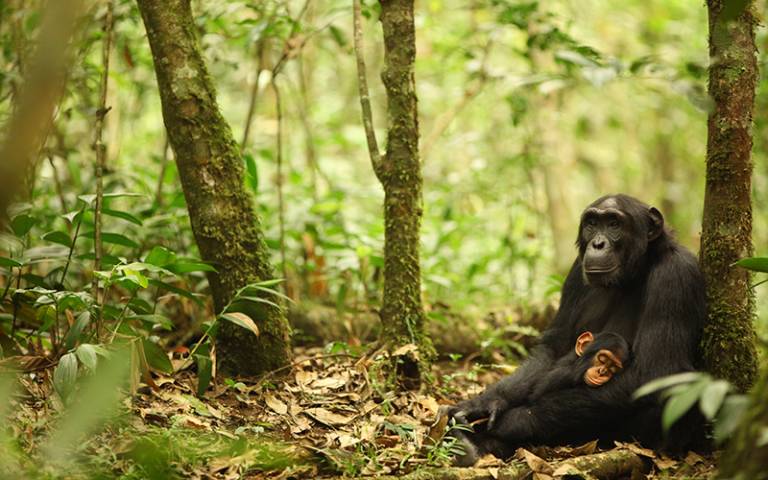
"Now look what you've done! The place is not fit to live in anymore!"
A sure sign of unintelligent design is one that completely fails to anticipate the future. Biologically speaking, poor design occurs when an organism is adapted to an environment at a specific moment but becomes increasingly maladapted as the environment evolves. This happens either because the organism fails to adapt quickly enough or because it was never designed with future changes in mind in the first place.
A good, intelligent designer, especially one equipped with the power of foresight, would not just design for today but for tomorrow, next year and for the foreseeable future. Failure to do so is incompetence, indolence or sheer malevolence in putting its design on course for ultimate disaster.
In my book,
The Body of Evidence: How the Human Body Refutes Creationism, I highlight numerous examples where the human body evolved for past environments — previous diets, predators, and social pressures — leaving us today with various vulnerabilities and compromises.
Human evolution moves at a glacial pace, barely noticeable even over many generations, while our environment has dramatically transformed within just a few decades.
Consider the technology available to our parents and grandparents compared to what we now take for granted—steam trains, landline telephones, no internet or colour TV, no central heating or air conditioning beyond an open fire or window, no satellite navigation, and no instant global communication. Further back, major societal shifts arose from mechanised farming, factory work, innovations in textile manufacturing, and even improvements in wheat milling for bread. Later still came automobiles and mass transit.
Yet, genetically speaking, our recent ancestors who navigated these revolutionary changes remain nearly identical to us today.
Now, we stand on the threshold of another seismic shift: artificial intelligence. Just a decade ago, writing this introduction would have involved considerable time researching, fact-checking, and carefully drafting paragraphs that still might not have fully conveyed my intended message. Today, I can draft my thoughts, then leverage the vast processing power of AI (like ChatGPT-4.5) to refine and clarify my ideas effortlessly. These introductory paragraphs are precisely the outcome of such a collaboration.
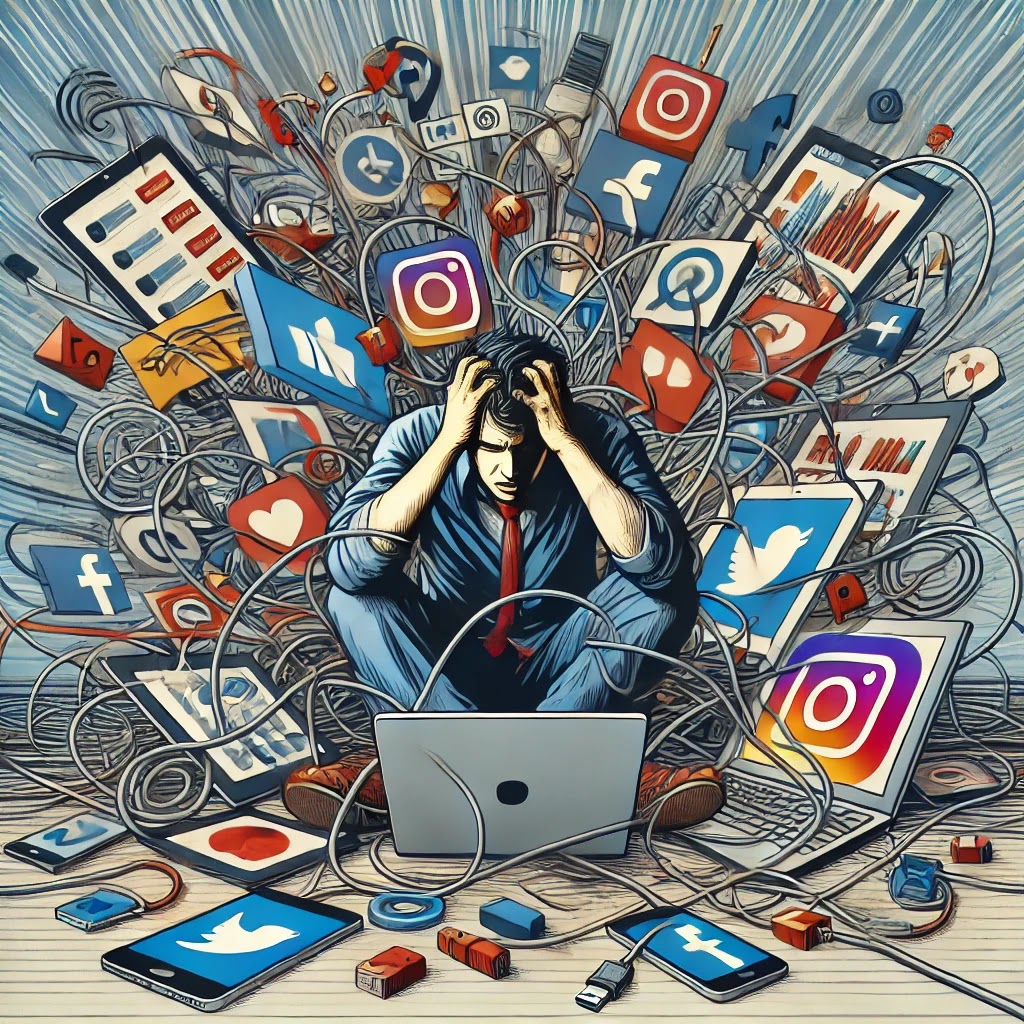
The core issue, however, remains that human culture is evolving at a rate several orders of magnitude faster than our biological capacity to adapt, creating an ever-widening gap between how we need to respond to new challenges and how we're inherently equipped to do so.
The consequences of this accelerating mismatch are thoughtfully explored in an article by Mike Brooks, Ph.D., in Psychology Today,
Humanity's Real Problem: Accelerating Evolutionary Mismatch.






.jpg)