Religion, Creationism, evolution, science and politics from a centre-left atheist humanist. The blog religious frauds tell lies about.
Wednesday, 6 December 2023
Malevolent Designer News - How A Bacterium Is 'Intelligently Designed' To Turn Plants Into Zombies
From Infamy to Ingenuity – Bacterial Hijack Mechanisms as Advanced Genetic Tools | John Innes Centre
Scientists working at the John Innes Centre, Norwich, Norfolk, UK., have worked out the sneaky way a bacterium converts an internal cell mechanism in plants to suit its own purpose at the expense of the host, in another example of how a parasite can zombify its host.
Creationists looking at this mechanism from the arrogant perspective that sees their own ignorant incredulity as scientific data, would conclude that it must be intelligently designed, but would then need to perform intellectual summersaults to explain why, even though their own putative creator god is the only supernatural entity capable of designing complex living organisms, something called 'Sin' also creates complex living organisms, so their omnipotent god is not responsible for parasites.
The parasitic Phytoplasma bacterium is transmitted by insects and causes diseases like Aster Yellows, significantly diminishing yields in leaf crops including oilseed rape, lettuce, carrots, grapevines, onions, and a variety of ornamental and vegetable crops worldwide. It is also responsible for the familiar 'witches' brooms' in trees in which the plant produces a proliferation of thin branches and leave.
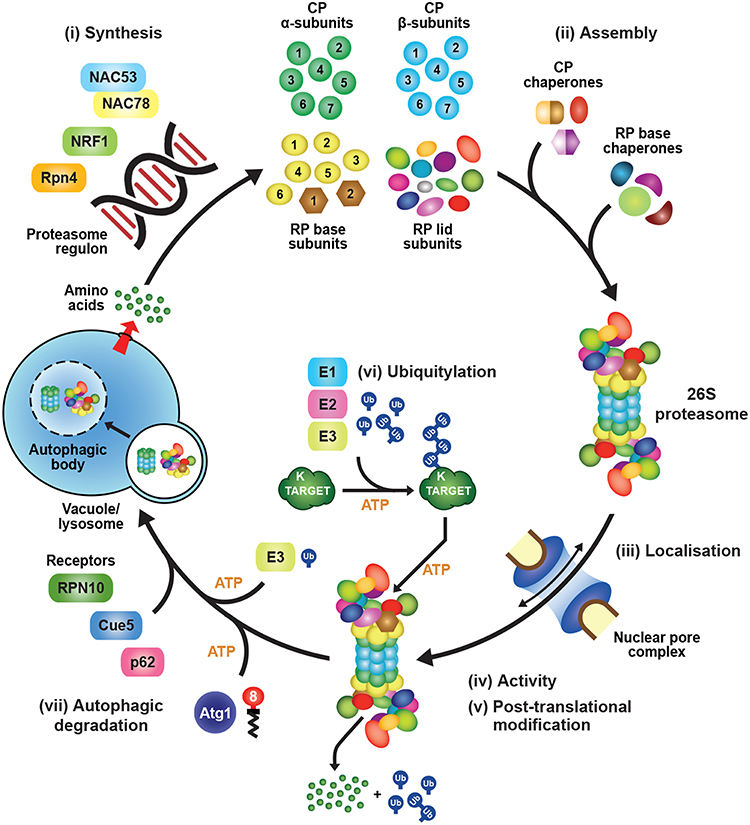
How it does this is explained in an open access research paper in PNAS. It does it by hijacking the protein recycling function of a cell organelles, the 26S proteasome, so first a little AI background about the 26S proteasomes:
Labels:
Biology
,
Botany
,
Creationism in Crisis
,
Evolution
,
Parasitism
,
Science
Creationism in Crisis - Humans and Other Apes Are Born With Similar Brains
A new study challenges the belief that human newborns have significantly less developed brains than other primates. The study found that humans are born at a typical development level for primates, but their brains grow more after birth, leading to the impression of underdevelopment.
Contrary to current understanding, the brains of human newborns aren’t significantly less developed compared to other primate species but appear so because so much brain development happens after birth.
Brains of newborns aren't underdeveloped compared to other primates | UCL News - UCL – University College London
Scientists are revising what was believed about the state of development of a human baby's brain at birth compared to that of a newborn Chimpanzee - but not in a way that brings any comfort to creationists.
This research compares the brain development of a human baby with that of other apes because the scientists have no doubt that humans are apes, so comparisons are scientifically valid.
It had been thought that a newborn human's brain was underdeveloped, or altricial, compared to the other apes, but this paper shows that to be a false impression caused by the fact the a human baby's brain grows more quickly and becomes more complex than that of our close relatives, however, the starting point is very similar to that of a chimpanzee.
The paper by researchers Aida Gómez-Roblesa and Christos Nicolaou of the Department of Anthropology, University College London (UCL) together with colleagues Jeroen B. Smaers of the Department of Anthropology, Stony Brook University, New York, USA and Chet C. Sherwood of the Center for the Advanced Study of Human Paleobiology, Department of Anthropology, The George Washington University, Washington, DC, USA, is published open access in Nature Ecology & Evolution.
The research and its significance are explained in a UCL News release:
Labels:
Anthropology
,
Biology
,
Creationism in Crisis
,
Evolution
,
Science
Unintelligent Design - Or Is It Malevolence? How Bacteria Are Designed to Exploit Our Mucus
[left caption]
[Right caption/credit]
Bacteria's mucus maneuvers: Study reveals how snot facilitates infection | Penn State University
The mucous membrane lining our respiratory system has evolved (or, according to creationists, been intelligently [sic] designed) to keep our respiratory system clean as we breathe in air containing particles of dirt, dust, pollen and bacteria. It does this by secreting mucus that traps the particles, then ciliated cells on the surface sweep them towards our pharynx to be swallowed and disposed of in our digestive system where the proteins in the mucous are recycled.
Other body cavities are lined by a mucous membrane that serves to protect and keep the cavity moist and lubricated.
But, in one of those research papers that creationists have to avoid reading, a team of researchers from Penn State University, have shown how bacteria have evolved (or been intelligently [sic] designed, according to creationists) to exploit the mucous, the better to infect us and make us sick, and the thicker the mucus, the better it is for these would-be pathogens.
Infections by bacteria, known medically as opportunist infections, especially in the nasal sinuses and lungs, are a frequent complication of viral infections such as a common cold or influenza. These opportunist infections can be more dangerous than the virus infections that facilitate them.
The team showed that bacteria find it easier to swim, swarm and form colonies in thick mucus than in thin, watery mucus and that this swarming probably helps protect them from the antibacterial enzymes in the mucus.
Their research is explained in a Penn State news release:
Labels:
Biology
,
Creationism in Crisis
,
Health
,
Malevolent Design
,
Parasitism
,
Science
,
Unintelligent Design
Creationism in Crisis - A Monster Virus Is A BIG Problem For Creationists
Pithovirus sibericum
Pithoviruses Are Invaded by Repeats That Contribute to Their Evolution and Divergence from Cedratviruses | Molecular Biology and Evolution | Oxford Academic
Regular readers with very long memories may remember how I wrote about something big and potentially nasty emerging from Siberian permafrost back in 2014.
The 30,000-year-old monster in question was a form of giant virus then unknown to science, now named Pithoviruses sibericus. It came back to life when thawed. Since then, several other related pithoviruses have been discovered in soil and aquatic sources. Fortunately, all those discovered so far are parasitic only on one species of amoeba, Acanthamoeba castellanii and don't pose a threat to humans or multicellular life.
The question was, why are they so large, or more particularly, why do they have such a massive genome, including some genes normally found in complex cells. the Pithovirus species so far discovered have a genome of between 460 to 686 kb. Their genome, moreover, is similar to that of bacteria and archaea, in that it is DNA-based and forms a single circular 'chromosome'.
But it's not the fact that the first one was found in permafrost dating back 20,000 before 'Creation Week', difficult though that little inconvenience is for creationists; it is the account of how they acquired this massive genome that is the thing of nightmares for any creationists who understand the biology.
They acquired it by processes that give the lie to their basic dogma that new genetic information can't arise in a genome without 'God magic'.
A team of researchers have shown that they acquired new genetic information and such a massive genome by:
- Horizontal gene transfer (5% -7 %)
- Gene duplication (14% - 28%)
- Massive inversions of repeated sequences of DNA.
And this gives the lie to the ludicrous creationist dogma that no new information can arise by mutation because all mutations are deleterious. There is nothing deleterious in having a spare copy of a gene, nor in mutations in that spare copy, least of all if it gives a new function that increases fitness.
The researchers, from the Institut de Microbiologie de la Méditerranée, FR3479), IM2B, IOM, Aix–Marseille University, Centre National de la Recherche Scientifique, Marseille, France were led by Matthieu Legendre. Their findings are published, open access, in Molecular Biology and Evolution:
Labels:
Biology
,
Creationism in Crisis
,
Evolution
,
Genetics
,
Parasitism
,
Science
,
Virology
Tuesday, 5 December 2023
Creationism in Crisis - Evolution of Rock Doves & Domestic Pigeons
Rock dove, Colmba livia neglecta (Iran)

A great deal is understood about how the many different varieties of domestic pigeon were produced ever since Charles Darwin used them to illustrate the role of selection in evolution. In this case, selection is human selection rather than natural selection, although the difference is a matter of semantics if you regard human selective breeders as part of the domestic pigeon's environment.
Incidentally, creationists should note that Darwin never claimed evolution always resulted in new species. As he showed with his selective breeding examples, it produced new varieties too. Some of these have become so far removed from their wild ancestors that they rank as subspecies, like the domestic pigeon, Columba livia domestica
Although the radiation of domestic varieties is now well understood, the wild ancestors, the rock doves, have received far less attention until now. Now a paper by a team led by Germán Hernández-Alonso of the Center for Evolutionary Hologenomics, The Globe Institute, University of Copenhagen, Copenhagen, Denmark, redresses that discrepancy by analysing the entire genomes of 65 historical rock doves that represent all currently recognized subspecies and span the species’ original geographic distribution. 3 of these specimens were from Charles Darwin's collection.
This works shows that rock doves have diversified into a number of subspecies across their range, stemming from a subspecies now restricted to a small coastal strip of Northwest Africa, C. livia gymnocyclus. One of these subspecies received a substantial ingression of genes from a related species, C. rupestris after it split from the West African population but before it became domesticated. The result is that C. livia gymnocyclus should now probably rank as a species in its own right, C. gymnocyclus.
First a little about the evolution of domestic pigeons:
Monday, 4 December 2023
Wonderful World - Ten Reasons to Like Spiders
Top left: Giant trapdoor spider Euoplos dignitas
Bottom left: European garden spider, Araneus diadematus
Top right: Gooty Sapphire Ornamental tarantula, Poecilotheria metallica
Bottom right: Banded Garden spider, Argiope trifasciata
Don't like spiders? Here are 10 reasons to change your mind
Back in the past, in what now seems like a lifetime ago, I managed the Emergency Operations Centre for my local Ambulance Service which was housed in a single-storey building in the grounds of the Church Hospital, Oxford. One of my nicknames was 'Spiderman' because of my fondness for spiders.
The roof space of this building was home to a population of 'house spider' or Tegenaria domestica, a good-sized one of which can be 4 inches or more across its outstretched legs. They frequently paid us a visit by coming through the light fittings or round the edges of the aircon unit.
The house spider is well-named, being one of those commensal species that, like barn swallows, can't exist without human habitation and so must have evolved after we became settled and built permanent dwellings.
Despite its large fangs, it is entirely harmless to humans, even if it does manage to pierce the skin - something I tried to impress on my staff, whose first response to one running across the floor was to stamp on it.
Despite this reassurance, one of my assistants was so arachnophobic she refused to enter the room until the spider was gone - although what she thought it would do to her was a mystery, so one of my tasks was to gently catch the spider in my hands and put it outside, whereupon I would deliver my famous (or maybe infamous) spider talk, in which I explained why spiders are such fascinating creatures - their very long evolutionary history from a common ancestor with scorpions; their multiple eyes (some for binocular vision and some for detecting movement) and above all their amazingly engineered webs.
Orb web spiders like the common garden spider, Araneus diadematus, make two sorts of silk - one to act as scaffolding and the radial threads of the web and sticky one to form the circular strands. Each thread of silk consists of multiple fine filaments that stretch very quickly to catch a flying insect without it bouncing off, then recoil slowly to avoid throwing the insect free. All this is controlled by the fine molecular structure and electrostatic bonds between the filaments. The result is a thread that, weight for weight, is stronger than steel.
One small spider that is common on walls and buildings in Oxford is the zebra spider, Salticus scenicus, a tiny black and white-striped spider, only a few millimeters long, that has amazing eyes. It is a hunting spider that preys on small insects, even some three times its size, by jumping on them. Its modus operandum is to crawl over the surface of walls and roofs and, when it sees its prey, it approaches slowly and when close enough, judges the distance perfectly and pounces. It will also jump across gaps, again with a perfectly judged jump, many times its own body length, rather like a human jumping the Grand Canyon from a standing start, but before it does so, it dabs the tip of its abdomen down to fix a 'safety line' of silk, just in case. To perform these feats, the zebra spider needs a high degree of visual acuity and binocular vison. The amazing thing about this spider is the way it overcomes the problem for visual acuity of such a small retina; it rapidly moves the retina up and down, effectively increasing its size.
The jump is accomplished, not by muscles in the legs, but by a sudden increase in haemocoelic blood pressure which straightens the front and back legs, so the spider always jumps with its legs extended.
I always hoped my spider talk would impress my staff enough to take an interest in spiders rather than seeing them as creepy-crawly things to be half-feared and killed simply for sharing the building with us. Alas, only one or two ever followed my example and picked them up to put them out of a window.
All that was by way of introduction to an article in The Conversation in which Leanda Denise Mason, an Associate Lecturer, Curtin University, Australia give her ten reasons to like spiders, or at least change your mind it you don't. Her article is reprinted here under a Creative Commons licence, reformatted for stylistic consistency. The original can be read here.
Labels:
Biodiversity
,
Biology
,
Creationism in Crisis
,
Evolution
,
Nature
,
Wildlife
Sunday, 3 December 2023
Creationism in Crisis - Scientists Show How a Dynamic And Changing Earth Influenced Evolution Over Millions of 'Pre-Creation' Years
[left caption]
[Right caption/credit]
Landscape dynamics determine the evolution of biodiversity on Earth - The University of Sydney
Again, it's the turn of geologists to refute creationism without even trying, like so many biologists do with their daily work.
Creationists insist that Earth is 'fine-tuned' for life; but as anyone who understands biology will know, life is 'fine-tuned' for Earth and the tuning process is called evolution by natural selection.
The observable fact that, over time, species have either evolved or gone extinct gives the lie to the 'fine-tuned for life' assertion because, if that were true, there would be no selection pressure for change and the fossil record would show no change.
In fact, the fossil record wouldn't exist as we know it because there would have been no evolution beyond the first free-living, single-celled prokaryote organisms because their environment would have been perfect for them.
Yet, as we know from daily observation, Earth is a changing and dynamic planet with periodic climate change, earthquakes and volcanoes caused by the slow process of plate tectonics, changing oxygen and carbon dioxide levels caused by the rise and fall of major ecosystems, and changing ocean currents caused by a number of different factors, not the least of which are climate change and plate tectonics. Then there are the cosmological changes caused by the Milankovitch cycles.
One of the consequences of this dynamic change is the way the Earth's surface is continually being recycled over geological time by erosion, transportation in water and sedimentation in ocean deposits as nutrients, then subduction and mountain-building and eventual resurfacing through volcanic activity. This gives changing levels of nutrients in the oceans that affect biodiversity both in the seas and on land.
This is the conclusion of a study by a team of geologists jointly led by Dr Tristan Salles of The University of Sydney, Sydney, New South Wales, Australia, and Dr Laurent Husson of Université Grenoble-Alpes, Grenoble, France. They have shown an association between changes in nutrient levels due to sedimentation and mass extinctions. Their findings are published open access in Nature and are explained in a University of Sydney news release:
Labels:
Biodiversity
,
Biology
,
Creationism in Crisis
,
Evolution
,
Geology
,
Geophysics
,
Science
Creationism in Crisis - How America's East Coast Formed - 230 Million Years Before 'Creation Week'
Vector graphic of the land mass of the supercontinent Pangea.
Credit: Rainer Lesniewski
Study Illuminates Formation of U.S. East Coast During Breakup of Supercontinent Pangea - SMU
It's not just the biologists who are incidentally refuting creationism with just about every peer-reviewed research paper; now the geologists are doing the same.
The problem for creationists is that their superstition has no basis in facts because it didn't happen and the record of how it did happen is in the evidence that science is revealing, so inevitably that evidence is going to refute the childish fairytale that creationists were taught by their parents who were taught it by their parents...
Take this piece of geological research into the formation of the East Coast of the USA, for example. It was carried out by scientists from the University of New Mexico, Southern Methodist University seismologist, Professor Maria Beatrice Magnani, and scientists from Northern Arizona University and the University of Southern California. It occurred in that long 'pre-Creation' history before creationists think Earth was magicked up out of nothing.
It is based on the knowledge that the East Coast of America formed when the supercontinent, Pangea, broke up some 230 million years before creationists think Earth existed.
Because it wasn't known about by the parochial and scientifically illiterate Bronze Age authors of their holy books, creationists are completely unaware of the way the present land-masses were formed on the breakup of Pangea, despite the abundant tectonic evidence in the form of mid-ocean ridges with their embedded record of multiple magnetic reversals over millions of years, subduction zones, earthquakes, volcanoes and uplift folds to form hills and mountains at tectonic plate margins.
Geology is a science about which my education has been somewhat lacking (I'm a biologist, physiologist and biochemist by training) but as I understand it, the edges of continents that were the site of the original rifts that opened up to form the oceans, particularly the Atlantic Oceans, will also show evidence of magma that would have welled up in the initial stages of the split.
In the case of the North American Atlantic coast, which is passive in this process because it is simply being pulled away from what is now Northwest Africa, and has not been subject to collisions with other plates, or any significant volcanic activity, these traces of magma are still to be found in the edges of the continental shelf beneath the ocean floor. Associated with the passive margin is a magnetic anomaly, The East Coast Magnetic Anomaly (ECMA), that runs parallel to the American East Coast.
My knowledge of the American East Coast is limited to two week vacation in Boston about 12 years ago, during which I tried bathing in Cape Cod Bay from a beach near South Wellfleet, to discover that I was standing barefoot on king crabs, either dead or alive (their remains littered the beach along Cape Cod), so I didn't spend long in the water - not that they were any threat to me but because they are not very pleasant to walk on.
As the Southern Methodist University news release explains:
Labels:
Atheism
,
Evolution
,
Geology
,
Geophysics
,
Science
Saturday, 2 December 2023
Malevolent Design News - How 'Intelligently Designed' Pathogens Use The Tactics Of A Burglar To Make Us Sick
Model pathogen, Toxoplasma gondii
[Right caption/credit]
Pathogens use force to breach immune defenses, study finds: IU News
Creationists trying to defend their magic creator god argue that it didn't create pathogenic parasites and instead blame it on 'Sin'. Sadly for them, however, one of their leading cult gurus, Michael J. Behe, has pulled that rug from underneath them by writing a book in which he used the supposedly irreducibly complex flagellum of a common pathogen, Escherichia coli (E. coli) to argue that it must have been intelligently designed, (so God did it!). Behe's book, 'Darwin’s Black Box' is constantly being cited as 'proof' that the reputedly omniscience, omnipotent creator god of the Bible and Qur'an is real and creates things.
So, let's go with their 'proof of God' argument and assume therefore that pathogens are the intentional design of their putative designer god and were designed for the function they perform - making us sick, while producing more copies of themselves to make others sick too.
Now a team of researchers have shown the lengths this alleged designer god has gone to to continue making us sick and suffer. The team, led by Professor Yan Yu, of the College of Arts and Sciences’ Department of Chemistry, Indian University, Bloomington, IN, USA have shown that the intracellular pathogens like Toxoplasma, tuberculosis, malaria and chlamydia don't use subtlety to gain entry into the cell, probably because this would provoke an immune response as our immune system, allegedly designed by the same intelligent designer to protect us from the pathogens it designed to harm us, tried to fight back. Instead, they use brute force to break into the cell and once inside use the same force to break into a cell vacuole where they are protected by the internal cell membranes.
How the research team which included Professor Yan Yu's colleagues from Indiana University with Thomas K. Gaetjens and Steven M. Abel of the Department of Chemical and Biomolecular Engineering, University of Tennessee, Knoxville, TN, USA, made this discovery is explained in an Indian University new release:
Labels:
Biology
,
Creationism in Crisis
,
Evolution
,
Health
,
Malevolent Design
,
Parasitism
,
Science
,
Unintelligent Design
Creationism in Crisis - How Snakes Evolved To Meet The Demands Of Their Habitat And Food Sources
There are more than 800 species of dipsadine snakes, ranging from less than 12 inches to more than 9 feet in length.
Photos: Gregory G. Pandelis.
Snake skulls show how species adapt to prey - News Center - The University of Texas at Arlington
The ability to catch and consume prey species is a key aspect of evolutionary biology in carnivorous species, for obvious reasons, and so is a major source of divergence and radiation of species as each species become more and more specialised at catching different prey species.
An example of this was published recently in the journal BMC Ecology and Evolution in which three researcher, led by Gregory G. Pandelis of the Amphibian and Reptile Diversity Research Center, Department of Biology, University of Texas at Arlington, Arlington, Texas, USA with two colleagues from the Department of Ecology and Evolutionary Biology, University of Michigan, Ann Arbor, Michigan, USA, showed a correlation between prey species and skull morphology in dipsadine snakes.
Labels:
Biodiversity
,
Biology
,
Creationism in Crisis
,
Evolution
,
Science
How Science Works - Facing The Challenges of New Information
Artistic rendering of the possible view from LHS 3154b towards its low mass host star. Given its large mass, LHS 3154b probably has a Neptune-like composition.
Credit: Penn State
Creative Commons
Creative Commons
Discovery of planet too big for its sun throws off solar system formation models | Penn State University
Theists embrace certainty at the expense of truth because it feels safe in an uncertain world in which truth is subordinate to opinion. Scientists embrace doubt because it leads them closer to the truth in a world full of wonder and begging to be understood, where truth is supreme and leads opinion wherever it may go.
In other words, religion is unreasonable certainty; science is reasonable uncertainty.
So, if there is one thing theists hate, it's being challenged with new information. It's not just scientific information that shows how far removed from reality their founding myths, such as those in the Bible, are, but information that shows, for example, that several of the 'epistles' attributed to Paul were forgeries trading on his name to give them added authority, or that the description of his 'conversion' on the road to Damascus was actually a description of a temporal lobe epileptic seizure and that his reason for being there didn't make any sense in the geo-political and legal context of the times.
So heavily invested are most devout theists that inconvenient facts like these are not considered reasons to change their minds; they are considered reasons to look for excuses to deny and dismiss the evidence. There is a vast and very lucrative industry, especially in the USA, which specialises in selling people 'reasons' to deny the science and believe the myths in the Bible, for instance. Remaining stoically ignorant of science is even considered virtuous in some parts of the world where religions still have a strangle hold.
Contrast that with science, where the most exciting news is that someone has discovered something that means we need to revise our thinking and change our minds. With science, when the facts change, the intellectually honest change their minds; with religion, when the facts change, they try to change the facts because the beliefs are sacred.
An example of how science welcomes and embraces new evidence is the news that cosmologists have probably discovered a massive planet orbiting a sun that is too small for such a large planet orbiting so close to it. This might not sound dramatic but if confirmed, it will demand a reassessment of how we think planetary systems form.
Friday, 1 December 2023
Creationism in Crisis - Evolution of a Carnivorous Pitcher Plant by Gene Duplication - New Genetic Information Created Naturally
Genomic study sheds light on how carnivorous Asian pitcher plants acquired signature insect trap - University at Buffalo
Unlike so many biology, geology and palaeontology papers published recently, this paper doesn't refute creationism by showing how much of Earth's history occurred before creationism's mythical 'Creation Week', although the genetic changes almost certainly did occur in the long period of 'pre-Creation' history.
Instead, it refutes two more of creationism's favourite fallacies:
And, just in case creationists declare that mere gene duplication wouldn't create enough new genetic information, this species doesn't have just one or a few genes duplicated and repurposed; they don't even stick with a whole genome duplication, They actually have five whole genome duplications making them decaploid, an extreme example of polyploidy!
East Asian pitcher plants, Nepenthes gracilis.
Photo: Pierre-Louis Stenger
East Asian pitcher plants capture insects using their highly specialized pitcher-shaped leaves, which may have resulted from duplicated genomes.
Photo: Pierre-Louis Stenger.
Unlike so many biology, geology and palaeontology papers published recently, this paper doesn't refute creationism by showing how much of Earth's history occurred before creationism's mythical 'Creation Week', although the genetic changes almost certainly did occur in the long period of 'pre-Creation' history.
Instead, it refutes two more of creationism's favourite fallacies:
- Genetic information can't be created without the magical assistance of a creator god. This is a fundamental axiom, taught to creationists by cult leaders such as William Dembski, who fooled them by equating 'information' with energy and citing the Third Law of Thermodynamics. It's a belief clung to despite the repeated evidence of gene duplication and repurposing of resulting redundancy.
- The fallacy of irreducible complexity which wrongly assumes that a complex system must have arisen as a single event and was so highly unlikely that a magic god must have created it. This is taught to them by another cult leader, Michael J. Behe, despite the evidence that 'irreducibly complex' systems can and do arise by exaptation of pre-existing, redundant structures or steps in a metabolic pathway that arise in parallel in the species gene pool, not all at once in a single event in one individual or cell.
And, just in case creationists declare that mere gene duplication wouldn't create enough new genetic information, this species doesn't have just one or a few genes duplicated and repurposed; they don't even stick with a whole genome duplication, They actually have five whole genome duplications making them decaploid, an extreme example of polyploidy!
Creationism in Crisis - Scientists Identify a Possible Cause of a Mass Extinction - 201 Million Years Before 'Creation Week'
An algal bloom
Deoxygenation levels similar to today’s played key role in marine extinctions during major past climate change event - News & Events | Trinity College Dublin
201 million years before creationists believe Earth was created, something happened to cause one of the pivotal moments in Earth's long 'pre-Creation' history, when very many species went extinct, providing the opportunity for the few survivors to evolve to occupy the vacant niches, so putting the evolutionary trajectory of Earth's ecosystems on a course that led us to where we are today.
This was the Triassic–Jurassic mass extinction.
Labels:
Biology
,
Creationism in Crisis
,
Evolution
,
Geology
,
Science
Creationism in Crisis - Ancestral Geckos from 150 Million Years Before 'Creation Week'
The black banded gecko, Coleonyx fasciatus, is a good approximation of the physical appearance of Helioscopus dickersonae
Yale study gives grandmother gecko a place of honor — and a new name | YaleNews
If you want to see the origin of today's species, the best place to find them will be in the fossil record of all the millions of species that lived in that vast expanse of pre-'Creation' time, when some 99.97% of Earth History happened and 99% of all known species lived and went extinct - before creationists believe Earth was created.
For example, and for yet another example of a science paper that casually refutes creationism with no effort to do so on the part of the authors, a team of palaeontologists from Yale have identified a new fossil lizard as the ancestor of modern geckos that lived during the late Jurassic period, 163.5 to 145 million years ago. This pushes the date of the earliest known member of the gecko line in North America back 100 million years.
The team have named the new species, Helioscopus dickersonae and have published their find open access in the journal Proceedings of the Royal Society B. The publication is accompanied by a Yale University press release:
Labels:
Biology
,
Creationism in Crisis
,
Palaeontology
,
Science
Wednesday, 29 November 2023
Creationism in Crisis - Early European Humans Hunted Beavers 400,000 Years before 'Creation Week'
Cut marks on the left femur of a beaver
Early humans hunted beavers, 400,000 years ago | Press and Public Relations
You know, this is so much like shooting fish in a barrel, that I would feel sorry for creationists. If only they were so smugly certain and lacking in self-doubt, but here's another of those so predictable scientific papers that refute creationism without even trying.
Previously, it was thought that Middle Pleistocene humans in Europe hunted large game such as bovids and rhinoceros for food, but this may be because the bones of large animals are better preserved than the bones of smaller mammals.
Now, a new study by a team from Johannes Gutenberg University Mainz (JGU), the Leibniz Zentrum für Archäologie (LEIZA), also in Mainz, and Leiden University in the Netherlands, shows that Middle Pleistocene humans hunted beavers as a food resource and possibly also for their pelts, 400,000 years before creationists think Earth was created.
The beavers they hunted were the now extinct Eurasian giant beaver, Trogontherium cuvieri, and the still living European beaver, Castor fiber.
The team have published their findings in the journal Scientific Reports.
The publication is accompanied by a brief press release from Johannes Gutenberg University:
Labels:
Anthropology
,
Archaeology
,
Creationism in Crisis
,
History
,
Science
Creationism in Crisis - How Elephants Got Their Trunks and Tusks 20 Million Years Before 'Creation Week' - No Magic Required
Artist's impression of Platybelodon grangeri
How shifting climates may have shaped early elephants’ trunks | For the press | eLife
As expected of scientific research papers, this one deals with events that occurred in that vast expanse of time before creationists think Earth was created, when 99.97% of Earth's history occurred.
This one, published open access in eLife, explains how the ancestors of modern elephants and their recently extinct relatives, the mammoths, got their long flexible trunks and used them for their unique feeding method.
The paper by lead author, Chunxiao Li, and colleagues from the Key Laboratory of Vertebrate Evolution and Human Origins of the Chinese Academy of Sciences, Institute of Vertebrate Paleontology and Paleoanthropology, Chinese Academy of Sciences, Beijing, China, and including Burt Wolff of the Department of Earth, Ocean and Atmospheric Science, Florida State University, Tallahassee, FL, USA and Fajun Sun of the Department Environmental Science & Technology, University of Maryland, MD, USA, "combines multiple analyses to reconstruct feeding behaviours in the extinct longirostrine elephantiforms - elephant-like mammals characterised by elongated lower jaws and tusks."
It seems that, as they grew larger, for reasons not yet fully understood, but possibly to give a larger 'vat' in which to ferment their high-cellulose diet, these early ancestors of the elephants had to evolve a longer jaw to reach the grasses and shrubs on which they grazed. The trunk extended as part of this process of facial elongation. This in turn created the opportunity for the end of the truck to play a part in holding the plants as they were cut off by the incisor teeth at the end of the lower jaw. This was more of an advantage in the open grasslands that Platybelodon inhabited, so, when climate change meant loss of habitat and eventual extinction for the two related gomphotheres, Platybelodon's prehensile trunk gave it enough advantage to survive.
A press release by eLife explains the research and its significance for understanding how elephants got their trunks:
Labels:
Climate
,
Creationism in Crisis
,
Environment
,
Evolution
,
Geology
,
Palaeontology
,
Science
Tuesday, 28 November 2023
Antivax COVIDiot News - Study Shows Vaccines Halted The Rise In Prem Births Caused By COVID-19
Study: Spike in premature births caused by COVID, halted by vaccines
About the last thing the politically-motivated, far right antivaxxers covidiots are interested in is protecting human life. With characteristic hypocrisy, many of the same frauds are also active campaigners against legal abortions and a woman's right to choose which, together with COVID-19 denialism and antivaxx conspiracism, have become major talking points in the Trumpanzee far right playlist.
The hypocrisy of these frauds was revealed yesterday in a study which shows there was a huge spike in the number of premature births during the early phase of the COVID-19 pandemic when women infected with the virus spontaneously aborted their baby. The same study also shows that in those areas where the vaccine uptake was high, the premature birth rate quickly fell back to pre-pandemic levels, but in areas where uptake was low, it took another year to return to pre-pandemic levels.
The study was carried out by Professor Jenna Nobles of Wisconsin–Madison University and Professor Florencia Torche, of Stanford University who have published their findings in Proceedings of the National Academy of Sciences (PNAS).
As the Wisconsin–Madison University press release explains:
Labels:
Antivaxxers
,
Covid-19
,
Covidiots
,
Extremism
,
Health
,
Human Rights
,
Trumpanzees
Monday, 27 November 2023
Creationism in Crisis - The Daily Life of a North American Mammoth - 7,100 Years Before 'Creation Week'
An illustration of an adult male woolly mammoth as it navigates a mountain pass in Arctic Alaska, 17,100 years ago. The image is produced from an original, life-size painting by paleo artist James Havens, which is housed at the University of Alaska Museum of the North.
Image by James Havens,
The Havens Studio
The Havens Studio
Study takes unprecedented peek into life of 17,000-year-old mammoth | uOttawa
A view of the excavation site of the mammoth tusk from north of the Brooks Range in Alaska.
Photo by Pam Groves, University of Alaska Fairbanks
According to creationist superstition, a magic man made of nothing created the entire Universe, Earth, and all life on Earth, out of nothing, using magic words spoken in a language that no-one else spoke, and, using the rotation period of a planet that didn't exist, completed it all in 6 days during what creationists call 'Creation Week'.
7,000 years before that, mammoths were living their daily lives in what is now Alaska, and leaving tusks that carried a daily record of where they were living and consuming vegetation, in the form of 'signature' ratios of isotopes of strontium.
Strontium finds its way into the plants that animals eat from the underlying rocks where the ratio of the different stable isotopes of strontium (87Sr and 86Sr) in it changes very little over millions of years, giving a characteristic 'signature' that can be used to identify where the food plants were growing. This signature strontium was deposited in the growth layers of mammoth tusks, starting at the tip when the mammoth was born, and ending in the root when the mammoth died. In between the two is a complete record of where the mammoth roamed.
But first, scientists need to build a strontium isotope map so they can match up the record in the tusks with the geographical location in which the food grew that day. And this is where voles come in. Voles also eat the strontium-containing grasses that mammoths eat and so build up a record in their teeth. However, voles are mostly very sedentary in their habits so have a very restricted range and because the strontium in the rocks changes little, even present-day voles can be used to build up a strontium isotope map.
Using that knowledge, an international research team led by Clément Bataille, an assistant professor and researcher in the Department of Earth and Environmental Sciences in the Faculty of Science, Ottawa University, Canada have analysed the strontium content of a mammoth tusk found on Alaska’s North Slope above the Arctic Circle, to build up a picture of its daily life and travels.
The study is explained in a press release from Ottawa University:
Labels:
Biology
,
Creationism in Crisis
,
History
,
Science
Sunday, 26 November 2023
Malevolent Designer News - Scientists Have Disovered the Sneaky Way Creationism's Putative Designer Created Childhood Leukaemia
Pediatric oncology: Scientists discover new Achilles heel of leukemia cells | Current news from the Goethe University Frankfurt
With the double-think that characterises creationsm, creationists will use, depending on what facts they are disputing, two mutually exclusive arguments:
So, it will be interesting to see what arguments creationists will come up with to counter the argument that, if creationism has any substance, the same designer must have designed childhood leukaemia, in full knowledge of the suffering and grief it would cause not just to the child but to his/her parents and relatives.
But I suppose they could always cite William Lane Craig's repugnant defence of religiously-inpired infanticide - "killing children is not wrong because they go straight to heaven so it makes them happy".
But whatever excuse they make, creationists are hoist by their own petard in arguing the false dichotomy fallacy, so they are stuck with portrying the god they purport to worship as the designer of childhood leukaemia - a position they seem to prefer to having people accept that evolution by natural selection is responsible for the nastiness in nature as well as the wonderful.
So, given that a favourite subject for their argument from ignorant incredulity, is the structure of DNA, how will creationists react to the fact that a team of researchers from the Department of Pediatrics and the Institute for Experimental Pediatric Hematology and Oncology at Goethe University, Frankfurt, Germany has discovered a site in the DNA of cancer cells that is essential for leukemia cells to survive?
In leukemia, white blood cells divide uncontrollably.
Pediatric oncology: Scientists discover new Achilles heel of leukemia cells | Current news from the Goethe University Frankfurt
With the double-think that characterises creationsm, creationists will use, depending on what facts they are disputing, two mutually exclusive arguments:
- A combination of the argument from ignorant incredulity and the false dichotomy fallacy. This argument depends on the assumption that there is only one supernatural entity capable of creating something as complex as DNA, with the conclusion "Therefore, God did it!", which of course is also a non-sequitur and an intellectually dishonest presupositional invocation of something unproven as evidence that it exists.
- On another day, presented with something so patently evil as childhood cancer or nasty parasites that kill many and make life a misery for millions more (and not just humans, but just about every living thing) creationists invoke somethign called 'Sin' as being responsible for its design and/or creation.
So, it will be interesting to see what arguments creationists will come up with to counter the argument that, if creationism has any substance, the same designer must have designed childhood leukaemia, in full knowledge of the suffering and grief it would cause not just to the child but to his/her parents and relatives.
But I suppose they could always cite William Lane Craig's repugnant defence of religiously-inpired infanticide - "killing children is not wrong because they go straight to heaven so it makes them happy".
But whatever excuse they make, creationists are hoist by their own petard in arguing the false dichotomy fallacy, so they are stuck with portrying the god they purport to worship as the designer of childhood leukaemia - a position they seem to prefer to having people accept that evolution by natural selection is responsible for the nastiness in nature as well as the wonderful.
So, given that a favourite subject for their argument from ignorant incredulity, is the structure of DNA, how will creationists react to the fact that a team of researchers from the Department of Pediatrics and the Institute for Experimental Pediatric Hematology and Oncology at Goethe University, Frankfurt, Germany has discovered a site in the DNA of cancer cells that is essential for leukemia cells to survive?
Labels:
Biology
,
Creationism in Crisis
,
Evolution
,
Health
,
Malevolent Design
,
Science
Unintelligent Design - Why Skunks Have Evolved Different Colour Patterns
Four skunks, four different patterns
November: Skunks' warning stripes | News and features | University of Bristol
It's better to warn than to attack because attacking is costly and carries risks, but a warning is often free or takes minimal effort.
This is why many creatures advertise the fact that they can be dangerous so leave them alone - yellow and black wasps; the warning rattle of a rattlesnake, the bright colours of a poison dart frog, or the black and white pattern of a skunk, for example.
But these patterns only work as a deterrent, if the potential threat has some experience or has evolved in their presence so has a genetic aversion.
Labels:
Arms Races
,
Biology
,
Creationism in Crisis
,
Ecology
,
Evolution
,
Science
,
Unintelligent Design
Subscribe to:
Comments
(
Atom
)


