Thursday, 7 November 2024

Refuting Creationism - Domestication of Sheep Long Before 'Creation Week'


Eastern Anatolian sheep (Konya sheep), Ovis orientalis anatolica
Population History of Domestic Sheep Revealed by Paleogenomes | Molecular Biology and Evolution | Oxford Academic

I've previously noted how almost all our domestic animals have been selectively bred to improve upon their wild ancestors, sometimes to the extent that the wild ancestor is hardly recognisable as the same species. Indeed, in some instances, the genetic isolation of the wild and domestic varieties is so wide that they are regarded as different species.

And Bible-literalist creationists believe all animals were magically create out of dirt without ancestors, specifically for the use of man - which begs the question, why have we had to improve on them to make them fit for purpose? Did an omnipotent creator god not know what we would use them for?

In a recent post I describes the domestication of modern cattle from their wild auroch ancestors, which, because of their size and aggressive nature, were too dangerous for herding and milking, and the domestic breeds have evolved from a very small founder population, probably because of that difficulty so animals placid enough were only rarely found.

All that took place thousands of years before creationists believe there was an Earth with life on it, as is usual with almost all of Earth's and human history.

Now, as an added embarrassment to creationists, palaeogeneticists have managed to trace the ancestors (wild mouflons) of modern domestic sheep to discover where they were domesticated and how long ago. It goes without saying that it happened long before creationists believe the god magicked sheep out of dirt, in common with almost all of Earth's history.

Wednesday, 6 November 2024

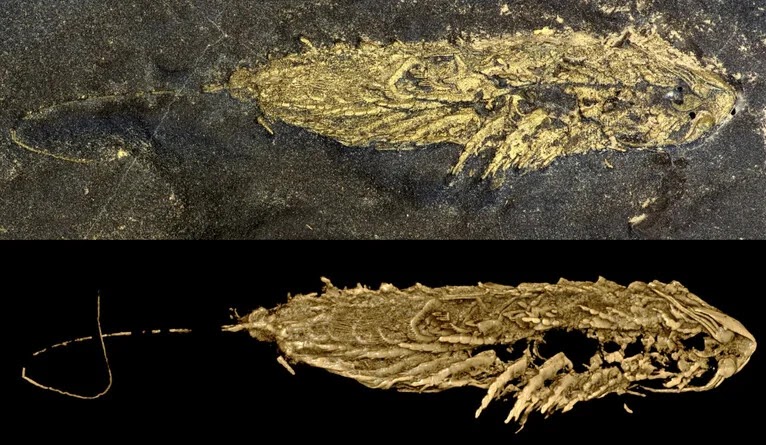
Common Origins - Stem Species of Horseshoe Crab's Scorpions & Spiders From 450 Million Years Before 'Creation Week'


The Megacheiran candidate: Fossil hunters strike gold with new species | YaleNews

It's another of those 'non-existent' transitional fossils days that come round several times a month, as scientists find yet another fossil which is clearly of an intermediate species between two different taxons.

Today's example is of an intermediate or stem species from which horseshoe crabs, spiders and scorpions evolved. It lived about 450 million years before there was an Earth for it to live on, according to creationists superstition, which believe Earth was created by magic as a small flat planet with a dome over it between 6 and 10,000 years ago.

New Book - Refuting Creationism: Why Creationism Fails In Both Its Science and Its Theology


My latest book is now available in Kindle, paperback and hardcover versions.

It is a comprehensive rebuttal of the main planks in the creationist anti-science campaign, showign why creationism is not only based on bad science and deliberate misinformation and misrepresentation of science and scientists, from the Big Bang, through abiogenesis to evolution of species.

I present evidence not only for speciation, including creationists' favourite fallacies - 'no transitional fossils' and 'no evidence of "macro-evolution"'. I also expose the lies and disinformation with which the creationist website misinform their cult mebers.

And lastly I show how fundemental Bible-literalism is based on bad theology by regarding stories that can't possibly be true as literal science and real history, rather than the simple tales parochial Bronze Age pastoralists invented to brige the yawning chasms in their knowledge and understanding, setin the small part of the Middle East that was all they knew anythign about.

Refuting Creationism - Ancient Aurochs From Long Before 'Creation Week'


An aurochs skull, St Petersburg.
Image: Prof. Dan Bradley.
Ancient DNA brings to life history of the iconic aurochs - News & Events | Trinity College Dublin

On problem with believing a myth that Earth was made out of nothing by magic 6-10,000 years ago is that there are paintings in caves in France that are older than that, showing animals that were around before then.

And a problem with believing that the same magician created all living things just as they are today without any ancestors, is that those same cave paintings show species that were ancestral to some of the animals that are around today, such as domestic cattle.

And a problem with believing that the same magician created all the animals for the benefit of humans is the evidence that all our domestic animals, with almost no exceptions, have been improved by selective breeding from wild ancestors. Did their putative creator not know what humans would need or how they would use the animals it created for them?

Aurochs, their evolution and relationship to domestic cattle. Aurochs (Bos primigenius) were large wild cattle that roamed parts of Europe, Asia, and North Africa. They are considered the ancestors of modern domestic cattle, playing a significant role in human history and agriculture. Here's an overview of the aurochs, their characteristics, history, and their relationship to modern cattle.

Physical Characteristics
  • Size: Aurochs were significantly larger than modern cattle, with bulls standing up to 6 feet (1.8 meters) at the shoulder and weighing up to 1,500 pounds (700 kg) or more. Cows were generally smaller than bulls.
  • Appearance: They had a muscular build with long legs and a slender body, which allowed them to move quickly. They possessed a distinctive hump over their shoulders.
  • Color: Bulls were typically dark with a lighter "eel stripe" down the back, while cows were generally reddish-brown.
  • Horns: Aurochs had large, forward-curving horns, which could reach up to 31 inches (80 cm) long. These horns were crucial for defense against predators and in fights between males.

Evolution and Extinction
  • Evolution: The aurochs evolved around 2 million years ago in India and spread across Europe, Asia, and North Africa. Over time, isolated populations adapted to their environments.
  • Extinction: The last recorded aurochs died in 1627 in Poland due to hunting, habitat loss, and diseases spread by domesticated cattle. Their extinction marked the end of the species, but they live on genetically through domestic cattle, which were bred from aurochs around 8,000 to 10,000 years ago.

Relationship to Domestic Cattle
  • Domestication: Modern domestic cattle (Bos taurus and Bos indicus) were domesticated from different auroch populations. Early humans domesticated aurochs in two main areas:
    • Bos taurus was domesticated in the Fertile Crescent (modern-day Middle East).
    • Bos indicus (zebu cattle) was domesticated in the Indian subcontinent.
  • Genetic Influence: Domestic cattle have inherited many traits from their auroch ancestors. Selective breeding by humans introduced variations in size, color, horn shape, and other physical traits to better suit agricultural needs.
  • Behavior: Domestic cattle have been bred for docility and other traits that make them manageable for farming. Aurochs, on the other hand, were more aggressive and less tolerant of human presence.

Breeding Back Efforts
In recent years, there have been efforts to "breed back" cattle that resemble the aurochs. Breeding back does not resurrect the aurochs genetically but seeks to produce cattle that resemble aurochs in appearance and behavior.
  • Heck Cattle: In the early 20th century, German zoologists Heinz and Lutz Heck attempted to recreate aurochs by selectively breeding European cattle breeds with certain aurochs-like features.
  • TaurOs Project: Launched in 2008, this project uses selective breeding of various cattle breeds to produce animals that physically and behaviorally resemble aurochs, focusing on rewilding European landscapes.

Role in Ecosystems and Rewilding
Aurochs once played a critical role in their ecosystems by grazing on grasses, which helped maintain the balance of plant species and created habitats for other animals. In rewilding efforts, cattle resembling aurochs are introduced to landscapes where their grazing patterns help to maintain open grasslands and support biodiversity.

Cultural Significance
Aurochs appear in ancient art, mythology, and folklore across many cultures. They were revered as symbols of strength and vitality and often featured in prehistoric cave paintings, such as those in Lascaux, France, which date back over 17,000 years.

Summary
  • Ancestors of Domestic Cattle: Aurochs are the wild progenitors of domestic cattle, with genetic links to both Bos taurus and Bos indicus.
  • Distinctive Features: Large, muscular, and possessing large horns, aurochs were much larger than modern cattle.
  • Rewilding and Conservation: Through efforts like the Heck Cattle and TaurOs Project, conservationists attempt to restore the ecological impact that aurochs once had on European landscapes.
  • Legacy: Although extinct, the aurochs' genetic legacy continues in domestic cattle, and they remain an iconic symbol in history and conservation.

The story of the aurochs highlights the powerful connection between humans and wild animals, showcasing how our ancestors' choices shaped the landscapes and species we see today.
And all these questions come from a paper published recently in Nature which reports on the analysis of the genome of 38 Aurochs from bones stretching back over some 50,000 years from sites across Eurasia from the UK to Siberia. The team of geneticists from Trinity College and other universities have explained their findings in a Trinity College press release:
Ancient DNA brings to life history of the iconic aurochs
Geneticists from Trinity, together with an international team of researchers, have deciphered the prehistory of aurochs – the animals that were the focus of some of the most iconic early human art, and whose tale is intertwined with climate change and human culture.
The team analysed 38 genomes harvested from bones dating across 50 millennia and stretching from Siberia to Britain in this work.

The aurochs roamed in Europe, Asia and Africa for hundreds of thousands of years. Adorned as paintings on many a cave wall, their domestication to create cattle gave us a harnessed source of muscle, meat and milk. Such was the influence of this domestication that today their descendants make up a third of the world’s mammalian biomass.

We normally think of the European aurochs as one common form or type, but our analyses suggest there were three distinct auroch populations alone in Europe – a Western European, an Italian, and a Balkan. There was thus a greater diversity in the wild forms than we had ever imagined.

Dr Mikkel-Holger S. Sinding, co-author
Department of Biology
University of Copenhagen, Copenhagen, Denmark.


Intriguingly, climate change also wrote its signature in aurochs genomes in two ways:

First, European and north Asian genomes separated and diverged at the beginning of the last ice age, around 100,000 years ago, and did not seem to mix until the world warmed up again at its end.

And second, genome-estimated population sizes dropped in the glacial period, with a more pronounced hard time endured by European herds. These lost the most diversity when they retreated to separated refugia in southern parts of the continent before repopulating it again afterwards.

The most pronounced drop in genetic diversity occurs between the period when the aurochs of southwest Asia were domesticated in the north of the Fertile Crescent, just over 10,000 years ago, to give the first cattle.

Remarkably only a handful of maternal lineages (as seen via mitochondrial DNA which is handed down via mothers to their offspring) come through this process into the cattle gene pool.

A Pleistocene aurochs from the Upper Rhine Valley, around 50,000 years old.

Image credit Staatliche Schlosser and Garten Hessen.


Although Caesar exaggerated when he said it was like an elephant, the wild ox must have been a highly dangerous beast and this hints that its first capture and taming must have happened with only a very few animals. However, the narrow genetic base of the first cattle was augmented as they first travelled with their herders west, east and south. It is clear that there was early and pervasive mating with wild aurochs bulls, leaving a legacy of the four separate preglacial aurochs ancestries that persists among the domestic cattle of today.

Professor Dan Bradley, senior author
Smurfit Institute of Genetics
Trinity College Dublin, Dublin, Ireland.


Publication:
Abstract
Now extinct, the aurochs (Bos primigenius) was a keystone species in prehistoric Eurasian and North African ecosystems, and the progenitor of cattle (Bos taurus), domesticates that have provided people with food and labour for millennia1. Here we analysed 38 ancient genomes and found 4 distinct population ancestries in the aurochs—European, Southwest Asian, North Asian and South Asian—each of which has dynamic trajectories that have responded to changes in climate and human influence. Similarly to Homo heidelbergensis, aurochsen first entered Europe around 650 thousand years ago2, but early populations left only trace ancestry, with both North Asian and European B. primigenius genomes coalescing during the most recent glaciation. North Asian and European populations then appear separated until mixing after the climate amelioration of the early Holocene. European aurochsen endured the more severe bottleneck during the Last Glacial Maximum, retreating to southern refugia before recolonizing from Iberia. Domestication involved the capture of a small number of individuals from the Southwest Asian aurochs population, followed by early and pervasive male-mediated admixture involving each ancestral strain of aurochs after domestic stocks dispersed beyond their cradle of origin.

One interesting finding is that the aurochs split and diversified during a glacial period when different populations were in different refugia, where they diversified genetically. This is reflected in the DNA inherited by domestic cattle and shows allopatric speciation in progress.

Another interesting finding is how the domesticated cattle and the wild aurochs continued to interbreed with domestic cattle, with auroch bulls mating with domestic cows, showing how diverging species can interbreed for a period until barriers to hybridization evolve.

All this paints a much more interesting picture of the origins of domestic cattle from wild ancestors than the childish one involving magic that creationists find easier to understand. It also poses the question for creationists - why didn't their putative designer design domestic cattle fit for purpose - docile and a high milk yield - that had to be bred into them through an extended period of selective breeding because their wild ancestors were too big and dangerous?

Sunday, 3 November 2024

Malevolent Design - How Sleeping Sickness Parasites Are 'Designed' to Evade Our Immune System


Sleeping sickness
Discovery Illuminates How Sleeping Sickness Parasite Outsmarts Immune Response | Johns Hopkins | Bloomberg School of Public Health

Trypanosoma brucei is a blood-borne eukaryote parasite that should leave believers in an intelligent designer, open-mouthed in admiration for its inventive genius. Christian fundamentalist creationists of the white supremacist persuasion should also admire the racist that, through T. brucei, has managed to keep large parts of Africa technologically under-developed due to the difficult in maintaining herds of domestic animals where the vector of these parasites - the tsetse fly - is common.

As a vector, the tsetse fly is a triumph of malevolent design which I mentioned in my popular book, The Unintelligent Designer: Refuting the Intelligent Design Hoax, but it would have been all for nothing without the nasty little T. brucei to cause sleeping sickness in humans and the debilitating disease "nagana" in cattle.

What creationist admires of the divine malevolence they believe designs these things should now be marveling at is the sheer brilliance of the design by which it manages to evade the immune system, which they believe was created by the same designer god which now regards his design as a problem to be overcome oh parasites like T. brucei can continue making Africans and their cattle sick.

Refuting Creationism - First Steps to Abiogenesis


Diagram of the atmospheric evolution of Earth's ancient atmosphere estimated by this study
© Yoshida et al.
Research News - How Life Began on Earth: Modeling Earth's Ancient Atmosphere | Tohoku University Global Site

The fact that living organisms arose on Earth from inorganic sources rather than being made of nothing by magic, is an indisputable fact because there are living organisms on Earth and the chemicals they are composed of all exist on the planet in inorganic minerals and gases. 'Life' contains nothing that 'non-life' doesn't contain.

This much we know, but what we don't yet know and can probably never know with certainty, is precisely how and where that happen. In fact, we don't even know whether it did all start in the same place at the same time because the reason there are two different prokaryote cells - bacteria and archaea - could be because life arose on Earth not once but twice, by two different processes in two different places at two different times.

What we have though is lots of working hypotheses in the process of being validated.

What role would Earth's atmosphere have played in abiogenesis? Earth's early atmosphere was crucial in creating the right conditions for abiogenesis—the process by which life originated from non-living matter. While the exact composition of Earth’s primordial atmosphere is still debated, its unique conditions likely contributed in several essential ways:
  1. Provision of Basic Building Blocks
    • Earth’s early atmosphere likely contained simple molecules like methane (CH₄), ammonia (NH₃), hydrogen (H₂), carbon dioxide (CO₂), nitrogen (N₂), and water vapor (H₂O). These molecules are rich in carbon, nitrogen, oxygen, and hydrogen—elements that are vital for organic compounds and, ultimately, for life.
    • When exposed to energy sources like ultraviolet (UV) radiation from the Sun or electrical discharges from lightning, these molecules could recombine into more complex organic molecules, such as amino acids and nucleotides, which are the building blocks of proteins and nucleic acids, respectively.

  2. Facilitation of Prebiotic Chemistry
    • Experiments like the famous Miller-Urey experiment in 1953 showed that simple gases (methane, ammonia, hydrogen, and water vapor) in an atmosphere subjected to electrical sparks could produce amino acids. This suggests that Earth’s early atmosphere could have been instrumental in initiating chemical reactions that synthesized complex organic molecules.
    • Without a protective ozone layer, the early atmosphere allowed substantial UV radiation to penetrate the Earth’s surface, providing the energy necessary to drive these prebiotic reactions.

  3. Supporting a Reducing Environment
    • The presence of reducing gases (such as methane and ammonia) would favor the formation of organic molecules because such conditions prevent the oxidation (and hence destruction) of organic compounds. Oxygen is highly reactive and can break down organic molecules, so the absence of free oxygen in the early atmosphere was likely a key factor that allowed these molecules to accumulate and react.
    • This reducing environment might have helped organic compounds to survive long enough to form stable, self-replicating systems.

  4. Encouraging Geochemical Interactions
    • The interaction between the early atmosphere and the oceans, along with geothermal activity like volcanic eruptions and hydrothermal vents, provided a diverse range of chemical environments. In particular, hydrothermal vents may have supplied essential minerals and additional energy sources, further driving complex chemical reactions that are believed to be important in the formation of life.
    • The cycling of materials between the atmosphere and oceans would have contributed to creating localized "hotspots" for prebiotic reactions.

  5. Protection and Concentration Mechanisms
    • The atmosphere also played a protective role by preventing the immediate dissipation of important compounds into space. It allowed the concentration of molecules and gases at Earth’s surface, increasing the chances of interactions among the essential precursors to life.
    • Early atmospheres may have helped regulate surface temperatures, preventing extreme fluctuations that would have been hostile to complex chemistry.

  6. Encouraging Self-Organization and Membrane Formation
    • Interactions in the early atmosphere could have contributed to the formation of lipid molecules that could aggregate to form primitive cell-like structures or vesicles. These structures would eventually help in containing and protecting reactions necessary for early metabolic pathways.
    • These early "proto-cells" or vesicles would have been necessary to create a boundary for molecular interactions, which is a critical step toward the organization needed for cellular life.

In summary, Earth’s early atmosphere provided a chemically conducive, energetically rich environment that fostered the synthesis and concentration of organic molecules necessary for abiogenesis. This atmosphere also shielded these nascent molecules, allowing them to organize and evolve toward increasingly complex systems, eventually leading to the first living organisms.
One of which is the precise details of the atmosphere on the Early Earth, which is important because it would have had a major impact on the rest of the environment in which life arose. To gain a better understanding of that, a team from Tohoku University, Tokyo University and Hokkaido University, Japan, led by Tatsuya Yoshida have succeeded in modelling that atmosphere, as explained in a Tohoku University press release and published in the journal Astrobiology:
How Life Began on Earth: Modeling Earth's Ancient Atmosphere
The key to unlocking the secrets of distant planets starts right here on Earth. Researchers at Tohoku University, the University of Tokyo, and Hokkaido University have developed a model considering various atmospheric chemical reactions to estimate how the atmosphere - and the first signs of life - evolved on Earth.

Ancient Earth was nothing like our current home. It was a much more hostile place; rich in metallic iron with an atmosphere containing hydrogen and methane.

Shungo Koyama, co-author
Graduate School of Science
Tohoku University, Sendai, Japan.
These molecules contain an important clue to how life was initially formed. When exposed to solar ultraviolet (UV) radiation, they undergo a chemical reaction that produces organics (also known as the "building blocks of life"). Part of these organics were precursors to essential biomolecules, such as amino acids and nucleic acids. However, understanding the role of UV radiation is difficult. Firstly, this type of atmosphere is unstable and likely underwent rapid changes due to atmospheric chemical reactions. Secondly, when UV radiation efficiently breaks down water vapour in the atmosphere and forms oxidative molecules, the precise branching ratio and timescale has not been determined. In order to address these issues, a 1D photochemical model was created to make accurate predictions about what the atmosphere was like on Earth long ago.

The calculation reveals that most hydrogen was lost to space and that hydrocarbons like acetylene (produced from methane) shielded UV radiation. This inhibition of UV radiation significantly reduced the breakdown of water vapour and subsequent oxidation of methane, thus enhancing the production of organics. If the initial amount of methane was equivalent to that of the amount of carbon found on the present-day Earth's surface, organic layers several hundred metres thick could have formed.

There may have been an accumulation of organics that created what was like an enriched soup of important building blocks. That could have been the source from which living things first emerged on Earth.

Tatsuya Yoshida, lead author
Graduate School of Science
Tohoku University, Sendai, Japan.

The model suggests that the atmosphere on ancient Earth was strikingly similar to what we see on current day neighbouring planets: Venus and Mars. However, despite their proximity, Earth evolved into a completely different environment. Researchers are trying to understand what makes Earth so special. As such, this model allows us to deepen our understanding of whether atmospheric evolution and the origin of life on Earth are unique or share common patterns with other planetary systems.

These findings were published in the journal Astrobiology on October 22, 2024.

Publication Details:
Tatsuya Yoshida, Shungo Koyama, Yuki Nakamura, Naoki Terada and Kiyoshi Kuramoto
Self-Shielding Enhanced Organics Synthesis in an Early Reduced Earth's Atmosphere Astrobiology DOI: 10.1089/ast.2024.0048
Abstract
Earth is expected to have acquired a reduced proto-atmosphere enriched in H2 and CH4 through the accretion of building blocks that contain metallic Fe and/or the gravitational trapping of surrounding nebula gas. Such an early, wet, reduced atmosphere that covers a proto-ocean would then ultimately evolve toward oxidized chemical compositions through photochemical processes that involve reactions with H2O-derived oxidant radicals and the selective escape of hydrogen to space. During this time, atmospheric CH4 could be photochemically reprocessed to generate not only C-bearing oxides but also organics. However, the branching ratio between organic matter formation and oxidation remains unknown despite its significance on the abiotic chemical evolution of early Earth. Here, we show via numerical analyses that UV absorptions by gaseous hydrocarbons such as C2H2 and C3H4 significantly suppress H2O photolysis and subsequent CH4 oxidation during the photochemical evolution of a wet proto-atmosphere enriched in H2 and CH4. As a result, nearly half of the initial CH4 converted to heavier organics along with the deposition of prebiotically essential molecules such as HCN and H2CO on the surface of a primordial ocean for a geological timescale order of 10–100 Myr. Our results suggest that the accumulation of organics and prebiotically important molecules in the proto-ocean could produce a soup enriched in various organics, which might have eventually led to the emergence of living organisms.

So, by the action if UV radiation from the sun on the inorganic molecules in Earth's early atmosphere for a period of some 10-100 million years, the oceans could have accumulated the basic building blocks for organic organisms to get started, and all th result of chemistry and physics with no magic gods involved at any point.

And, as usual with scientific discoveries, the truth is shown to have little resemblance to the origin myths the parochial Bronze Age pastoralists made up to fill the yawning chasm in their knowledge and understanding of the world around them, with their belief that Earth had only existed for a few thousand years, so were blissfully ignorant of the 99.9975% of its history that occurred before then.

Refuting Creationism - What Happened When a Massive Metor Hit Earth 3 billion Years Before 'Creation Week'


What happened when giant S2 meteor hit Earth 3 billion years ago?— Harvard Gazette

Barberton Greenstone belt of South Africa.
Photo: Nadja Drabon
Creationists love to tell us how their putative intelligent designer designed an entire Universe with countless trillions of stars many with planetary systems, and made a special one called Earth which is perfectly designed for them to live on.

The problem with that comforting lie is that it isn't borne out by the disturbing truth. Not only is Earth far from perfect for their (human) life over most of its area, being inaccessible and hostile without special human-made technology, but it has been, and probably will be again, subject to almost unimaginable, catastrophic events in its past, such as plate tectonics causing changes in ocean currents which caused climate change so drastic the Earth literally froze over. There have equally been times when the polar icecaps melted flooding coastal areas where many of our modern major cities and ports are located.

Wednesday, 30 October 2024

Refuting Creationism - Walking With Dinosaurs 70-75 Million Years Before 'Creation Week'


Paleontologists discover Colorado ‘swamp dweller’ that lived alongside dinosaurs | CU Boulder Today | University of Colorado Boulder

Paleontologists dig for fossils in northwestern Colorado.
Credit: John and ReBecca Foster.
AI-Generated illustration of life in a Cretaceous swamp near the Western Inland Seaway

ChatGPT4o
For some reason creationists have a fixation with dinosaurs, probably because, deep down, they know their existence refutes the biblical nonsense of an Earth that's only 6-10,000 years old. After all, there is nothing quite like a 75 million-year-old fossil of a living creature for falsifying the idea that the Universe, Earth and life on it were all created in a single week, just a few thousand years ago.

So, their cult leaders are forever scraping around trying to find evidence that human beings and dinosaurs lived together and even that Jesus would have been familiar with T. rex or Diplodocus and was probably used to pterosaurs flying overhead. But of course, there is none - which was never a reason for a creationist to abandon a delusion.

What there is, however, is evidence that dinosaurs were around until about 66 million years ago then promptly went extinct to be replaced by birds and mammals as the dominant terrestrial life forms.

And now we have evidence of an early mammal living amongst dinosaurs in what if now Colorado, USA. Sadly, there is no evidence that the early mammal resembled Jesus or any other humans for that matter; it was more like a muskrat.

Sunday, 27 October 2024

Refuting Creationism - Producing 'Life' in The Laboratory


Biological systems serve as examples for the simplified artificial systems used to create synthetic cells.
Beeld Willy Arisky via Pexels
Creating a simplified form of life | News articles | University of Groningen

One of the more amusing questions creationists keep asking is how did 'life' come from non-life? Or more dogmatically, they claim 'life' from 'non-life' is impossible.

They then scuttle off to hide when asked to define, 'life' and state how it can be measured to assess whether something like a rock, a bacterium or a bowl of chicken soup has any life in it. It causes the same tactic of avoidance when asked to explain how dead food becomes living tissues during the process of digestion and metabolism, if that's impossible?

The problem is creationists have been brainwashed into thinking that 'life' is something magical; some special force that turns inorganic chemicals into 'living' structures. In fact, 'life' is a process involving atoms and molecules doing their chemistry according to the fundamental laws of chemistry and physics. And the function of the process is to manage entropy - the tendency of a system to become disordered - using the energy in nutrients.

And rather than 'life' being something magical which is magically inserted into a developing embryo at some unspecified day of its development from a zygote to a free-living organism, it's actually a continuation of the life processes of the egg and sperm that united to form the zygote. There never is a 'new life', just a continuation of the parent's entropy management process.

Refuting Creationism - Humans Were Butchering Elephants In India 300-400,000 Years Before 'Creation Week'


Rare fossils of extinct elephant document the earliest known instance of butchery in India – Research News
Having taken a short break from writing blog posts to work on a new book, I'm now taking a short break from writing a book to catch up on an accumulation of papers that refute creationism, not intentionally (few serious working scientists bother to do that nowadays) but quite incidentally by simply revealing facts that are entirely inconsistent with creationist dogmas.

This news release, for example, exposes the fact that there were humans butchering elephants in India between 300,000 and 400,000 years ago in that 99.9975% of Earth's history that happened before creationists believe there was even an Earth for people and elephants to live on.

The evidence is the cut marks on the remains of a three extinct giant elephants, Palaeoloxodon turkmenicus, which died near a river at what is now Pampore in the Kashmir Valley. Soon after they died, they were covered in sediment and buried along with 87 stone tools that had been used to butcher them along with the bone flakes that show the bones were struck in exactly the right way to extract the marrow. The butchers clearly knew what they were doing.

Friday, 18 October 2024

Refuting Creationism - Seven New Frogs In Madagascar And How They Evolved


Boophis marojezensis. Now know to be 8 different species.

Seven New Frog Species Discovered in Madagascar: Sounds Like Something from Star Trek – University of Copenhagen

An international research team have discovered seven new species of tree frog in Madagascar, all members of the Boophis genus, previously thought to be a single species. They are characterized by their distinctive sounds. Their high-pitched whistles are unlike the sounds normally associated with frogs and sounding more like something from science fiction prompted their discoverers to give them all names based on Star Trek captains: Boophis archeri (Archer), Boophis burnhamae (Burnham), Boophis janewayae (Janeway), Boophis kirki (Kirk), Boophis picardi (Picard), Boophis pikei (Pike), Boophis siskoi (Sisko).

The basis for the revised taxonomy is two-fold - genetic and bioacoustic. Although there are all morphologically similar, differing mainly in size, the genetic evidence shows they have diverged into genetically isolated populations and the acoustic evidence shows how genetic separation is maintained by a prezygotic barrier to hybridization. The high pitch of their calls is believed to make them audible above the sound of running water in their normal environment.

Speciation in Progress - A Genetically Isolated Population of Harbor Seals


Alaska’s Iliamna Lake harbor seals commonly move more than 200 kilometers. Researchers hypothesized that they move regularly between freshwater and marine habitats.
Photo credit: David Withrow, NOAA Fisheries.
FAU | Iliamna Lake Harbor Seals Genetically Isolated from Pacific Ocean

The Iliamna Lake harbor seals are one of only a handful of seals that live wholly in fresh water, the best-known example of which is the Lake Baikal seal in Russian Central Asian.

The Alaskan seals have probably been isolated for thousands of years having entered the lake when it was connected to the Pacific before it became isolated from the ocean. The seals have lived there in isolation ever since. These are the classic conditions for allopatric speciation to occur as the founder effect, genetic drift and local environmental selectors cause them to diverge genetically from their parent population in the Pacific.

Thursday, 17 October 2024

Malevolent Designer News - Stand By For The Next Move In The Mpox Arms Race


Mpox virus particles
Mpox Vaccine Is Safe and Generates a Robust Antibody Response in Adolescents | NIAID: National Institute of Allergy and Infectious Diseases

As Medical science announces success in the search for a vaccine against the mpox virus currently spreading misery and suffering around the globe, we can be as sure as can be that creationism’s divine malevolence is working on a variant with an inbuilt way to evade the antibodies the vaccine produces, in just the same way it did with COVID-19 - if you believe a magic designer is behind these things, the way intelligent [sic] design creationists do.

Christian Hypocrisy News - SBC Pastor And Former Seminary Professor Lied To The FBI To Protect Sexual Predators


Pastor Matt Queen, preaching at Southwestern Baptist Theological Seminary, March 2023
Matt Queen, SBC pastor and former seminary professor, pleads guilty to lying to FBI

The fundamental principles of Christianity are supposedly the rules allegedly handed down to Moses by God in the form of the Ten Commandments, although there is some confusion over which ten commandments is the because the only set of ten rules called The Ten Commandments in the Bible are all about what food to eat when, what to sacrifice when, etc., (Exodus 34:17-26) and nothing to do with human interactions - the basis of society.

The rules allegedly give to Moses in the form of writing on two 'tablets of stone' are what are normally referred to as The Ten Commandments, although there are two different versions (Exodus 20:2-17 and Deuteronomy 5:7-21), differing especially over the reason for 'keeping the sabbath holy'. Apparently, God changed his mind on that point.

But incorporated in these latter commandments is the Golden Rule almost certainly plagiarized from neighboring cultures because no culture could succeed without a form of it - Treat others the way you would like them to treat you. In other words, do something that fundamentalists seem to find baffling - use your innate empathy ability to work out how to behave in any given situation.

that rule obviously covers killing, stealing, etc., so renders them redundant in any list of rules of civilised behaviour, so perhaps the second most important rule is 'no lying', or, in biblical terms, no bearing false witness against others and no trying to fool people into believing thongs you know aren't true.

You could argue of course that lying to someone, or to paraphrase Mark Twain's, "trying to fool someone into believing something that aint so", is really covered by the Golden Rules because you wouldn't want someone to trick you into believing some thig that aint so, so you shouldn’t try to trick them.

So, given the readiness of Christians to lie for their faith, it is very clear that scant regard is being paid to the rules they would like to impose on the rest of us if ever they regained the power over us that they once had. In fact, piety is used as an excuse to self-licence an exemption from the rules they insist other should live by, demonstrating yet again the truism that religions provide excuses for people who need excuses. They're not only trying to fool us with false witnessing but they're doing something to us that they wouldn't want us to do to them. In other words, they're being something that Jesus allegedly forbade them from being - hypocrites. (Matthew 15: 7-8)

It should come as no surprise than that a leading Southern Baptist has been exposed as a lying hypocrite. Indeed, its's almost as though he believes there is no omnipotent god who will one day judge him, with special scrutiny on how faithfully he's complied with the God-given rules, or not. This particular hypocritepious Christian is none other than a Southern Baptist Convention pastor and seminary professor, Matt Queen, who has just admitted lying under oath to the FBI and creating false documents in order to deceive those investigating allegations of sexual abuse.

Tuesday, 15 October 2024

Refuting Creationism - The Japanese People Didn't Notice Noah's Genocidal Flood!


Human remains from the Yayoi period, approximately 2,300 years ago, from which DNA was extracted.
Map of Japan showing Sakhalin (far north) and the Kuril and Ryukyu Islands

Google Map
Traces of ancient immigration patterns to Japan found in 2000-year-old genome | SCHOOL OF SCIENCE THE UNIVERSITY OF TOKYO

Being parochial Bronze Age pastoralists who knew about nothing and nowhere that was more than a day or two's walk from their hill pastures in Canaan, those who made up the Hebrew creation myths could not possibly have been aware that there were other cultures in far-away places like China, Korea and Japan, which had ancient histories going way back before the myth-makers thought Earth was created, and which were unscathed by an global flood at the time in which they set that tale.

Had they been aware of them, they could have made up slightly more plausible myths with a more realistic timeline, instead of requiring their believers to try to compress everything that's happened in the entire 14-billion-year-old Universe into 10,000 years.

But how could they have done so when they had no-one to teach them the real history of the planet and the people living on it? All they had was their own limited imagination and a handful if inherited myths from neighbouring culture, like Egypt and Sumeria, for theirs was a backward, illiterate culture from the fearful infancy of our species, dependent on oral traditions and superstitions.

How could they possibly have known, for example, that a population of humans had been more or less isolated for about 6,500 years, ending at about the time the myth-makers believed Earth was made out of nothing by magic, complete with a dome over it to cover the small, flat place they called home? They would have known nothing about immigration from China or from the Korean Peninsula into the Japanese archipelago that brought this period of isolation to an end and probably resulted in the present-day population of Japan.

So, of course, they saw nothing wrong with inventing a tale about a genocidal flood killing everyone apart from 8 related survivors, or of building a tower to reach above the dome or about a panicking god making them all speak different languages so they couldn't work in cooperative groups any more, and yet, if their tale is to be believed, the descendants of those few survivors, all speaking different languages, migrated to places like China, Korea and Japan where they all adopted the local language and writing that had been used for several thousand years, forgot all about Noah and his flood and invented new gods and religions, whereas the myth-makers of Canaan remembered it all word-perfect in every detail...

So, how do we know the record they left was wrong?

Unintelligent Design - The Blunder That Causes Cancers


Ludwig Cancer Research

It has often been a theme of my blog posts how, if we regard cells as the result of conscious (I won't use the term 'intelligent' as that's singularly inappropriate, as we shall see) design then the picture quickly emerges of a bungling incompetent, cobbling together Heath-Robinson solutions to problems of its own incompetent making and lack of foresight.

The entire system of epigenetics, for example, is only necessary in a multicellular organism with its cell specialisation because specialised cells only need a small subset of the entire genome, yet, because cells replicate using exactly the same process that single-celled organisms use, where the entire genome needs to be replicated in every daughter cell, the cells of multicellular organisms such as humans each receive the entire species genome. So, most of it needs to be turned off.

This is where the epigenetic system comes in where methyl groups are attached to key bases in the DNA which prevents that section being transcribed into RNA, effectively switching the gene off. There are other components to the epigenetic system, but that is the pertinent component as far as this particular blunder is concerned.

The problem starts when a methyl group is attached to a cytosine base (C in the CGTA genetic code) which is next to a guanine(G) base.

Monday, 14 October 2024

Unintelligent Design Or Sheer Malevolence? - Defective Sperm Puts Mother And Baby At Risk


AI-generated graphic illustrating preeclampsia
(with AI spelling)
ChatGPT4o
Defective sperm doubles the risk of preeclampsia | Lund University

Christian superstition insists that every person conceived is a creation of their omniscient, omnipotent god who knows and has always known, exactly who is going to be born and has an oven-ready plan for their entire existence. Each baby conceived was exactly as the Christian god intended, down to the last detail of the DNA Exactly which sperm fertilizes which egg when, is part of the god's omniscient, perfect plan.

Leaving aside the absurdity of throwing millions of sperms at a single egg to produce that conception, when only a predetermined one was going to be the winner in order to produce the predetermined genome, when a single sperm would have been just as effective, we are left with the disturbing idea that any and all genetic defects were the intended outcome of that conception; the intention of a supposedly omnibenevolent god.

Now, it might, in fact it definitely is possible for a Christian to imagine some ultimate good will come from a child with a genetic defect, but what if a defect in the sperm causes harm not just to the baby, but to the mother? Are we to conclude that a mother whose life is put at risk by a defective sperm from her partner was the intended victim of an 'all-loving' god? What possible good can come from a mother's (and almost invariably her baby's) life being in danger from something beyond her control? What possible good can come from preeclampsia?

Refuting Creationism - How A Beetle Evolved To Eat Toxic Plants


Red milkweed beetle, Tetraopes tetrophthalmus
Red milkweed beetle genome sequence offers plant-insect co-evolutionary insights

We are continually being assurd by gullible cretionists that the Theory of Evolution (TOE) is 'a theory in crisis' becase a growing body of biologisdts have abandonned it in favour of the creationists superstition of intelligent [sic] design.

This has been a creationist fantasy for at least the last 50 years since when it is supposedly about to happen, any day now, real soon (a bit like The Second Coming of Christ - something which, despite regular announcements that it will happen next Wednesday at noon, never happens - but its gunna, you see!)

However, when we read the scientific publications of these biologists who are allegedly abandoning the TOE, we see no signs whatever of any abandonment; quite the opposite. We see the TOE as firmly embedded in biological science as the Laws of Thermodynamics and the Theory of Gravity are embedded in physics, Atomic Theory is embedded in chemistry and Germ Theory is embedded in epidemiology. It forms the bedrock of the science, without which very little makes any sense.

For example, when a bunch of entomologists wanted to understand how a species of herbivorous beetle can eat a toxic plant, they compared it genomically with a related species that doesn't eat the toxic plant to see how the ability to proccess the toxins evolved.

Of course, being scientists, they reject the idea that the beetle was magically created that way by an unproven supernatural entity because none of that can be falsified and the existence of such an entity can't be established, so there is no logical reason to include one in any answer. The fact that their mummies and daddies might have believed in it is irrelevent to their science, because belief doesn't create facts.

Saturday, 12 October 2024

Malevolent Design - How Chlamydia Is 'Designed' to Cause Maximum Sufferring.


Schematic representation of how a C. pneumoniae cell infects a human cell. The bacterium injects the protein SemD (green) into the cell, which activates the cell protein N-WASP, which in turn initiates vesicle formation.
Credit: HHU/Fabienne Kocher.
Universität Düsseldorf: Original or copy: How Chlamydia manipulate the host cell

The problem of parasites for creationists is one that, despite the best efforts of apologists like Michael J Behe of the Deception Institute, just won't go away.

Sadly, Behe shot himself in the foot with his original claim to have proven 'intelligent [sic] design in living organisms with his choice of the bacterial flagellum in E. coli, where he persuaded his willing audience that these nasty little pathogens had been intelligently designed - and by unspoken assumption, designed by the locally-popular god.

Now creationists wave his 'proof' of design as evidence for their creator god because only their god is capable of creating living organisms.

But, with characteristic double-think, creationists also argue that their god is omnibenevolent, so something else must have created parasites like E. coli, and, courtesy again of Michael J. Behe, they cite 'Sin' causing 'genetic entropy' and the absurd idea of 'devolution' this supposedly causes, as the cause of parasites and pathogens (but not the bacterial flagellum, obviously!).

The problem with that notion is that they need to do their double-think trick one more time and believe that a trait with improves a pathogens ability to live and reproduce in its host makes it somehow less perfect that one without that trait. So, in the creationist's world, an improvement is a move away from perfection!

But, with a cult that appears to believe learning is a move away from the 'perfection' of pristine ignorance (from whence comes expertise in all aspects of science), that's probably not too difficult a feat of mental gymnastics for a creationist to perform.

Creationism Refuted - Biologists Observe Real-Time Evolution Over 30 Years.


ISTA | Evolution in Real Time

In a devastating rebuttal of creationists’ assertions that evolution has never been observed, a team led by the Austrian Institute of Science and Technology (ISTA) have just published the results of a 30-year study which records the evolution of a marine snail.

The normal response of creationists to this sort of observation is a desperate attempt to redefine evolution as something other than the scientific one of change in allele frequency over time in a population to one of their cult's childish parodies - cats turning into dogs; monkeys having human babies, etc.; or bleating forlornly about 'Macro- evolution'.

The fact remain, however, that science isn't going to change its definition to suit creationists so they can continue to misrepresent it to their credulous dupes.

Evolution happens, has been observed happening, and happens just as the Theory of Evolution predicts - in response to environmental change as environmental selectors favour some variants or combinations of variants over others, causing sorting of alleles in the population according to their differential ability to be passed down the generations into descendants.

Web Analytics