This article is best read on a laptop, desktop, or tablet


Homo habilis is an extinct hominid species that lived between 2.8 and 1.5 million years ago. It is considered to be one of the earliest members of the genus Homo, and its name means "handy man" in Latin, reflecting its ability to make and use tools.
Creationists often struggle to explain why closely related species share identical genes located at the same locus on the same chromosome, typically resorting to the argument of common design rather than common descent. Even more challenging for creationists is when these shared genes exhibit slight modifications that result in significant differences between species, strongly supporting descent with modification.
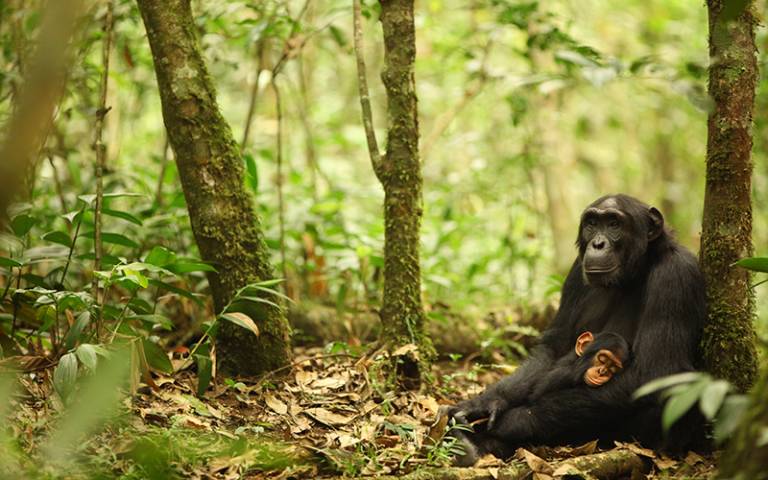
A compelling recent example involves two genes, NBPF14 and NOTCH2NLB, identified by researchers from the German Primate Center - Leibniz Institute for Primate Research (DPZ) and the Max Planck Institute of Molecular Cell Biology and Genetics. These genes, modified specifically in humans, appear to explain the larger and more complex human brain compared to chimpanzees and bonobos. The research shows that NBPF14 and NOTCH2NLB act synergistically: one gene increases the production of neural progenitor cells, while the other facilitates their transformation into neurons capable of forming more extensive neural connections.
Together, these genetic modifications account for the remarkable increase in the size and complexity of the human brain relative to our closest primate relatives.
For an explanation of how two mutations with a low probability can quickly spread through the gene pool when they act synergistically, see my book Twenty Reasons To Reject Creationism: Understanding Evolution, pages 17-20, in which, using the example of a bacterium and two beneficial mutations acting synergistically, I show that the time take for 50% of the population to have both mutations is actually shorter than the time for 50% of the population to have just one mutation because, the accelerating effect of synergy increases the probability of both being inherited together.
This can explain why a large-brained archaic hominin appeared relatively suddenly in the fossil record. As we shall see, the fact that at least one of our ancestral species went through a narrow genetic bottleneck was ultimately highly beneficial because this reduces the time taken for the whole gene pool to acquire a neutral mutation by genetic drift alone.


.jpg)