Monday, 1 December 2025

Creationism Refuted - Earth Not Finely Tuned but the Result of Dynamic And Unstable Forces That we Ignore At Our Peril


56 million years ago, the Earth suddenly heated up – and many plants stopped working properly
56 million years ago, in that vast expanse of pre–‘Creation Week’ history when 99.975% of Earth’s story unfolded — long before creationists imagine the Universe even existed — an event occurred that gives the lie to the claim that their putative designer created Earth as a safe and stable planet, finely tuned for the existence of (human) life. Earth’s temperature rose by roughly 6 °C as the amount of carbon in the atmosphere increased dramatically.

The cause of this, the Palaeocene–Eocene Thermal Maximum (PETM), lay in the disruption of one of Earth’s major feedback systems. Plants sequester carbon through photosynthesis and lock it into their tissues, but that system was pushed out of balance until a new equilibrium eventually formed. It took some 70,000–100,000 years for the planet to recover.

The problem was that higher temperatures caused many plants to fail because they had evolved for cooler conditions, and evolution proceeds far too slowly to cope with rapid environmental change. As plant productivity collapsed, less carbon was sequestered, which in turn drove temperatures higher — a classic positive feedback loop, triggered by a relatively small initial shift.

The worrying parallel today is that the current rate of anthropogenic warming is around ten times greater than at the onset of the PETM.

How we know this — and how the PETM reshaped climate and the terrestrial biosphere — is explored in a paper by an international team of scientists, published open access (in unedited form) in Nature Communications.

Two of the authors have also written a summary of their research in The Conversation. Their article is republished here under a Creative Commons licence, with formatting adjusted for consistency.


56 million years ago, the Earth suddenly heated up – and many plants stopped working properly
Forest life in the Paleocene-Eocene Thermal Maximum
AI-Generated image (ChatGPT 5.1)

Vera Korasidis, The University of Melbourne and Julian Rogger, University of Bristol
Around 56 million years ago, Earth suddenly got much hotter. Over about 5,000 years, the amount of carbon in the atmosphere drastically increased and global temperatures shot up by some 6°C.

As we show in new research published in Nature Communications, one consequence was that many of the world’s plants could no longer thrive. As a result, they soaked up less carbon from the atmosphere, which may have contributed to another interesting thing about this prehistoric planetary heatwave: it lasted more than 100,000 years.

Today Earth is warming around ten times faster than it did 56 million years ago, which may make it even harder for modern plants to adapt.

Rewinding 56 million years

Plants can help regulate the climate through a process known as carbon sequestration. This involves capturing carbon dioxide from the atmosphere via photosynthesis and storing it in their leaves, wood and roots.

However, abrupt global warming may temporarily impact this regulating function.

Investigating how Earth’s vegetation responded to the rapid global warming event around 56 million years ago – known formally as the Paleocene-Eocene Thermal Maximum (or PETM) – isn’t easy.

To do so, we developed a computer model simulating plant evolution, dispersal, and carbon cycling. We compared model outputs to fossil pollen and plant trait data from three sites to reconstruct vegetation changes such as height, leaf mass, and deciduousness across the warming event.

The three sites include: the Bighorn Basin in the United States, the North Sea and the Arctic Circle.

We focused our research on fossil pollen due to many unique properties.

First, pollen is produced in copious amounts. Second, it travels extensively via air and water currents. Third, it possesses a resilient structure that withstands decay, allowing for its excellent preservation in ancient geological formations.
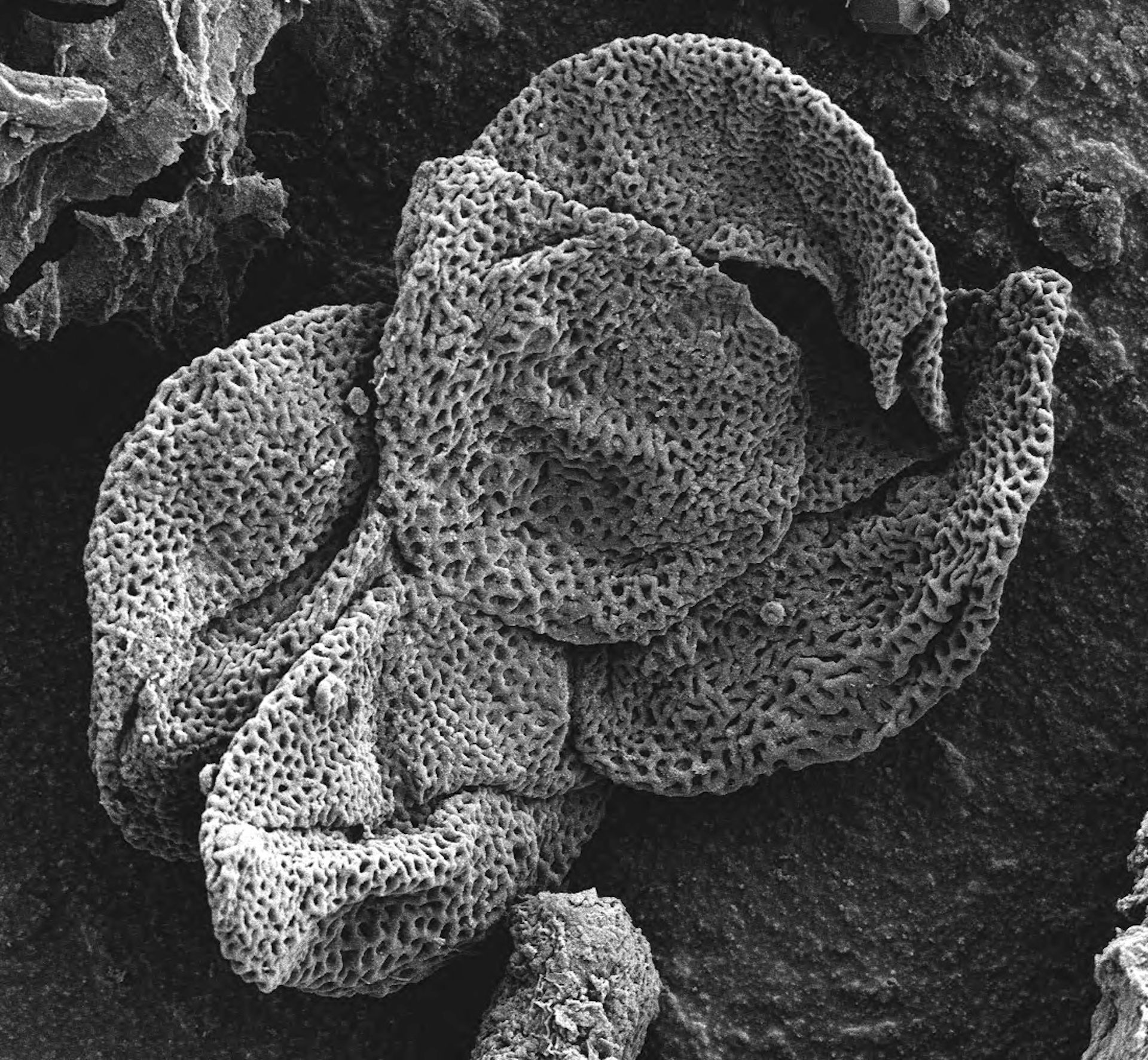
A black and white microscopic image of a pockmarked piece of pollen.
56-million-year-old fossilised palm pollen from the Bighorn Basin, Wyoming, United States.
Vera Korasidis
A shift in vegetation

In the mid-latitude sites, including the Bighorn Basin – a deep and wide valley amidst the northern Rocky Mountains – evidence indicates vegetation had a reduced ability to regulate the climate.

Pollen data shows a shift to smaller plants such as palms and ferns. Leaf mass per area (a measure of leaf density and thickness) also increased as deciduous trees declined. Fossil soils indicate reduced soil organic carbon levels.

The data suggest smaller, drought-resistant plants including palms thrived in the landscape because they could keep pace with warming. They were, however, associated with a reduced capacity to store carbon in biomass and soils.

In contrast, the high-latitude Arctic site showed increased vegetation height and biomass following warming. The pollen data show replacement of conifer forests by broad-leaved swamp taxa and the persistence of some subtropical plants such as palms.

The model and data indicate high-latitude regions could adapt and even increase productivity (that is, capture and store carbon dioxide) under the warmer climate.

A glimpse into the future

The vegetation disruption during the PETM may have reduced terrestrial carbon sequestration for 70,000-100,000 years due to the reduced ability of vegetation and soils to capture and store carbon.

Our research suggests vegetation that is more able to regulate the climate took a long time to regrow, and this contributed to the length of the warming event.

Global warming of more than 4°C exceeded mid-latitude vegetation’s ability to adapt during the PETM. Human-made warming is occurring ten times faster, further limiting the time for adaptation.

What happened on Earth 56 million years ago highlights the need to understand biological systems’ capacity to keep pace with rapid climate changes and maintain efficient carbon sequestration. The Conversation
Vera Korasidis, Lecturer in Environmental Geoscience, The University of Melbourne and Julian Rogger, Senior Research Associate, School of Geographical Sciences, University of Bristol

This article is republished from The Conversation under a Creative Commons license. Read the original article.

Published by The Conversation.
Open access. (CC BY 4.0)
Abstract
The Paleocene–Eocene Thermal Maximum (PETM) around 56 million years ago was a 5–6°C global warming event that lasted for approximately 200 kyr. A warming-induced loss and a 70–100 kyr lagged recovery of biospheric carbon stocks was suggested to have contributed to the long duration of the climate perturbation. Here, we use a trait-based, eco-evolutionary vegetation model to test whether the PETM warming exceeded the adaptation capacity of vegetation systems, impacting the efficiency of terrestrial organic carbon sequestration and silicate weathering. Combined model simulations and vegetation reconstructions using PETM palynofloras suggest that warming-induced migration and evolutionary adaptation of vegetation were insufficient to prevent a widespread loss of productivity. We conclude that global warming of the magnitude as during the PETM could exceed the response capacity of vegetation systems and cause a long-lasting decline in the efficiency of vegetation-mediated climate regulation mechanisms.

Rogger, J., Korasidis, V.A., Bowen, G.J. et al.
Loss of vegetation functions during the Paleocene–Eocene Thermal Maximum.
Nat Commun (2025). https://doi.org/10.1038/s41467-025-66390-8

Copyright: © 2025 The authors.
Published by Springer Nature Ltd. Open access.
Reprinted under a Creative Commons Attribution 4.0 International license (CC BY 4.0)

Events like the PETM expose the fragility of the systems that sustain life and demonstrate how easily they can be tipped into new and often hostile states. Far from being the work of an infallible designer fine-tuning a planet for a single favoured species, Earth’s history shows a world continually shaped by feedback loops, chance events and the slow, directionless process of evolution. When those systems are pushed too far or too fast, life suffers — and it takes tens of thousands of years for the planet to recover.

What makes the comparison with today so stark is the rate at which we are forcing change. The PETM was a natural carbon-cycle disturbance that unfolded over millennia. Our own contribution has taken place in a geological instant, yet it is already driving shifts comparable in magnitude to that ancient warming pulse. If slow change overwhelmed ecosystems then, the acceleration humanity has produced is even more concerning.

Understanding the PETM is not simply an academic exercise. It is a reminder, written in deep time, that there are limits to what living systems can endure and that “business as usual” can push Earth into states incompatible with the world we inherited. The past cannot tell us exactly what will happen next, but it does show that the consequences of inaction are neither abstract nor remote. The warning signs are etched in the rocks; whether we heed them is up to us.

One thing we know is that there is no watching sky daddy who's going to come and rescue us from our folly.

Incompetent Design - How Sunlight Turns Off Cancer Protection in Skin


Schematic of the role of YTHDF2 in regulating U6 snRNA decay and interaction with TLR3 to control UVB-induced inflammation and tumorigenesis.

New study reveals how controlling sunburn-triggered inflammation may prevent skin cancer - UChicago Medicine

Researchers at the University of Chicago have uncovered how prolonged exposure to ultraviolet (UV) radiation can lead to skin cancer by disabling a vital protective mechanism in skin cells. They have just published their findings, open access, in Nature Communications.

This protective mechanism relies on a protein called YTHDF2, which plays a key role in regulating RNA metabolism and maintaining cellular health. Sunlight degrades this protein, removing that safeguard and allowing damage to accumulate.

For advocates of Intelligent Design (ID) creationism, this research presents several awkward questions—questions they will either ignore or attribute to ‘sin’.

First, why is this protection needed at all? If life were intentionally and intelligently designed, why would RNA metabolism require an additional, failure-prone layer of regulation to keep cells functioning? Why not design it to be robust in the first place?

Second, why create a system so fragile that sunlight—an unavoidable feature of life on Earth—can disable it? Designing a repair mechanism that breaks down precisely when it is needed most hardly inspires confidence in the designer’s competence.

And then there is the broader problem: ID creationism equates its designer with the supposedly omniscient and omnipotent god of the Bible or Qur’an. If that is true, why design a mechanism that predictably causes cancer? Was this an act of malevolence or oversight?

If YTHDF2 were flawless and impervious to degradation, Discovery Institute fellow William A. Dembski would no doubt present it as an example of “complex specified information,” a supposed indicator of intelligent purpose. But its vulnerability raises uncomfortable possibilities: Is this an unsuccessful attempt to patch over earlier design flaws in RNA metabolism? A sign of competing designers beyond the control of ID’s putative omnipotent creator? Or evidence that the designer is actively introducing harm and suffering?

The answer, of course, is that this problem arises because the human body is not the product of intelligent design at all, but of a long evolutionary process that modifies existing processes and structures to produce workable—though often imperfect—solutions. Evolution favours whatever improves short-term reproductive success, even if it introduces compromises and sub-optimal outcomes that undermine long-term survival and health. These sub-optimal systems then drive the evolution of an additional layers of complexity to minimise the results of failure.

Like other organism's the human body is full of these examples of evolutionary compromises and sub-optimal solutions that cause diseases and health problems that illustrate the difference between an intelligently designed system and an evolved system. Looked at in detail, the human body is evidence against intelligent design and strongly supports the Theory of Evolution, as I show in my book, The Body of Evidence: How the Human Body Refutes Intelligent Design.

Refuting Creationism - How Butterfly Genomes Confirm Darwin's Conclusion


[Body]
1,000 butterfly and moth genomes to investigate evolution, climate change resilience, and tackle food security issues

Geneticists at the Wellcome Sanger Institute have just completed the sequencing of 1,000 European butterflies and moths. Their results are already feeding into research papers, such as that by Asia E. Hoile, Peter W. H. Holland & Peter O. Mulhair, in BMC Genomics. The Wellcome Sanger team have published their results in Trends in Ecology & Evolution

In 1858, Charles Darwin and Alfred Russel Wallace proposed the theory of evolution by natural selection, or as they described it, the origin of species by the preservation of favoured races. Darwin then elaborated on that central idea and concluded that the ‘tree of life’ would branch in ways consistent with diversification from common origins.

Creationists, on the other hand, claim all species were created by magic in their present form just a few thousand years ago, with no evolution and no common ancestry.

Darwin's Tree of Life sketch
Neither Darwin nor Wallace knew anything about DNA or genomes, or that mutations in DNA would become ‘favoured’ in particular environmental niches, driving diversification. They developed their ideas purely from the observable morphological and behavioural similarities and differences among species.

So, if the creationists are right, what should we see in these 1,000 genome sequences?

Sunday, 30 November 2025

Refuting Creationism - Why Would a Creator Create Life Around Hydrothermal Vents?


Discovery in the Deep Sea: Unique Habitat at Hydrothermal Vents

Here is something for creationists to run away from: why would a creator god who supposedly made the entire universe as a place for humans – especially American humans – to live, and arranged everything else for their benefit, create creatures in an environment so hostile that no human could survive there without specialised modern equipment? And how exactly did Noah collect two of each of the countless species that live there in great profusion, only to place them on the Ark and somehow maintain the extreme conditions they require?

The simple answer, as underscored by these discoveries, is that the whole tale is a childish fairy story. The organisms inhabiting the extreme conditions of deep-ocean trenches evolved to live there over millions of years, entirely independent of any usefulness to humans, whose existence is of supreme indifference to them.

The conditions described come from an open-access paper in Scientific Reports by an international team of oceanographers and marine biologists led by the GEOMAR Helmholtz Centre for Ocean Research in Kiel, Germany. They detail a unique environment 1,300 metres below the surface on a flank of Conical Seamount in the western Pacific, off Lihir Island in Papua New Guinea. What makes it unique is not simply that it is a hydrothermal vent, but that it is coupled with a cold methane seep from deep sediment layers. Hot, mineral-rich water and cold, hydrocarbon-rich methane gas rise along the same pathways, producing vent fluids filled with bubbles of cold methane.

The result is a unique ecosystem comprising dense fields of the mussel Bathymodiolus, along with tube worms, shrimp, amphipods, and striking purple sea cucumbers coating the rocks so completely that the underlying surfaces are entirely concealed.

Before methane-producing sediments accumulated, the hydrothermal fluids were even hotter, leaving behind tell-tale deposits of gold and silver, as well as antimony, mercury, and arsenic. The various lifeforms have adapted to thrive amid these chemicals, some of which are highly toxic.

Hydrothermal vents are among the most extraordinary environments on Earth — geochemical oases on the seafloor where life thrives without sunlight, fuelled instead by chemical energy. They overturn several once-assumed “rules” of biology and offer important clues about evolution, extremophiles, and possibly even the origins of life.~

Saturday, 29 November 2025

Malevolent Designer News - Stunning 3D Images of the Yellow Fever Virus Reveal It's Irreducible Complexity - Malevolent Design or Evolution


High-resolution imaging of yellow fever virus reveals structural secrets that could power next-generation vaccines.
UQ scientists uncover secrets of yellow fever - News - The University of Queensland
Scientists at the University of Queensland, Australia, have produced near atomic-level 3D images of the yellow fever virus. These reveal the remarkable complexity that Michael J. Behe and William A. Dembski of the Discovery Institute insist constitutes evidence of intelligent design – a theme almost universally endorsed by creationists and forming the central plank of their advocacy for creationism.

They have recently published their findings, open access, in the journal Nature Communications.

So, the obvious question for intelligent design advocates is this: is the irreducible complexity and complex specificity of the yellow fever virus evidence that it was intelligently designed to kill people? Or, when complex specified information and irreducible complexity do harm to humans, do these supposed ‘evidences’ for the existence of an intelligent designer (i.e. a god) somehow cease to apply, even though they benefit the virus? If so, how can a supposedly scientific definition change its meaning depending on the subjective judgement of what is being specified and how much or how little it benefits humans?

Unintelligent Design - The Design Blunder That Causes Many Diseases - Malevolence or Incompetence?

Glutathionylated mtDNA
AI-generated image (ChatGPT 5.1)

New type of DNA damage found in our cells’ powerhouses | UCR News | UC Riverside

Scientists led by the University of California, Riverside (UC Riverside) have identified a previously unknown form of DNA damage in mitochondria that may underlie a wide range of disorders linked to mitochondrial dysfunction. Their findings have just been published in the Proceedings of the National Academy of Sciences (PNAS).

Mitochondria contain their own DNA (mtDNA), which is essential for the proper functioning of these organelles that convert glucose into ATP, supplying cells with the energy needed to power metabolic processes.

The culprit is a large molecule, glutathionylate, which attaches to DNA and, if left unrepaired, can cause mutations. Researchers at UC Riverside, working with colleagues at the University of Texas MD Anderson Cancer Center, found that glutathionylated mtDNA accumulates in mitochondria at levels up to 80 times higher than in the cell nucleus. In short, the nuclear DNA repair system is vastly more efficient than its mitochondrial counterpart.

For advocates of Intelligent Design (ID), this discovery—if they understood it rather than dismissing it as part of an imagined conspiracy to undermine their faith—creates an acute theological problem. If we temporarily grant the core assumption of ID creationism, that a supernatural designer indistinguishable from the allegedly omniscient, omnipotent, and omnibenevolent god of the Bible and Qur’an is responsible for the design of mitochondrial DNA and its replication machinery, then only two coherent conclusions follow:
  • the designer is incompetent, having failed to produce fault-free mtDNA and an adequate repair mechanism, despite supposedly managing this for nuclear DNA; or
  • the designer could have produced fault-free mtDNA but chose instead to create error-prone mtDNA and a weak repair process, thereby intentionally designing disease and suffering—in other words, malevolence.
Moreover, the very need for a repair system betrays the absence of omnipotent, intelligent engineering. It is characteristic instead of the layered complexity produced by cumulative, unplanned evolutionary processes, which inevitably yield sub-optimal compromises.

The notion of an omniscient designer also rules out the excuse that the harmful consequences were unforeseeable. An all-knowing creator would have foreseen them; yet, according to ID logic, the designer implemented them regardless—designing mitochondrial DNA to fail and cause disease.

Thus, a biological phenomenon that fits seamlessly within the framework of evolutionary theory becomes an insurmountable theological obstacle for ID advocates, who must contort the evidence to suit a predetermined conclusion while catering to a scientifically illiterate and credulous audience.

Refuting Creationism - 'Lucy' Had a Cousin Species Who Lived Alongside Her

The Burtele Foot with its elements in the anatomical position.
Photo by Yohannes Haile-Selassie/ASU

New research by ASU paleoanthropologists: 2 ancient human ancestors were neighbors | ASU News.

According to new open-access research just published in Nature by a team led by Arizona State University palaeoanthropologist Yohannes Haile-Selassie, ‘Lucy’ (Australopithecus afarensis) was not the only hominin living on the Ethiopian Highlands 3.4 million years ago. This was part of the vast span of human evolutionary history that occurred long before creationists believe Earth was made as a small, flat world with a dome over it somewhere in the Middle East. Living alongside ‘Lucy’ was another species, now named Australopithecus deyiremeda.

However, A. deyiremeda differed from A. afarensis in several important ways — differences that reflect how two species can coexist in the same region by adapting to distinct ecological niches. A. deyiremeda, for instance, had an opposable big toe suited to climbing, indicating a more arboreal lifestyle than A. afarensis. Isotope analysis of A. deyiremeda’s teeth also shows that it had a different diet.

The first indication that another species might be present came in 2009 with the discovery of foot bones, announced publicly in 2012. In palaeontology, it is standard practice not to name a new species based on such fragmentary remains, especially when cranial bones are absent. Although teeth were also found in the same area, there was initially insufficient evidence to link them definitively to the foot bones.

Then, in 2015, the team had enough material to announce and name the new species, though they were still unable to demonstrate that the foot bones belonged to it. Now, ten years on, they believe they finally have sufficient fossil evidence to make that connection.

This news is unlikely to trouble creationists, who already have a ready supply of scientifically baseless excuses for dismissing ‘Lucy’: that it was forged; that scientists fabricated the evidence; that it was assembled from scattered bones found six miles apart; that ‘carbon dating’ was used (despite not being applicable at that age); or that radioactive decay rates have changed in the last 6,000–10,000 years, making 6,000 years only appear to be 3.4 million.

For those with the intellectual honesty and humility to form opinions based on evidence, however, the discovery offers a fascinating example of how multiple ancient hominins coexisted — and, in evolutionary terms, how two species sharing a common ancestor can diverge to occupy different ecological niches.

Friday, 28 November 2025

Unintelligent Design - Higher Yielding Wheat - If Humans Can Do it, Why Didn't Creationism's 'Desiger'?


By kallerna - Own work CC BY-SA 4.0, Link
Wheat That Makes Its Own Fertilizer | UC Davis

Scientists at the University of California, Davis (UC Davis) have developed a strain of wheat capable of producing its own nitrate fertiliser, thereby increasing yields and reducing the amount of artificial nitrate that needs to be applied to fields. They achieved this by harnessing the nitrogen-fixing abilities of common soil bacteria that convert atmospheric nitrogen into nitrates in a form plants can absorb. Their research is published, open access, in the Plant Biotechnology Journal.

We seem to have been here before, observing how a food crop or domesticated animal could have been far more productive or better suited to human needs had it been given a more efficient “design” to begin with. In fact, virtually all our cultivated plants and domesticated animals have been profoundly reshaped by human selection, using the same biological principles as natural selection: favouring advantageous genes and eliminating those that are less so.

The new wheat strain produces nutrients that support anaerobic bacteria similar to those found in the root nodules of legumes such as peas and beans. These bacteria thrive in the low-oxygen environment of specialised nodules, where they fix nitrogen for the host plant. Wheat, however, lacks such nodules, and attempts to transfer nodule-forming genes from legumes have so far been unsuccessful. Instead, this new approach encourages nitrogen-fixing bacteria to live in close association with the wheat root system, effectively bypassing the need for nodules altogether.

This raises an awkward question for Intelligent Design creationists who equate their designer deity with the allegedly omnibenevolent, omniscient, omnipotent god of the Bible, Torah, and Qur’an. Why didn’t this deity simply give crops like wheat and other staple foods the genes the bacteria use, or at least give them the genes required to host nitrogen-fixing bacteria directly, rather than devising an unnecessarily complex symbiosis only some plants can use? And if, for some reason, these were impossible, why didn’t it create a system resembling the one now designed by the UC Davis researchers?

As with so much in nature that ID proponents like to cite as evidence of complexity—and therefore design—closer inspection typically reveals solutions that are suboptimal, needlessly intricate, and often wasteful. As I point out in my book, The Unintelligent Designer: Refuting The Intelligent Design Hoax, these are not hallmarks of intelligent engineering, which should aim for minimal complexity and maximal efficiency. Instead, they are entirely consistent with an undirected evolutionary process that tinkers with what already exists, with no foresight and with success measured solely by reproductive output.

The simple fact is that humans, using intelligence, can and do devise more efficient, sensible solutions than those found in nature—as the UC Davis team has demonstrated. Such solutions ought to have been obvious to any genuinely omniscient designer.

This leaves creationists with a stark dilemma: must they conclude that their designer god is incompetent, unable to anticipate future needs, or malevolent in withholding solutions that would benefit humanity? Or is it more plausible that these biological systems arose through the natural evolutionary processes they insist “don’t work”?

Thursday, 27 November 2025

Unintelligent Design - The Defect that Causes Alzheimer's - Incompetence or Malevolence?


Exosomes
Researchers discover cell defect linked to the development of Alzheimer’s

Researchers at Aarhus University in Denmark have identified a defect in the production of exosomes within cells, linked to a mutation found in patients with dementia. Their findings are published in the journal of the Alzheimer’s Association, *Alzheimer’s & Dementia*.

Advocates of Intelligent Design argue that all genetic information must originate from an intelligent agent, claiming that anything both complex and specified cannot arise without deliberate design. Their proposed designer is invariably indistinguishable from the god of the Bible and Qur’an: an all-knowing, all-powerful and supposedly benevolent creator.

What they never address is why a system attributed to such a being should fail at all—let alone in ways that cause profound suffering. It is akin to a human engineer producing an aircraft with engines that randomly fail or wings that detach mid-flight. And because this designer is held to be omniscient, the failure cannot be inadvertent. It must have been foreseen and deliberately incorporated, making such mutations part of the intended plan rather than unfortunate accidents.

Following the internal logic of ID creationism, Alzheimer’s dementia would therefore count as an intended outcome—meeting William Dembski’s own criteria for “complex specified genetic information”. This provides yet another instance, alongside the cancer example I discussed recently, of biological processes that appear designed to destroy. It sits comfortably among the many parasites and pathogens explored in The Malevolent Designer: Why Nature’s God is Not Good, all pointing to a distinctly malign pattern in the supposed “design”.

ID proponents typically fall back on blaming “The Fall”, implying the existence of another creative force beyond the control of their designer. This manoeuvre only further undermines their claim that ID is a scientific enterprise rather than creationism thinly disguised, since it relies on biblical literalism to rescue the argument from the conclusion of an incompetent or malevolent designer—an outcome that is theologically awkward and, for many believers, outright heretical.

Tuesday, 25 November 2025

Malevolent Design - How Some Cancers Are Designed to Win - Incompetence or Malevolence?


Cancer cells dividing
Shapeshifting cancers’ masters, unmasked | Cold Spring Harbor Laboratory

Scientists led by Cold Spring Harbor Laboratory (CSHL) Professor Christopher Vakoc have uncovered a mechanism by which certain cancers manage to evade modern medical treatments: they can disguise themselves as ordinary cells from entirely different tissues, such as those of the skin. In two recent papers — one in Nature Communications and another in Cell Reports — Vakoc’s team identify the proteins that determine whether pancreatic cancer cells retain their pancreatic identity or slip into a skin-cell-like state. They also highlight a different set of proteins with a pivotal role in tuft-cell lung cancer.

Proteins, of course, are specified by genetic information, and if that information is altered, so too is the protein’s function. In the language of ID creationists, proteins are products of “complex, specified genetic information”.

This presents intelligent design creationists with a familiar problem — one they usually address, as with parasites and pathogens, by ignoring it and relying on the scientific illiteracy of their followers. If complex, specified information were genuinely evidence of an intelligent designer, then that same designer would be implicated in the origin of the proteins that maintain and diversify cancers. Their “specified information” is neither less complex nor less specific than the proteins involved in cognition, immunity, or embryonic development.

Only by refusing to define “complex specificity” in scientific terms — or to explain how it might be distinguished from information that is supposedly non-complex or non-specified — do ID advocates manage to maintain the fiction that all beneficial traits are the work of their designer, while harmful traits must arise from some other agency. This selective attribution, based entirely on subjective human preference, underscores the religious foundations of intelligent design creationism and its distance from genuine science.

The team’s findings are summarised in a Cold Spring Harbor Laboratory news release by Jen A. Miller.

Monday, 24 November 2025

Refuting Creationism - Kissing Goodbye to Childish Superstitions

[left caption]
[right caption]

Ape ancestors and Neanderthals likely kissed, new analysis finds | University of Oxford

Researchers have shown that kissing emerged early in the human evolutionary lineage, and that Neanderthals, along with other close relatives in our tangled family tree, almost certainly kissed as well.

Kissing is an intriguing behaviour, widely assumed to serve important social functions that outweigh the obvious drawbacks of exchanging microbes and viruses.

The team, led by Dr Matilda Brindle, an evolutionary biologist in Oxford University’s Department of Biology, based their conclusion on the principle that when two species on separate branches of the primate family tree share a behaviour, it was likely present in their common ancestor. This approach indicates that kissing arose among the ancestors of the great apes between 21.5 and 16.9 million years ago. Their findings were published very recently in the journal Evolution and Human Behavior.

Creationists who insist that evolutionary biologists are abandoning the Theory of Evolution—a framework on which this analysis directly relies—may be alarmed to find no evidence of such a retreat. Quite the opposite: the observation that a trait with both costs and benefits will persist when the benefits outweigh the costs neatly explains the evolutionary retention of kissing across several related species.

Thursday, 20 November 2025

Creationism Refuted - Unlike Creationists Chimpanzees Change Their Mind When the Evidence Changes


Ngamba Island Chimpanzees, Uganda

Photo: Sabana Gonzalez, UC Berkeley
New psychology study suggests chimpanzees might be rational thinkers | Letters & Science

A recent study has shown that chimpanzees, unlike creationists, are capable of rationally revising their beliefs when presented with new information – another trait they share with most humans.

Creationists, by contrast, tend to take pride in refusing to change their minds. For them, admitting error would be a sign of weakness: a capitulation to the supposedly corrupting influence of scientific evidence that threatens to lure them away from the ‘truth’. In their circular logic, it must be true because they believe it, and they believe it because it is true - a circular logic designed to make intellectual bankruptcy look like a virtue called 'faith'.

Chimpanzees, unburdened by irrational superstition or egos in need of constant reinforcement, appear far more interested in being right than in demonstrating unwavering devotion to a demonstrably wrong belief system.

Interestingly, the chimpanzees can do something human children do by the age of about 4. The ability to asses evidence and base opinions on it, is, of course, the basis of science - which may be the reason creationists struggle to understand it and reject evidence as the basis of opinion, believing themselves to be capable of simply knowing the truth, like a child below the age of 4. So we have a continuum of increasing intellectual ability and integrity from toddlers and creationists through chimpanzees and 4-year-old humans to human adults. The study, carried out by a large research team that included UC Berkeley Psychology Postdoctoral Researcher Emily Sanford, UC Berkeley Psychology Professor Jan Engelmann, and Utrecht University Psychology Professor Hanna Schleihauf, has just been published in Science and is summarised in a University of California Berkeley news item.

Wednesday, 19 November 2025

Creationism Refuted - 40,000-Year-Old Woolly Mammoth RNA


One of Yuka’s legs, illustrating the exceptional preservation of the lower part of the leg after the skin had been removed, which enabled recovery of ancient RNA molecules.

Photo: Valeri Plotnikov.
The world’s oldest RNA extracted from woolly mammoth - Stockholm University

Scientists led by researchers from Stockholm University, Denmark, have just announced that they have successfully extracted RNA from 40,000-year-old mammoth remains — the oldest RNA ever obtained. This shows that not only DNA but also RNA can persist for extraordinary lengths of time under the right conditions, adding yet more to the mountain of evidence that undermines creationist claims. With preserved RNA, researchers can even reconstruct the DNA that originally served as its template, effectively giving scientists two independent avenues for recovering genetic information.

One of the joys of debunking creationism — a childish superstition when set beside the rigour of evolutionary biology — is the sheer abundance of evidence. Almost every peer-reviewed paper in biology, geology, palaeontology, cosmology, and the other natural sciences demonstrates, in one way or another, the reality of evolution and the age of the Earth, and presents verifiable results that creationism simply cannot accommodate.

Even psychology lends its weight. Not only does it support an evolutionary account of human cognition and intelligence, but it also helps explain why creationists cling so tightly to demonstrably false beliefs. For many, rejecting evidence becomes a test of loyalty or personal strength, with scientific data treated as part of a supposed conspiracy designed to shake their faith. If they can cling to their faith despite the overwhelming contrary evidence, then they must really believe it.

Adding this new discovery to the existing evidence is rather like tossing a pebble onto Mount Everest and expecting creationists to accept the mountain’s existence because a pebble lies on it. Such acceptance is impossible for the committed creationist, since that would mean yielding to the ‘evil conspiracy’ and admitting that their favourite holy book is not a perfect, divinely authored scientific text, but a compilation of Bronze Age and Early Iron Age mythology, created by people doing their best to explain a world they did not yet understand.

Monday, 17 November 2025

Creationism Refuted - Doggy Dos For Creationists


Dogs 10,000 years ago roamed with bands of humans and came in all shapes and sizes

This is the second article in The Conversation which incidentally refutes creationism and shows us why the Bible must be dismissed as a source book for science and history on the basis that, when compared to reality, it's stories are not just wrong; they're not even close.

This one deals with essentially that same subject as my last past - the evolution of all the different dog varieties since wolves were first domesticated some 11,000 years ago. Together with all the other canids that creationists insist are all dog 'kind', including several foxes, several subspecies of wolf, coyotes, jackals, and African wild dogs, the hundreds of different recognised breeds of dog could not conceivably have arisen from a single pair and the resulting genetic bottleneck just a few thousand years ago. Moreover, we are expected to believe that in that short space of time, all the canids evolved from being vegetarian (with canine teeth, meat-cutting incisors and bone-crushing molars, apparently) to being obligate carnivores.

As well as the paper that was the subject of my last blog post, this The Conversation article mentions another paper, also published in Science by palaeontologists led by Shao-Jie Zhang from the Kunming Institute of Zoology, China. This paper draws on DNA evidence from ancient Eastern Eurasian dogs.

The article by Kylie M. Cairns, a Research Fellow in Canid and Wildlife Genomics, UNSW Sydney, Australia and Professor Melanie Fillios of the Department of Archaeology and Palaeoanthropology, University of New England, USA. Their article is reprinted here under a Creative |Commons licence, reformatted for stylistic consistency.

Sunday, 16 November 2025

How We Know The Bible Was Wrong - Creationists Dogged by DNA And Fossil Evidence

Sharma the Wolf
From The Girl and the Wolf,
By Bill Hounslow

Dogs 10,000 years ago roamed with bands of humans and came in all shapes and sizes

This is the first of two articles published in The Conversation concerning the origins of domestic dogs and the myriad different breeds that have been developed under human agency since wolves were first domesticated. Neither of them is good news for creationists for several reason.

Firstly, the DNA evidence points to a history much older that the simple tale origin tale in the Bible allows for - a history stretching back some 11,000 years or more to before creationists believe anything existed.

Secondly, and this is something that I have found creationists will always run away from - if God supposedly created all animals for the benefit of humans, why have we had to modify them to such an extent that in many cases they are scarcely recognisable from their wild ancestors? Did God not know what we would use them for or what designs would be best suited for different purposes?

The answer of course, is that the Bible stories are just that - stories. They were never intended to be written down and bound together in a book later declared, by people with a personal stake who needed a spurious 'God-given' authority to take control of society, to be the inerrant word of a creator god and therefore definitive history and science textbooks. Their complete misalignment with observable reality should be more than a clue that the latter is wrong.

This article by two of the authors involved in the first study - Carly Ameen, a lecturer in Bioarchaeology, University of Exeter and Allowen Evin, CNRS Research Director, Bioarchaeology, Université de Montpellier. Together with a large group of colleagues they have just published their study in Science. Their article in The Conversation is reprinted here under a Creative Commons licence, reformatted for stylistic consistency.

Friday, 14 November 2025

How Science Works - Not Abandonning Evolution - Refining Our Understanding Of It


A new theory of molecular evolution | University of Michigan News

A new paper in Nature Ecology & Evolution by a research team at the University of Michigan, led by evolutionary biologist, Professor Jianzhi Zhang, comprehensively, but incidentally, refutes several common creationist claims — such as that mainstream biologists are abandoning evolution because it supposedly cannot explain the evidence, that all mutations are harmful, so cannot underpin evolution, and that scientists are prevented from publishing findings that challenge orthodoxy.

The study examines a key assumption of the Neutral Theory of Molecular Evolution — namely that most amino-acid substitutions are neutral (neither beneficial nor strongly deleterious) and fix by drift rather than selection. The authors report experimental data showing that in mutational-scanning assays of over 12,000 amino-acid-altering mutations across 24 genes, >1 % of mutations were beneficial, implying a far higher beneficial-mutation rate than is conventionally assumed.

To reconcile that finding with the fact that comparative genomic data appear consistent with many substitutions being neutral, Zhang’s team propose a new model — “adaptive tracking with antagonistic pleiotropy” — in which beneficial mutations are frequently environment-specific, and when the environment changes the same mutation may become deleterious, hence failing to fix. In this way, although beneficial mutations are common, they rarely reach fixation when environments shift, and substitution patterns can appear neutral.

The paper operates fully within the framework of evolutionary theory by natural selection: it does not challenge evolution itself, but refines a subsidiary theoretical model about molecular changes. Thus, it strengthens the broader evolutionary paradigm rather than undermines it.

Refuting Creationism - Cambrian Fossils Confirm The Bible Is Wrong.


Salterella in longitudinal section, showing biomineralized outer shell (blue arrow), agglutinated material (red arrow) and the boundary between the agglutinated layer and the shell near the apex (white arrows),

Interbedded fine-grained clastic and carbonate strata of the lower Illtyd Formation, Wind River, Yukon, Canada, that locally contain Salterella.
A skeleton and a shell? Ancient fossil finally finds home on the tree of life | Virginia Tech News | Virginia Tech

As though fossils from half a billion years before their mythical “Creation Week” weren’t awkward enough for creationists, this latest find slips neatly into the tree of life and closes a small but meaningful gap in our understanding of how protective shells evolved. In doing so, it undermines more creationist claims than they might care to consider.

A research team led by Prescott J. Vayda of Virginia Tech has shown that the enigmatic fossils Volborthella and Salterella, long puzzling palaeontologists, are in fact early cnidarians — members of the group that includes corals, jellyfish, and sea anemones. These organisms are united by their stinging cells, which they use to subdue prey. Even more troublesome for creationists, the structure of the earlier Volborthella shell strongly suggests a transitional relationship with the more complex shell of Salterella, hinting at an evolutionary sequence between the two.

The team’s findings have just been published in the Journal of Paleontology.

The Cambrian period was defined by the emergence of mobility and, with it, true predation. These new ecological dynamics sparked evolutionary “arms races”, driving rapid diversification in both offensive and defensive strategies: sensory structures, spines, shells, and behaviours such as burrowing. These early cnidarians provide an important glimpse into how some of the earliest protective shells came to be.

Such evolutionary arms races also offer yet another reason to dismiss the notion of an intelligent designer. No competent designer would turn yesterday’s solution into today’s problem — yet that is precisely what we see in nature, where improvements in predators prompt improvements in prey, and vice versa. It’s exactly what one would expect from an unguided evolutionary process with no foresight, driven solely by differential survival and reproduction.

Wednesday, 12 November 2025

Creationism Refuted - Neanderthals Didn't Disappear - They Became Us


A simple analytical model for Neanderthal disappearance due to genetic dilution by recurrent small-scale immigrations of modern humans | Scientific Reports

One of the enduring myths cherished by creationists is that humans appeared suddenly, as a distinct and immutable species, untouched by the messy processes of evolution. Yet study after study continues to reveal just how fluid and interconnected the human story really is. The latest comes from three researchers - Andrea Amadei, Giulia Lin, and Simone Fattorini - who have just published a fascinating analytical model in Scientific Reports explaining how the Neanderthals did not simply “vanish,” but were gradually absorbed into the expanding population of early modern humans.

This idea is not new, as I have reported before in this blog here and here, but what is new is this analytical model that shows how easily it happened. The model shows that repeated, small-scale migrations of Homo sapiens into Neanderthal territories would have resulted in gradual genetic dilution over time, without any need for violent extermination or sudden extinction events. Their DNA lives on in our genomes today — in Europeans, Asians, and other non-African populations — a genetic signature of our shared ancestry.

This finding adds yet another layer to the mounting evidence that humanity is not the product of divine design without ancestry but of evolutionary blending and adaptation. The neat, separate categories that creationists like to imagine simply never existed. Instead, what we see is a continuum of populations interacting, interbreeding, and shaping one another’s evolutionary fate. Rather than distinct “kinds,” humans and Neanderthals were part of a dynamic, interconnected lineage shaped by migration and time — the very processes that creationist dogma denies.

Far from the simplistic tale of a single miraculous creation, the history of our species is one of mixture, movement, and gradual transformation — precisely what evolution predicts, and precisely what the fossil and genetic evidence confirms.

Tuesday, 11 November 2025

Refuting Creationism - The Universe Doesn't Need a God to Program It


In the film The Matrix, about a computer-simulated world, the red and blue pills symbolize a choice the hero must make between illusion and the truth of reality.

Photo by ANIRUDH on Unsplash.
UBCO study debunks the idea that the universe is a computer simulation - UBC's Okanagan News

Creationists who want to believe that science and theology are compatible often resort to a pantheistic-style argument: that although the universe clearly operates according to the laws of physics, those laws must have been set by a creator deity of some kind. A modern twist on this theme is the claim that the universe, and everything within it, is in fact a vast computer simulation — and that “God” is the programmer. This is, of course, an argument that challenges science to prove a negative: to demonstrate that the universe *isn’t* a simulation.

What creationists are doing here is trying to prise open a gap — any gap — into which they can insert their god.

Now, four scientists at the University of British Columbia believe they have effectively closed that gap by putting the “simulation hypothesis” to the test against the null hypothesis. One of the them is the renowned atheist physicist Dr Lawrence M. Krauss, author of several books and articles debunking creationist ideas, including A Universe From Nothing: Why There Is Something Rather Than Nothing, which dismantles the notion that there had to be a ‘prime mover’ for the universe to exist.


Monday, 10 November 2025

Refuting Creationism - Microbes That Create Life From Non-Life

Mud volcano

Fig. 9: Schematic of microbial succession and biogeochemical processes in serpentinite mud at the Mariana forearc.
This schematic depicts lipid biomarker transitions from pelagic sediment communities to extremophiles adapted to high pH and redox conditions in serpentinite mud. The Mariana forearc biosphere is fueled by alkaline serpentinization fluids enriched in H2, CH4, DIC, and organic acids, sustaining specialized microbial communities. Lipid and stable carbon isotope data reveal a shift from relict methanogenic archaea, likely engaged in hydrogenotrophic methanogenesis, to a later ANME-SRB community mediating anaerobic oxidation of methane (AOM). Changes in substrate availability likely drove this transition. Distinct lipid signatures, including unsaturated diethers, acyclic GDGTs, and ether-based glycolipids, highlight adaptations to pH stress, phosphate limitation, and fluctuating redox conditions. The presence of in-situ branched GDGTs suggests previously uncharacterized bacterial communities persisting in these ultra-oligotrophic conditions. The Mariana forearc serpentinite biosphere, shaped by episodic fluid flow and substrate shifts, provides insights into deep-sea subsurface habitability. DIC = dissolved inorganic carbon, ANME anaerobic methanotrophic archaea, SRB sulfate-reducing bacteria, AOM anaerobic oxidation of methane, GDGT glycerol dialkyl glycerol tetraether.


Fats provide clues to life at its limits in the deep sea

Researchers at MARUM – Bremen University’s Centre for Marine Environmental Sciences – have made a discovery, just published open access in the journal Communications Earth & Environment, which, properly understood, should make depressing reading for creationists.

They have found living organisms both on and within the ocean floor, surviving in conditions where normal life would be impossible. These microorganisms inhabit mud volcanoes with a pH of 14, metabolising hydrogen and carbon to form methane by drawing energy from minerals in the surrounding rock. In other words, they live entirely without oxygen and with almost no organic matter, synthesising all they need from inorganic sources.

Informed creationists will recognise that these organisms directly refute their frequent assertion that life cannot arise from non-life — because producing life from non-life is precisely what these microorganisms are doing.

This also contradicts the biblical claim that all living things were created for the benefit of humans, since there is no conceivable way these organisms could serve any human purpose. Of course, to be fair, the authors of the Bible were completely ignorant of microorganisms, deep-ocean mud volcanoes, and chemosynthetic metabolism. They could only attempt to explain the larger creatures that lived in the limited region around their homes in the Canaanite hills.

And, as any informed creationist should also understand, these are exactly the sort of extreme conditions that biologists believe may have fostered the emergence of the earliest living organisms during the origin of life on Earth — once again undermining any claim that abiogenesis is impossible.

Saturday, 8 November 2025

Refuting Creationism - Diverging Sloth Genomes - Just As The TOE Predicts

[left caption]
[right caption]

Deforested genomes: scientists find signs of environmental degradation in the genomes of the endangered Maned Sloths - Leibniz Institute for Zoo and Wildlife Research

The discovery fits seamlessly within the framework of Darwinian evolution. Two once-connected populations became isolated and exposed to different ecological conditions, followed their own evolutionary paths. Over time, their genomes accumulated distinct mutations reflecting adaptation, genetic drift, and local environmental pressures. The result is two clearly defined species whose divergence can be explained entirely by natural processes acting over generations — a textbook demonstration of evolution in action.

Yet this same process now drives both species along a far more perilous trajectory. As their habitats continue to shrink and fragment, their populations are losing genetic diversity and becoming increasingly inbred. Evolution has no foresight or purpose; it cannot plan for the future or reverse the consequences of environmental destruction. The very mechanism that once diversified life on Earth can, under relentless human pressure, just as readily lead to extinction.

There is no sign of “intelligent design” in this grim reality — only the blind, natural workings of selection, drift, and chance operating within a degraded environment. If a designer were guiding life towards some higher purpose, it would hardly produce a situation where its own creations are being driven to extinction by the ecological collapse of their habitats. The plight of the maned sloths stands as a vivid reminder that life’s diversity, beauty, and tragedy arise not from supernatural intent, but from the impersonal and unyielding logic of evolution.

As world leaders prepare for COP30 in Brazil, the message from the maned sloths’ genomes could not be clearer: conservation must be guided by evolutionary science and ecological understanding, not by comforting myths of divine oversight. Only by recognising the true, natural processes that shape life can we hope to protect what remains of it.

Friday, 7 November 2025

Refuting Creationism - Another of Those 'Living Fossils' For Creationists To Misrepresent

Adult marine shell-boring spionid polychaete.
Vasily Radishevsky/
Far Eastern Branch of the Russian Academy of Sciences

Spionid traces on fossilized bivalve shells.

Javier Ortega-Hernandez/Harvard University.
Half-billion-year-old parasite still threatens shellfish | UCR News | UC Riverside

It’s Coelacanth time for creationist disinformers again.

Hilariously, I’ve known creationists claim that the 'fact' that coelacanths haven’t changed for 200 million years somehow proves the “evilutionists” are wrong and that Earth is only 6,000–10,000 years old. How they managed to examine the genome of a 200-million-year-old fossil remains a mystery, but DNA appears to play no part in a creationist’s definition of evolution.

So, for an alternative fallacious argument, here’s an even older fossil that’s still around today, apparently in much the same form as it was almost half a billion years ago. It’s a parasitic worm that attacks oysters. The details have just been published in the journal iScience by scientists led by University of California, Riverside palaeobiologist Karma Nanglu, with colleagues from Harvard.

The parasitic, soft-bodied bristle worm belongs to a group called the spionids. It’s common in today’s oceans and feeds on the shells of mussels and oysters, leaving a characteristic question mark-shaped track in their shells. Their parasitism doesn’t kill the shellfish but probably shortens their lifespan.

Wednesday, 5 November 2025

Refuting Creationism - 300,000 Years Of Stone Technology In Africa - Over 2 Million Years Before 'Creation Week'


Fig. 1: Map of Turkana Basin with the Namorotukunan Archeological Site and timeline of currently known events in the Plio-Pleistocene.
a Geographical context of the Koobi Fora Formation (red stripes), the paleontological collection area 40 (green square), and the location of the site of Namorotukunan (black dot); [map produced Natural Earth and NOAAA ETOPO 202295]; b Stratigraphic context of the Koobi Fora Formation highlighting members and key volcanic ash marker levels, yellow bars refer to the age of archeological horizons (tephrostratigraphy after McDougall et al.96); c A chronology of key Plio-Pleistocene hominins from the East African Rift System (EARS)11,74,97,98 d A chronology and key localities associated with hominin lithic technology3,6,12 (images of Nyayanga provided by E. Finestone; images of Lomekwi and BD1 based on 3D models; artifact images are for representation and not to scale) and the investigations at Namorotukunan: red arrows represent the artifact levels in the archeological excavations (photos DRB), and colored circles (lettered A-G) represent geologic sections investigated to develop a synthetic stratigraphic column (presented in Figs. 2 and 3).
Stone Tools Through Generations: 300,000 Years of Human Technology | Media Relations | The George Washington University

The story of our origins is written in the ground of Africa. It is real, tangible, and objective — a record that doesn’t rely on belief or interpretation, but on physical evidence left behind by our ancient ancestors. A fresh chapter of that record has just been described in a new open-access paper in Nature Communications, authored by an international team of palaeoanthropologists led by Professor David R. Braun of the Center for the Advanced Study of Human Paleobiology at George Washington University, and the Max Planck Institute for Evolutionary Anthropology in Leipzig, Germany.

By comparison, the origins narrative found in Genesis reflects the worldview and assumptions of people who believed the Earth was small, flat, and covered by a solid dome. It is astonishing that, even today, some treat that ancient cosmology as a more reliable account of human history than the rich and expanding fossil and archaeological record in Africa. Yet such individuals continue to seek influence over policy, law, morality, and social institutions, grounding their authority not in evidence, but in pre-scientific tradition — a worldview formed long before the wheel, let alone modern science.

Web Analytics