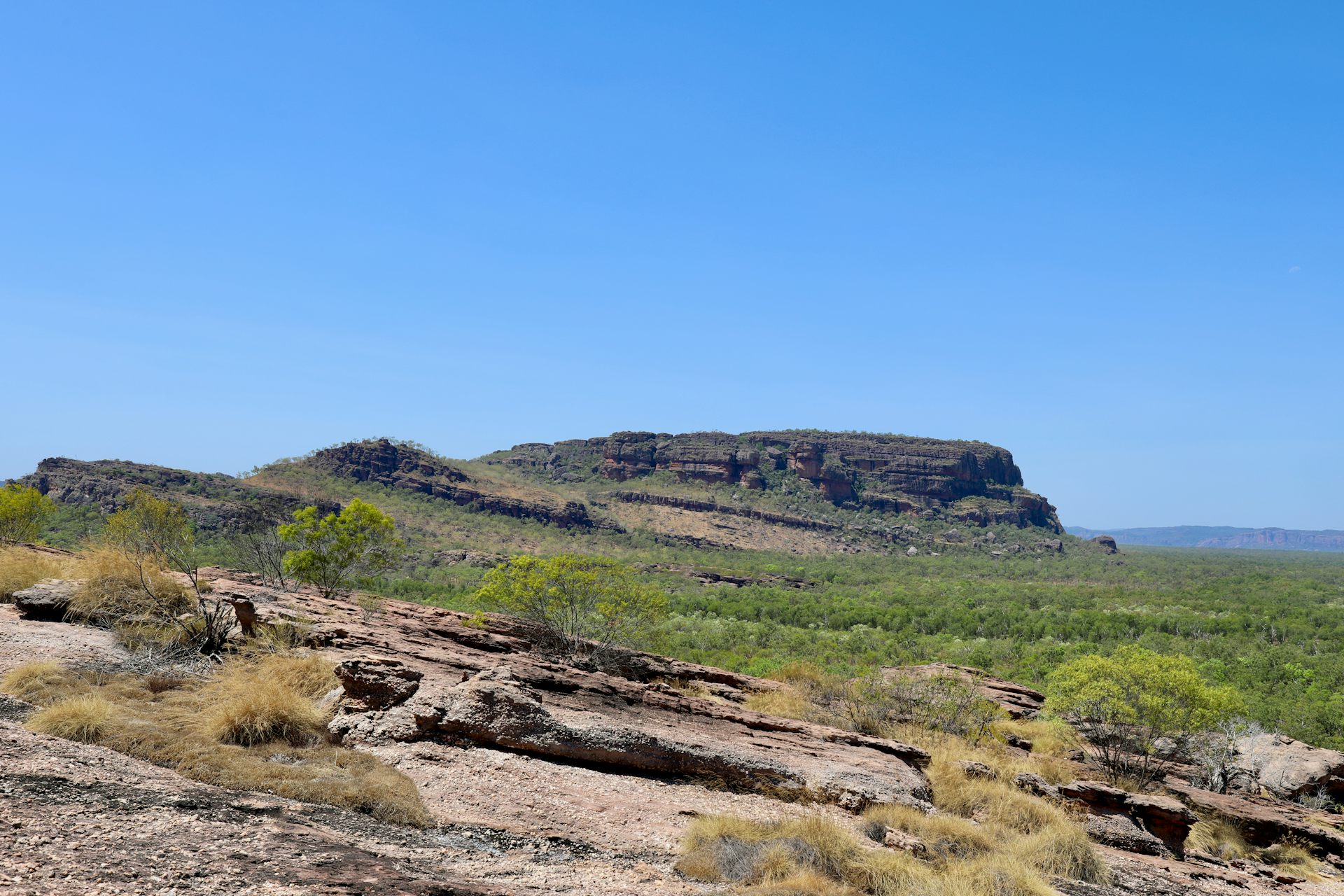
Field photos of the Khugenetsavkhlant badlands in the Eastern Gobi Desert of Mongolia today, where Tamirkhan balcarceli was discovered.
Michael Novacek/© AMNH
One of the most revealing differences between science and creationism is what happens when new evidence challenges an established explanation. In science, that is an opportunity to improve our understanding. In creationism, where the conclusion has already been declared unquestionable, it becomes a problem to explain away. A remarkable fossil from Mongolia’s Gobi Desert provides a particularly instructive example: a small mammal whose combination of teeth, skull and limb bones has prompted scientists to reconsider an enduring hypothesis about mammalian evolution. Predictably, there is no comfort here for anyone hoping that revising an evolutionary family tree means abandoning evolution.
The animal, Tamirkhan balcarceli, is described in a paper in Nature by Andres Giallombardo and colleagues. Discovered in 2004, the exceptionally informative specimen preserves a skull and part of a hind limb. This provides something researchers had previously lacked for the enigmatic mammals known as zhelestids: teeth and substantial skeletal remains belonging to the same individual.
Until now, zhelestids were known principally from teeth and fragmentary jaws. Their relatively low, rounded molar cusps resembled those of plant-eating hoofed placental mammals, encouraging suggestions that they represented an early radiation of placentals during the Cretaceous. The new fossil tests that interpretation against a much broader sample of anatomy. Its zhelestid-like molars occur alongside distinctive incisors, skull structures and hindlimb features characteristic of another ancient mammalian group, the zalambdalestoids. The researchers conclude that zhelestids belong within that group. Their apparently revealing resemblance to later herbivorous placentals arose through convergent evolution.
The significance extends beyond moving a name from one branch of a family tree to another. Identifying which ancient mammals belong within the placental radiation helps establish when that radiation began and how its early members diversified. An animal can possess teeth resembling those of a later group without belonging to that group: similar feeding demands can favour similar dental adaptations in separate evolutionary lineages. More complete fossils allow researchers to distinguish those similarities from the wider anatomical evidence of ancestry. This discovery therefore changes how an important set of Cretaceous fossils contributes to the history of placental origins; it does not, by itself, settle every question about their timing.
For young-Earth creationists, the chronological problem remains as severe as ever. This is a Late Cretaceous mammal, part of a world that existed tens of millions of years before the few thousand years into which they attempt to compress the history of Earth and its inhabitants. Revising its evolutionary relationships does nothing to bring that world within the biblical timetable. Nor does a previously mistaken interpretation of its teeth supply evidence for separately created “kinds”. To establish that claim would require positive evidence of separate creation, not merely the discovery that one proposed relationship needs correction.